


Regarded as one of the most audacious and daring rescue operations in modern history, the Israeli commando raid on Entebbe Airport in Uganda on July 4, 1976, will forever be etched in the annals of time as a testament to bravery, precision, and skill. In a heart-stopping operation, Israeli special forces rescued 102 hostages from the clutches of Palestinian terrorists who had hijacked an Air France jetliner, leaving a lasting impact on global counter-terrorism efforts.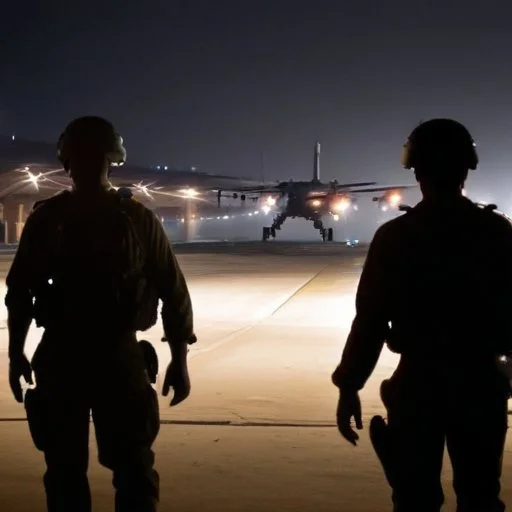
The seeds of the Entebbe rescue operation were sown in the tumultuous climate of the Middle East during the 1970s. The Palestine Liberation Organization (PLO), a militant group fighting for Palestinian independence, had been engaged in a series of hijackings and terrorist attacks targeting Israeli and Western interests. The hijacking of Air France Flight 139, which originated from Tel Aviv and was bound for Paris, was just another episode in this cycle of violence.
On June 27, 1976, Air France Flight 139 was hijacked by four Palestinian terrorists and a German revolutionary, who diverted the plane to Entebbe Airport in Uganda. The hijackers, led by Wilfried Böse, demanded the release of 53 Palestinian prisoners held in Israel and other countries, threatening to kill the hostages if their demands were not met. The Ugandan government, led by dictator Idi Amin, provided tacit support to the hijackers, complicating the already precarious situation.
As the crisis unfolded, Israeli Prime Minister Yitzhak Rabin assembled a team of top military officials, led by Lt. Col. Yonatan Netanyahu, to devise a plan to rescue the hostages. The operation, code-named "Operation Thunderbolt," was fraught with risks, but the Israelis were determined to act. A team of 90 commandos, including Netanyahu, flew to Entebbe on July 3, 1976, armed with nothing but their bravery, confidence, and precision.
The Israeli commandos, disguised as Ugandan military officials, arrived at Entebbe Airport under the cover of darkness. In a meticulously planned and executed operation, they stormed the airport, neutralized the hijackers, and rescued the hostages. The entire operation lasted just 53 minutes, with the commandos killing all the hijackers and 45 Ugandan soldiers. Three Israeli soldiers, including Netanyahu, were injured, and one hostage, Jean-Jacques Maimoni, was killed in the crossfire.
The Entebbe raid sent shockwaves around the world, showcasing Israel's military prowess and its unwavering commitment to protecting its citizens. The operation was hailed as a triumph of counter-terrorism, forcing countries to re-examine their approach to hostage situations. The rescue also exposed the blatant support of terrorist groups by certain regimes, putting Uganda's dictator Idi Amin on the global spotlight.
| June 27, 1976 | Air France Flight 139 is hijacked by Palestinian terrorists and diverted to Entebbe Airport in Uganda. |
| June 28, 1976 | Ugandan dictator Idi Amin meets with the hijackers, offering them support. |
| July 3, 1976 | Israeli commandos, led by Lt. Col. Yonatan Netanyahu, fly to Entebbe to prepare for the rescue operation. |
| July 4, 1976 | The Israeli commandos conduct Operation Thunderbolt, rescuing 102 hostages and killing the hijackers. |
The Entebbe rescue operation will forever be remembered as a testament to bravery, precision, and the unwavering commitment to protecting human life. It serves as a reminder that, even in the darkest of times, courage and determination can overcome even the most daunting challenges.
The Entebbe raid was not the first time Israel had mounted a daring rescue operation. In 1972, Israeli commandos had rescued passengers from a hijacked Sabena Boeing 707 at Tel Aviv's Lod Airport. This earlier operation, known as Operation Isotope, had provided valuable experience and insights that would later inform the planning and execution of the Entebbe raid.
In the years leading up to the Entebbe hijacking, the Palestine Liberation Organization (PLO) had launched a series of high-profile attacks on Israeli and Western targets. These attacks, including the 1972 Munich Olympics massacre, had created an environment of fear and uncertainty in Israel and beyond.
The success of the Entebbe raid marked a turning point in Israel's approach to counter-terrorism. It demonstrated that, with careful planning, precise execution, and a willingness to take risks, even the most seemingly intractable hostage situations could be resolved successfully.

Lt. Col. Yonatan Netanyahu, the commander of the Israeli commando team, was a complex figure with a rich emotional life. He was a poet and a philosopher, as well as a skilled soldier. His leadership during the Entebbe raid was instrumental in its success, and his death in the operation was a devastating blow to his family and the Israeli military.
Böse, the leader of the hijackers, was a German revolutionary with a troubled past. He had been involved in several high-profile terrorist attacks before the Entebbe hijacking, and his radical ideology had driven him to seek out increasingly violent and provocative actions.
The Entebbe raid had a profound impact on global popular culture. It inspired numerous books, films, and documentaries, cementing its place in the public imagination. The operation's dramatic storyline, combined with its real-life heroism and sacrifice, made it an irresistible subject for storytellers.
In the years following the Entebbe raid, Israel became a symbol of daring and determination in the face of terrorism. The operation's success helped to boost Israeli morale and galvanize international support for the country's anti-terrorism efforts.

The Entebbe raid marked a significant shift in Israel's foreign policy, as the country began to take a more assertive stance against terrorism. The operation demonstrated Israel's willingness to act unilaterally, even in the face of international pressure, to protect its citizens and interests.
The raid also had important implications for Israeli-Ugandan relations. The operation exposed the Ugandan government's tacit support for terrorism, leading to a significant deterioration in relations between the two countries.
The Entebbe raid took place against the backdrop of a rapidly changing global landscape. The Cold War was at its height, and superpower rivalries were exacerbating regional conflicts across the world.
The operation highlighted the complex web of alliances and rivalries that characterized the Middle East during the 1970s. Israel's decision to act unilaterally in Entebbe was driven in part by its perception of a growing threat from radical Arab states and their Soviet benefactors.