


The iconic image of Israeli Prime Minister Yitzhak Rabin and Palestine Liberation Organization chairman Yasser Arafat shaking hands on the White House lawn on September 13, 1993, marks a pivotal moment in the quest for peace in the Middle East. This historic gesture followed the signing of the Oslo Accords, a landmark agreement that granted limited Palestinian autonomy and set the stage for a new era of cooperation between Israel and the Palestine Liberation Organization.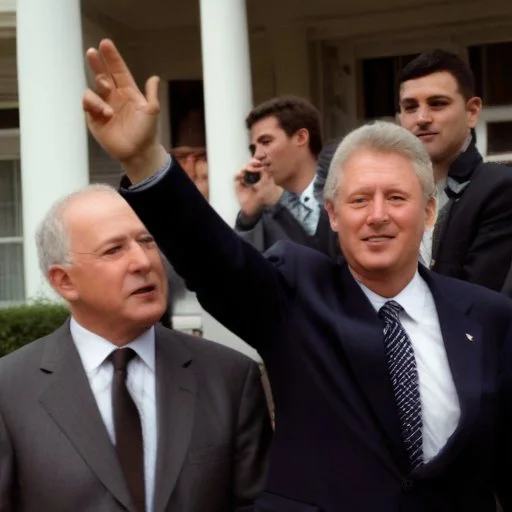
The path to the Oslo Accords was paved by decades of violence and mistrust between Israel and the Palestinian people. The 1948 Arab-Israeli War, the 1967 Six-Day War, and the 1987 Intifada had created an atmosphere of hostility, making the prospect of peaceful coexistence seem distant. However, the international community, led by the United States, had been actively seeking to broker a peaceful resolution to the conflict.
The Oslo Accords led to the establishment of the Palestinian Authority, which was granted limited autonomy over parts of the West Bank and Gaza Strip. The agreement also paved the way for the withdrawal of Israeli forces from certain areas and the release of Palestinian prisoners.
The Oslo Accords had a profound impact on the cultural and social fabric of the region. The agreement inspired a sense of hope and optimism, as people from both sides began to envision a future free from conflict.
The Oslo Accords were not without controversy. Critics argued that the agreement did not go far enough in addressing Palestinian grievances, while others saw it as a betrayal of Israeli interests. Despite these challenges, the handshake between Rabin and Arafat remained a powerful symbol of the possibility of peace.
Yitzhak Rabin's words during the signing ceremony still resonate today: "Enough of blood and tears. Enough of death."
The Oslo Accords set the stage for future peace agreements, including the 1994 Gaza-Jericho Agreement and the 1998 Wye River Memorandum. Although the road to peace has been fraught with challenges, the spirit of cooperation embodied in the Oslo Accords continues to inspire leaders and ordinary people alike.
| 1948 | Arab-Israeli War |
| 1967 | Six-Day War |
| 1987 | Intifada |
| 1993 | Oslo Accords signed |
| 1994 | Gaza-Jericho Agreement |
| 1998 | Wye River Memorandum |
The Oslo Accords, though imperfect, represent a crucial step towards peace in the Middle East. As we look back on this historic moment, we are reminded of the power of diplomacy, courage, and vision in shaping a better future for generations to come.
The Oslo Accords had a profound impact on the cultural landscape of the Middle East. The agreement paved the way for increased cultural exchange between Israelis and Palestinians, with many artists, writers, and musicians using their platforms to promote peace and reconciliation. In the years following the accords, there was a surge in joint Israeli-Palestinian cultural projects, including theater productions, art exhibitions, and music festivals.
One notable example is the establishment of the Palestinian National Theatre in Jerusalem, which was founded in 1994 with the goal of promoting Palestinian culture and fostering dialogue between Israelis and Palestinians. The theatre has since become a hub for cultural exchange, hosting productions that tackle themes of identity, conflict, and coexistence.
The Oslo Accords also inspired a new wave of Israeli and Palestinian filmmakers, who used their films to explore the complexities of the conflict and the possibilities of peace. Many of these films went on to receive international recognition, including Hany Abu-Assad's "Paradise Now" and Eran Riklis's "The Syrian Bride".
In addition to these tangible cultural achievements, the Oslo Accords also had a profound impact on the intangible cultural fabric of the region. The agreement helped to create a sense of hope and optimism, which inspired people on both sides to imagine a future free from conflict and characterized by mutual respect and understanding.

Shimon Peres: The Architect of the Oslo Accords
While Yitzhak Rabin and Yasser Arafat were the public faces of the Oslo Accords, it was Shimon Peres who played a crucial behind-the-scenes role in brokering the agreement. As Israel's Foreign Minister, Peres was responsible for leading the secret negotiations with the Palestinians, and it was his diplomatic skill and creativity that helped to overcome the many obstacles that threatened to derail the process.
Peres's commitment to peace was deeply personal, driven by a sense of responsibility to the victims of the Holocaust and a desire to ensure that Israel would never again be isolated and vulnerable. Throughout his long and distinguished career, Peres was a vocal advocate for peace and reconciliation, and his tireless efforts ultimately earned him the Nobel Peace Prize in 1994.
Despite his many achievements, Peres was not without his critics. Some accused him of being overly optimistic, of ignoring the deep-seated mistrust and hostility that had built up over decades of conflict. However, Peres remained undeterred, convinced that the only way to achieve true security was through peace and cooperation.
The Oslo Accords were not solely a bilateral agreement between Israel and the Palestinians. Rather, they were part of a broader geopolitical context, driven by a complex interplay of regional and international factors.
In the aftermath of the Cold War, the international community was eager to see an end to the Arab-Israeli conflict, which had long been a source of instability and tension in the Middle East. The United States, in particular, saw the conflict as a major obstacle to its goals of promoting democracy and stability in the region.
The Gulf War of 1990-1991 had also created a new regional dynamic, with Arab states such as Egypt and Jordan increasingly willing to engage with Israel and explore the possibility of peace. The Oslo Accords were, in many ways, a product of this new regional landscape, with Israel and the Palestinians seizing the opportunity to make a breakthrough.

The Oslo Accords were a major political gamble for all parties involved. For Yitzhak Rabin, the accords represented a huge risk, as he faced opposition from within his own party and from settlers who felt that he was betraying Israel's claim to the occupied territories.
For Yasser Arafat, the accords were a calculated risk, as he sought to consolidate his power and legitimacy among the Palestinian people. Arafat faced opposition from more radical elements within the PLO, who saw the accords as a betrayal of the Palestinian cause.
For Bill Clinton, the Oslo Accords were a significant foreign policy achievement, demonstrating his commitment to peace and stability in the Middle East. However, the accords also exposed the limits of American power, as the United States struggled to impose its will on the parties and ensure a lasting peace.
The roots of the Oslo Accords can be traced back to the 1970s, when Israel and the Palestinians first began to explore the possibility of a peaceful settlement.
In 1978, Israeli President Anwar el-Sadat and Israeli Prime Minister Menachem Begin signed the Camp David Accords, which established a framework for peace talks between Israel and its Arab neighbors. Although the accords did not directly address the Palestinian issue, they created a precedent for Israeli-Arab diplomacy and paved the way for future negotiations.
In the 1980s, the intifada, or Palestinian uprising, forced Israel to re-evaluate its approach to the conflict. The Israeli government, led by Yitzhak Rabin, began to explore the possibility of a negotiated settlement, leading to the secret talks in Oslo that ultimately produced the Oslo Accords.