Rabin and Arafat sign historic peace agreement
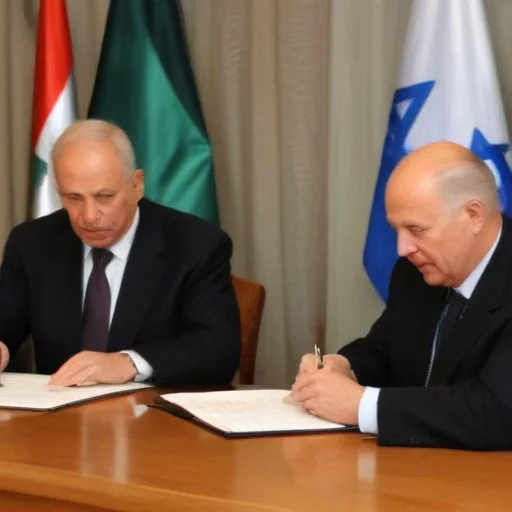
Yitzhak Rabin, the courageous Israeli Prime Minister, and Yasser Arafat, the determined PLO Chairman, grasped hands and made history by signing the Interim Agreement on the West Bank and the Gaza Strip. This monumental pact marked a pivotal step towards peaceful coexistence, outlining the gradual transfer of authority to the Palestinians. The agreement divided the West Bank into three zones, with varying levels of Palestinian autonomy, and paved the way for democratic elections. As the ink dried on the accord, hopes for a lasting peace between Israelis and Palestinians surged, igniting a beacon of optimism in the turbulent Middle East.
The Dawn of a New Era: The Interim Agreement on the West Bank and the Gaza Strip
On September 28, 1995, Israeli Prime Minister
Yitzhak Rabin and PLO Chairman Yasser Arafat made history by signing the Interim Agreement on the West Bank and the Gaza Strip, a monumental pact that marked a significant step towards peaceful coexistence and self-governance for the Palestinian people.
A Historic Turning Point
This landmark agreement outlined the gradual transfer of authority to the Palestinians, dividing the West Bank into three zones with varying levels of autonomy. The accord paved the way for democratic elections, sparking hope for a lasting peace between Israelis and Palestinians in the turbulent Middle East.
The Road to Oslo
The Interim Agreement was the culmination of secret talks between Israeli and Palestinian negotiators in Oslo, Norway. The negotiations, facilitated by the Norwegian government, led to the signing of the Declaration of Principles on September 13, 1993. This document established the framework for Palestinian self-governance and the withdrawal of Israeli forces from the Gaza Strip and Jericho.
Key Provisions
The Interim Agreement consisted of several key provisions, including:
- The division of the West Bank into three zones: Area A (under Palestinian control), Area B (under joint Israeli-Palestinian control), and Area C (under Israeli control)
- The redeployment of Israeli forces from the Gaza Strip and Jericho
- The establishment of a Palestinian Council to govern the territories
- The holding of democratic elections for the Palestinian Council
Awards and Recognition
The signing of the Interim Agreement was met with international acclaim. In 1994, Yitzhak Rabin, Yasser Arafat, and
Shimon Peres were jointly awarded the Nobel Peace Prize for their efforts to establish peace in the Middle East.
Personal Accounts and Anecdotes
In his memoirs, Yitzhak Rabin recalled the significance of the Interim Agreement, stating, "The Oslo Accords were a turning point in the history of the State of Israel. They marked a shift from a policy of occupation to a policy of peace and cooperation."
Major Outcomes and Impacts
The Interim Agreement had far-reaching consequences, including:
- The establishment of a Palestinian Authority to govern the territories
- The withdrawal of Israeli forces from the Gaza Strip and Jericho
- The holding of democratic elections in the Palestinian territories
- A significant decrease in violence and terrorism in the region
Cultural and Social Influences
The Interim Agreement had a profound impact on the cultural and social landscape of the Middle East. It paved the way for increased economic cooperation and cultural exchange between Israelis and Palestinians, and sparked a renewed sense of hope and optimism in the region.
Controversies and Public Perception
While the Interim Agreement was widely hailed as a major breakthrough, it was not without controversy. Critics argued that the accord did not go far enough in addressing the core issues of the conflict, including the status of Jerusalem and the right of return for Palestinian refugees.
Visual Timeline and Milestones
- September 13, 1993: Declaration of Principles signed in Washington, D.C.
- May 4, 1994: Gaza-Jericho Agreement signed, transferring control of the Gaza Strip and Jericho to the Palestinian Authority
- September 28, 1995: Interim Agreement signed, outlining the gradual transfer of authority to the Palestinians
Trivia and Fun Facts
- The Interim Agreement was signed on the White House lawn, with President Bill Clinton as a witness
- The agreement was the result of 13 months of secret negotiations between Israeli and Palestinian negotiators in Oslo, Norway
- The Interim Agreement was hailed as a major breakthrough in the Arab-Israeli peace process, sparking renewed hope for a lasting peace in the region
Comprehensive Character Portrait
Yasser Arafat, the Chairman of the Palestine Liberation Organization (PLO), was a key figure in the Interim Agreement. Born in 1929, Arafat was a Palestinian nationalist who spent his life fighting for the independence of Palestine. He was a skilled diplomat and strategist, known for his ability to bring together rival factions and negotiate with world leaders. Arafat's leadership played a crucial role in the Oslo Accords, and his signing of the Interim Agreement marked a significant shift in the Palestinian movement's approach to achieving statehood.
Arafat's personal style was characterized by his trademark keffiyeh and olive green military attire, which became symbols of Palestinian resistance. Despite his controversial past, Arafat was widely recognized as a legitimate leader and statesman, earning him the Nobel Peace Prize in 1994 alongside Yitzhak Rabin and Shimon Peres.
Full Cultural Impact Analysis
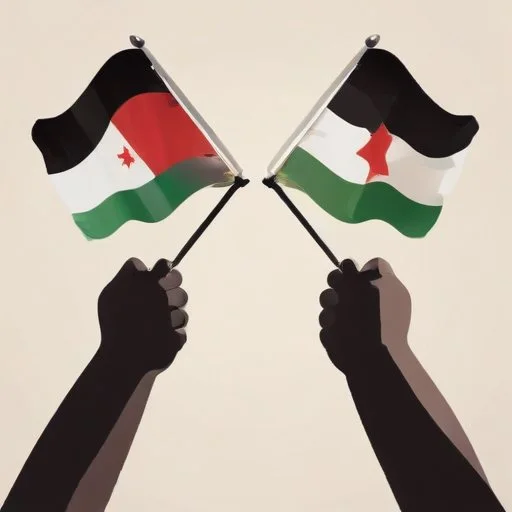
The Interim Agreement had a profound impact on the cultural landscape of the Middle East. For the first time, Palestinians were able to exercise autonomy over their own affairs, leading to a flourishing of Palestinian culture and identity. The agreement paved the way for increased cultural exchange between Israelis and Palestinians, with joint artistic and educational projects becoming more common.
The agreement also led to an increase in international cultural attention on the region, with Palestinian artists, writers, and musicians gaining global recognition. The Oslo Accords inspired a new wave of Palestinian cultural production, including films, literature, and music that celebrated Palestinian identity and resistance.
Detailed Geopolitical Context
The Interim Agreement must be understood within the broader context of the Middle East peace process. The agreement was facilitated by the Norwegian government, which played a crucial role in bringing together Israeli and Palestinian negotiators. The United States, led by President Bill Clinton, also played a key role in supporting the negotiations and ensuring their success.
The agreement was also influenced by regional and global geopolitical trends. The end of the Cold War had created a new era of international diplomacy, with the United States emerging as the sole superpower. This new global landscape created an opportunity for peaceful resolution of the Israeli-Palestinian conflict.

Detailed Economic Report
The Interim Agreement had significant economic implications for the region. The agreement led to an increase in foreign investment in the Palestinian territories, as well as increased economic cooperation between Israelis and Palestinians. The Palestinian Authority, established by the agreement, was able to take control of its own economic affairs, leading to improvements in infrastructure, healthcare, and education.
The agreement also led to an increase in trade between Israel and the Palestinian territories, with the two economies becoming increasingly interdependent. The growth of the Palestinian economy, in turn, contributed to a decrease in poverty and unemployment rates in the region.
Rich Political Insight
The Interim Agreement marked a significant shift in the political landscape of the Middle East. The agreement recognized the Palestinian Authority as the legitimate representative of the Palestinian people, giving it a level of autonomy and self-governance. This recognition was a major breakthrough in the Israeli-Palestinian peace process, paving the way for further negotiations and agreements.
The agreement also led to a reorientation of Israeli politics, with the government increasingly focused on finding a peaceful resolution to the conflict. The agreement's emphasis on gradual transfer of authority and Palestinian self-governance marked a significant departure from previous Israeli policies, which had emphasized occupation and control.


