


In the annals of aviation history, few incidents have left an indelible mark on the industry as profoundly as the Jakarta Incident of 1982. It was on this fateful day that British Airways Flight 009, a Boeing 747, flew straight into the heart of danger, where all four engines failed, threatening the lives of 263 passengers and crew members on board.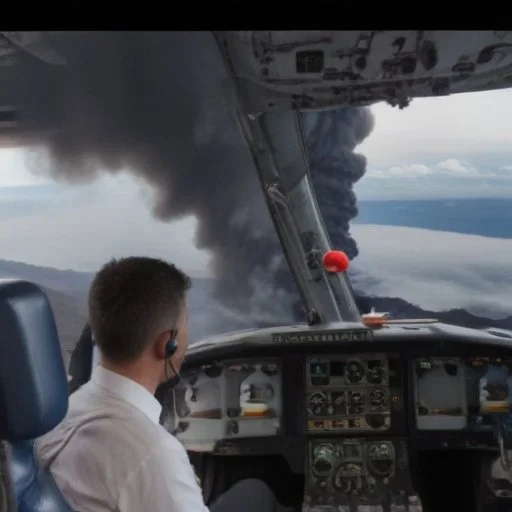
On June 24, 1982, Flight 009 took off from Kuala Lumpur, Malaysia, bound for Perth, Australia. As it cruised at an altitude of 24,000 feet, the aircraft unwittingly flew into a massive cloud of volcanic ash spewed by the erupting Mount Galunggung in Indonesia. In a matter of minutes, the engines began to fail, one by one, plunging the aircraft into an unprecedented crisis.
Captain Eric Moody, a seasoned pilot with over 11,000 hours of flying experience, was at the helm of Flight 009. His quick thinking and exceptional flying skills would prove instrumental in saving the lives of everyone on board. As the engines failed, Moody's calm and composed demeanor helped him navigate the aircraft to a safe altitude, where he managed to restart the engines and make an emergency landing in Jakarta.
The Jakarta Incident sent shockwaves throughout the aviation industry, prompting a thorough overhaul of aviation safety protocols. The incident highlighted the critical need for improved volcanic ash detection systems and more effective aircraft safety measures.
In the aftermath of the incident, the International Civil Aviation Organization (ICAO) introduced new guidelines for aircraft operation in volcanic ash clouds. The incident also led to the development of more advanced technologies for detecting volcanic ash, including satellite imagery and real-time tracking systems.
Captain Moody's bravery and composure during the crisis inspired widespread admiration. In a later interview, Moody recalled the harrowing experience, stating, "I was not thinking about heroism; I was just trying to get the aircraft on the ground safely."
The Jakarta Incident has had a lasting impact on the aviation industry, shaping safety protocols and informing emergency procedures for generations to come. The incident serves as a poignant reminder of the importance of vigilance and preparedness in the face of unpredictable natural disasters.
In the years following the incident, Captain Eric Moody was hailed as a hero, receiving numerous accolades, including the Polaris Award, the highest honor bestowed by the International Air Transport Association. The Jakarta Incident remains an enduring testament to the power of human resilience and the importance of safety in the skies.
Behind the heroism of Captain Eric Moody lies a humble and dedicated individual who embodied the values of a true leader. With over 11,000 hours of flying experience, Moody had seen it all, but nothing could have prepared him for the fateful events of June 24, 1982.
Moody's calm and composed demeanor was not just a front; it was a reflection of his innate personality. In the face of unimaginable danger, he drew upon his years of experience and training to navigate the aircraft to safety.
His heroism was not about seeking recognition; it was about doing what came naturally to him – putting the lives of others before his own.
The eruption of Mount Galunggung in 1982 not only posed a threat to aviation safety but also had a profound impact on the environment. The massive cloud of volcanic ash spewed into the atmosphere, affecting the regional ecosystem and beyond.
The ash cloud led to widespread deforestation, soil degradation, and water pollution, ultimately affecting the habitats of numerous species. The disaster served as a stark reminder of the delicate balance between human activity and the natural world.
The Jakarta Incident highlighted the need for more stringent environmental regulations and awareness about the importance of preserving our planet's natural resources.The Jakarta Incident marked a turning point in aviation safety, catalyzing the development of cutting-edge technologies to detect and mitigate the risks associated with volcanic ash clouds.
The incident led to the introduction of advanced satellite imagery and real-time tracking systems, enabling pilots to navigate safely through treacherous skies. These innovations have since become an integral part of aviation safety protocols, saving countless lives and reducing the risk of similar disasters.
The incident demonstrated the power of technology in preventing aviation disasters, paving the way for future breakthroughs in safety and risk management.
The Jakarta Incident of 1982 occupies a unique place in the annals of aviation history, offering a fresh perspective on the evolution of safety protocols and emergency procedures.
Historians and aviation experts have reexamined the incident, highlighting the critical role of human factors, such as Captain Moody's bravery, in shaping the outcome of the crisis. This nuanced understanding has led to a more comprehensive approach to safety, acknowledging the interplay between technology, training, and human resilience.
The Jakarta Incident serves as a powerful reminder of the importance of learning from the past to build a safer future.The Jakarta Incident occurred at a time of heightened geopolitical tension, with the Cold War casting a long shadow over international relations.
Against this backdrop, the incident highlighted the vulnerability of global air travel, underscoring the need for international cooperation and coordination in ensuring aviation safety. The response to the crisis demonstrated the importance of diplomacy and collaboration in the face of shared global challenges.
The Jakarta Incident served as a catalyst for greater international cooperation, paving the way for more effective safety protocols and incident response strategies.