


In the sweltering heat of April 26, 1607, a trio of battered ships, the Susan Constant, the Godspeed, and the Discovery, dropped anchor in the tranquil waters of the Chesapeake Bay, marking the arrival of the first permanent English colony in North America – Jamestown.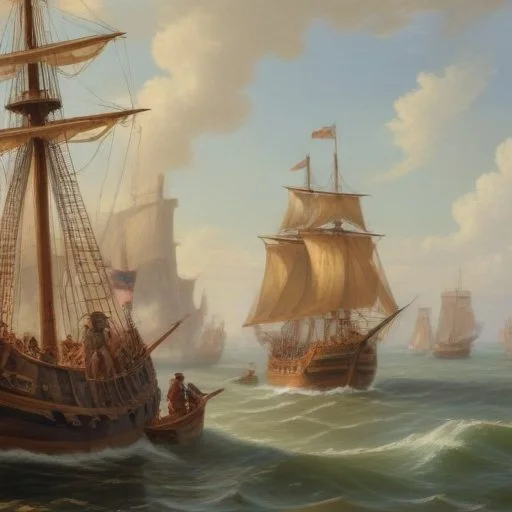
brainchild of the Virginia Company of London, Jamestown was the result of a decade-long effort to establish a foothold on the North American continent. The company, comprised of wealthy investors and entrepreneurs, sought to capitalize on the New World's untapped resources and provide a lucrative outlet for English goods.
At the helm of this audacious venture stood Captain Christopher Newport, a seasoned navigator with a reputation for bravery and cunning. Alongside him, Captain John Smith, a young and ambitious officer, would prove instrumental in the colony's survival. Together, they would navigate the uncharted waters of diplomacy with the native Powhatan tribe, forging an uneasy alliance that would define the colony's early years.
Jamestown's early years were marked by a delicate balance of power between the English settlers and the native Powhatan tribe. The colony's survival hinged on the ability of its leaders to navigate this complex web of alliances and rivalries, often relying on the help of friendly natives like Pocahontas, daughter of Chief Powhatan.
The native Powhatan tribe played a crucial role in the colony's survival, providing food and vital knowledge about the New World's unforgiving environment. In return, the English offered valuable trade goods and military protection, forging a tenuous bond that would shape the course of American history.
Jamestown's establishment marked the beginning of a new era of English exploration and settlement in North America, paving the way for the creation of the United States. The colony's early struggles and triumphs set the stage for the development of American identity, as settlers adapted to the harsh realities of the New World and forged a unique cultural heritage.
The successful tobacco industry, established in the early 1610s, would become a mainstay of the American economy, cementing Jamestown's legacy as a pioneer in the development of the New World.
Captain John Smith's written accounts of the early Jamestown years offer a rare glimpse into the daily struggles and triumphs of the settlers. His descriptions of the native Powhatan tribe and their leader, Chief Powhatan, provide valuable insights into the complex dynamics of the era.
In one memorable passage, Smith recounts a dramatic confrontation with Chief Powhatan, in which he is forced to negotiate for the release of several English captives. The tense standoff, which ultimately ends in the release of the prisoners, showcases the delicate balance of power between the English and the native tribe.
Jamestown's legacy extends far beyond the early struggles of the English settlers, influencing the course of American history in profound ways. The colony's establishment marked the beginning of a new era of English exploration and settlement in North America, setting the stage for the development of the United States.
The successful tobacco industry, established in the early 1610s, would become a mainstay of the American economy, solidifying Jamestown's place as a pioneer in the development of the New World.
The Jamestown settlers brought a variety of livestock with them, including chickens, pigs, and even a few horses.
The colony's early years were marked by a series of mysterious disappearances, with many settlers vanishing into the surrounding wilderness, never to be seen again.
The iconic image of Pocahontas and Captain John Smith meeting in the forest, popularized in films and literature, is likely a work of fiction, with little historical basis.
Jamestown's legacy continues to captivate modern audiences, with ongoing archaeological excavations uncovering new secrets about the colony and its inhabitants.
The journey to Jamestown was not without its challenges. The three ships, Susan Constant, Godspeed, and Discovery, faced treacherous seas and unpredictable weather conditions. The voyage took over four months to complete, with the ships arriving in the Chesapeake Bay on April 26, 1607. The colonists were relieved to have finally reached their destination, but they soon realized that they had arrived too late in the season to plant crops. This oversight would have severe consequences in the months to come.
The settlers were not prepared for the harsh realities of the New World. They had brought limited supplies and were not equipped to handle the challenges of the wilderness. The swampy terrain and humid climate made it difficult to build shelters, and the settlers struggled to find fresh water and food. Many of the colonists fell ill, and some even died due to disease and malnutrition.

Captain John Smith was a complex figure, known for his bravery, cunning, and ambition. Born in 1580, Smith was a seasoned sailor and adventurer who had traveled extensively throughout Europe and the Middle East. He was instrumental in the survival of the Jamestown colony, using his skills as a negotiator and leader to forge alliances with the native Powhatan tribe.
Despite his many accomplishments, Smith was also known for his arrogance and disagreements with other leaders in the colony. He clashed with Captain John Ratcliffe, who had been left in charge of the colony after Captain Newport's departure. Smith's written accounts of the early Jamestown years provide valuable insights into the daily struggles and triumphs of the settlers.
The establishment of Jamestown had a profound impact on the cultural dynamics of the New World. The English settlers brought with them their language, customs, and traditions, which would eventually become the foundation of American culture. The native Powhatan tribe, on the other hand, introduced the English to new foods, such as corn and tobacco, which would become staples of the American economy.
The cultural exchange between the English and the Powhatan was not without its challenges. The two groups had different values and customs, which often led to misunderstandings and conflicts. However, the alliance between the two groups also led to the development of a new creole culture, which would blend elements of both English and Native American traditions.

The establishment of Jamestown marked the beginning of a new era of economic development in the New World. The colony's early years were marked by struggles to survive, but eventually, the settlers began to thrive. The tobacco industry, established in the early 1610s, would become a mainstay of the American economy, cementing Jamestown's legacy as a pioneer in the development of the New World.
The economic success of Jamestown was not limited to tobacco. The colony also established a successful trade network with the native Powhatan tribe, exchanging goods such as tools, clothing, and guns for food and other essential supplies. The colony's economic growth would eventually lead to the development of a new middle class, comprised of merchants, traders, and artisans.
One of the most significant artifacts from the Jamestown era is the Virginia Company Charter, which granted the Virginia Company of London the right to establish a settlement in the New World. The charter, issued in 1606, outlines the company's goals and objectives, including the establishment of a Christian community and the extraction of natural resources.
Another important artifact is the John Smith Map, which provides valuable insights into the geography and topography of the Chesapeake Bay region. The map, drawn by Smith in 1608, shows the location of Native American settlements, as well as the routes used by the English settlers to travel throughout the region.