


On a fateful morning in April 1952, Japan Air Lines Flight 301 etched its name in the annals of history as one of Japan's deadliest aviation disasters, claiming the lives of 37 passengers and crew members. The DC3 aircraft, en route from Haneda to Osaka, vanished from radar screens, only to be discovered later in pieces on the slopes of Mount Mihara, a dormant volcano on Izu Oshima Island.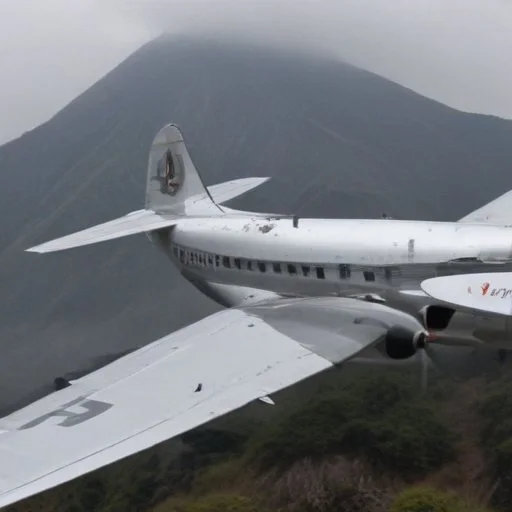
April 9, 1952, began like any other day in post-war Japan. The country was still reeling from the devastating effects of World War II, and the aviation industry was experiencing a period of rapid growth. Japan Air Lines Flight 301, operated by a Douglas DC3 aircraft, took off from Haneda Airport in Tokyo, carrying 37 passengers and crew members bound for Osaka. The flight was expected to be a routine one, but fate had other plans.
The flight crew, consisting of experienced pilots Captain Yoshio Hokao and First Officer Tadashi Kondo, navigated the aircraft through the skies, following the standard flight plan. However, as they approached Izu Oshima Island, the crew encountered dense fog, reducing visibility to almost zero. The pilots, relying on their instruments and experience, attempted to navigate the treacherous terrain, but it was too late. At 9:10 am, the aircraft slammed into the rugged slope of Mount Mihara, disintegrating on impact.
The crash of Japan Air Lines Flight 301 sent shockwaves throughout the nation, sparking widespread grief and outrage. Rescue teams rushed to the scene, but the remote location and harsh weather conditions made it difficult to access the wreckage. Initial investigations pointed to poor visibility and possible pilot error as the primary causes of the tragic accident. The incident led to a thorough overhaul of Japan's aviation safety regulations, with a focus on improving pilot training and weather forecasting systems.
The crash of Flight 301 marked a turning point in Japanese aviation history, prompting a renewed focus on safety and risk management. The incident led to the establishment of the Japan Transport Safety Board, an independent agency responsible for investigating and preventing transportation-related accidents. The tragedy also spurred the development of more stringent safety protocols, including the mandatory use of radar and improved communication systems.
The 37 lives lost in the crash of Japan Air Lines Flight 301 are remembered as victims of a tragic accident that could have been prevented. Their memory serves as a poignant reminder of the importance of safety and responsibility in the aviation industry. As we reflect on this tragic event, we honor the lives lost and recommit ourselves to ensuring that such catastrophes never occur again.
The crash of Japan Air Lines Flight 301 remains an important lesson in the importance of safety and risk management in the aviation industry. As we move forward, we must continue to learn from the past, honoring the memories of those lost while striving to create a safer, more responsible aviation sector.
The crash of Japan Air Lines Flight 301 was not an isolated incident, but rather part of a larger trend of aviation accidents in post-war Japan. In the years following World War II, Japan's aviation industry experienced rapid growth, but this growth was not always matched by adequate safety measures.
In the 1950s, Japan saw a series of devastating aviation accidents, including the 1953 crash of a Japanese National Airlines plane that killed 16 people, and the 1958 crash of a Japan Air Lines DC3 that killed 20. These accidents, including the crash of Flight 301, led to a re-evaluation of Japan's aviation safety regulations and paved the way for the development of stricter safety protocols.
The crash of Flight 301 was a wake-up call for the Japanese government and the aviation industry, highlighting the need for improved safety measures and more stringent regulations.
Captain Yoshio Hokao, the pilot of Japan Air Lines Flight 301, was an experienced aviator with thousands of hours of flight time under his belt. Hokao had served as a pilot in the Japanese military during World War II and had later become a commercial pilot.
Despite his experience, Hokao was not immune to the challenges of flying in dense fog. In the weeks leading up to the crash, Hokao had expressed concerns about the safety of flying in instrument meteorological conditions (IMC), and had even requested additional training on instrument flying.
Hokao's legacy is a testament to the importance of ongoing training and education in the aviation industry.
The crash of Japan Air Lines Flight 301 had a profound impact on Japanese culture, sparking widespread grief and outrage. The accident led to a re-evaluation of the role of the aviation industry in Japanese society, and highlighted the need for greater accountability and safety measures.
In the years following the crash, the Japanese government and aviation industry worked to rebuild trust with the public, investing in improved safety protocols and more stringent regulations.
The crash of Flight 301 remains an important cultural touchstone in Japan, serving as a reminder of the importance of safety and responsibility in the aviation industry.
The crash of Japan Air Lines Flight 301 was a major setback for the Japanese aviation industry, but it also paved the way for significant technological advancements. In the years following the accident, Japanese manufacturers began to develop more advanced navigation and communication systems, including radar and instrument landing systems.
These technological advancements had far-reaching implications, improving safety and reducing the risk of accidents in the aviation industry. Today, Japan is a leader in aviation technology, with companies like Mitsubishi and Kawasaki at the forefront of innovation.
The legacy of Flight 301 can be seen in the advanced avionics systems used in modern aircraft.
The crash of Japan Air Lines Flight 301 had significant economic implications, both for the airline industry and the Japanese economy as a whole. The accident led to a decline in air travel, as well as increased costs for airlines and the government.
In the years following the crash, the Japanese government invested heavily in improving aviation safety, investing in new technologies and infrastructure. This investment paid off, with the air travel industry experiencing rapid growth in the 1960s and 1970s.
The crash of Flight 301 was a major economic setback, but it also paved the way for long-term growth and development in the aviation industry.