


In a long-overdue act of acknowledgment and contrition, President Ronald Reagan signed the Civil Liberties Act of 1988, providing 20,000 payments to Japanese Americans who suffered forced relocation and internment during World War II. This landmark legislation marked a crucial step towards healing the wounds of the past and reaffirming the country's commitment to upholding civil liberties.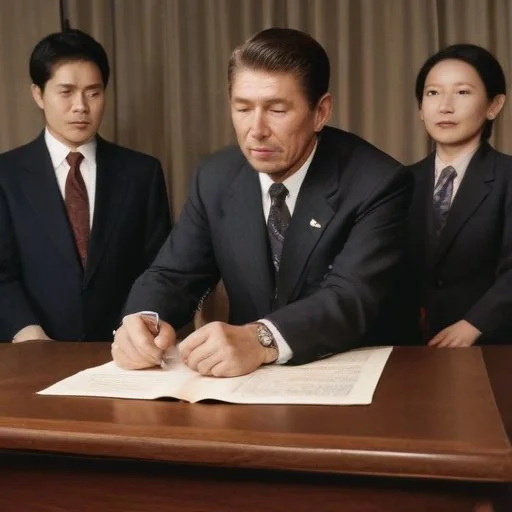
Following the attack on Pearl Harbor in 1941, the United States government, fueled by wartime hysteria and xenophobia, enacted Executive Order 9066, which authorized the forced relocation and internment of over 120,000 Japanese Americans. This travesty of justice, euphemistically labeled as "evacuation," resulted in the loss of livelihoods, property, and dignity for an entire community.
The Civil Liberties Act of 1988 marked a significant milestone in the Japanese American community's struggle for justice and recognition. The legislation:
The Civil Liberties Act of 1988 had a profound impact on the Japanese American community, fostering a sense of closure, dignity, and empowerment. It also:
"The internment of Japanese Americans during World War II is a grave injustice that shall never be forgotten. This legislation is a significant step towards healing the wounds of the past." — President Ronald Reagan (1988)
"Redress is not just about money; it's about recognition, apology, and acknowledgment of the government's wrongdoing." — Norman Mineta (1980s)
The Japanese American internment experience shares parallels with other instances of government mistreatment, such as:
The Civil Liberties Act of 1988 was a testament to the resilience and perseverance of Japanese Americans, who shared their stories of struggle and triumph. One such account comes from:
The Civil Liberties Act of 1988 set a crucial precedent for future redress and reparations efforts, influencing:
The attack on Pearl Harbor by Japan in December 1941 sparked widespread fear and paranoia among Americans. Rumors of Japanese spies and saboteurs spread like wildfire, fueled by sensationalized media reports and inflammatory rhetoric from politicians. This toxic atmosphere of fear and mistrust set the stage for the forced relocation and internment of Japanese Americans, as the government scrambled to respond to perceived threats to national security.
In the weeks and months that followed, discriminatory policies and practices proliferated, with Japanese Americans facing curfews, travel restrictions, and asset seizures. The media, too, played a significant role, perpetuating negative stereotypes and reinforcing the notion that Japanese Americans were inherently disloyal. It was against this backdrop of xenophobia and wartime hysteria that Executive Order 9066 was signed, authorizing the forced relocation and internment of over 120,000 Japanese Americans.

Mitsuye Endo was a 22-year-old Sacramento native when she was forced to leave her home and relocate to the Tule Lake internment camp. But unlike many others, Endo refused to back down, challenging the constitutionality of the internment policy in court. Her case, Ex parte Endo, ultimately made its way to the Supreme Court, where it resulted in a landmark ruling that declared the internment policy unconstitutional.
Endo's bravery and determination inspired a generation of Japanese Americans to stand up for their rights and fight against injustice. Her legacy continues to serve as a powerful symbol of resistance against government overreach and discrimination.
The forced relocation and internment of Japanese Americans during World War II shares eerie parallels with other instances of government mistreatment. One such example is the Indian Removal Act of 1830, which saw the forced relocation of tens of thousands of Native Americans from their ancestral lands to Indian Territory (present-day Oklahoma).
Similarly, the treatment of African Americans during the Civil Rights Movement, including the internment of Japanese Americans during World War II, highlights the recurring theme of government-sanctioned discrimination. The experiences of Latinx Americans during the Mexican Repatriation (1929-1936), in which over a million people of Mexican descent were forcibly deported, further underscore the need for accountability and redress.

The Civil Liberties Act of 1988 marked a significant turning point in the Japanese American community's struggle for justice and recognition. The legislation not only acknowledged the government's role in perpetuating injustices but also provided a sense of closure and dignity to the affected individuals.
The cultural impact of redress and reparations cannot be overstated. By acknowledging past wrongs and taking concrete steps to rectify them, the government sends a powerful message about the importance of accountability and respect for human rights. Moreover, the Civil Liberties Act of 1988 has inspired a renewed sense of cultural identity and pride among Japanese Americans, promoting greater awareness and empathy among Americans about the Japanese American experience during World War II.
The forced relocation and internment of Japanese Americans during World War II had devastating economic consequences for the affected individuals and communities. Many lost their livelihoods, properties, and life savings, struggling to rebuild their lives in the aftermath of the war.
The Civil Liberties Act of 1988, while providing a measure of redress and reparations, also acknowledged the economic toll of internment. The $20,000 payments to surviving internees, while insufficient to fully compensate for past losses, represented a crucial step towards restoring the economic dignity of Japanese Americans. Moreover, the legislation has had a lasting impact on the Japanese American community's economic development, fostering greater economic empowerment and resilience in the face of adversity.