


In the waning days of World War II, the Japanese government made a crucial announcement that would change the course of history. On August 10, 1945, Japan sent a message to the Allies, accepting the terms of the Potsdam Declaration, but with one significant caveat: the preservation of the Emperor's sovereignty as a sovereign ruler.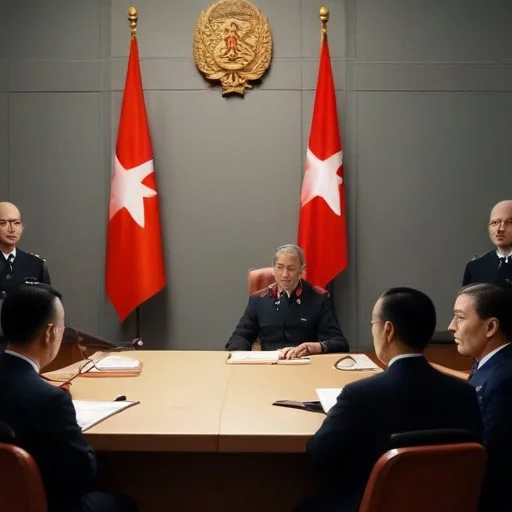
As Allied forces closed in on Japanese territory, Emperor Hirohito and his government faced an existential crisis. The once-mighty empire was on the brink of collapse, and the only way to avoid total defeat was to surrender unconditionally. But the Japanese government was unwilling to relinquish the symbolic power of the monarchy, fearing it would lead to the loss of national identity and pride.
For centuries, the Japanese monarchy had been revered as a symbol of divine authority, with the Emperor serving as a unifying figure for the nation. The concept of kokutai, or national polity, was deeply ingrained in Japanese culture, emphasizing the importance of the Emperor as a sovereign ruler. This ideological commitment to the monarchy made it difficult for the Japanese government to accept anything less than preservation of the Emperor's sovereignty.
Issued on July 26, 1945, the Potsdam Declaration was a joint statement by the United States, the United Kingdom, and the Soviet Union, calling on Japan to surrender unconditionally and accept the terms of the Allied powers. The declaration warned of prompt and utter destruction if Japan failed to comply, but the Japanese government was hesitant to surrender without guarantees for the Emperor's position.
The Japanese government walked a tightrope, trying to appease the Allies while maintaining the Emperor's sovereignty. This delicate balancing act was necessary to avoid total defeat, while also preserving national pride and identity. The government's conditional surrender was a calculated move, aiming to secure a better deal for Japan and its people.
The response to Japan's conditional surrender was mixed. While the Allies were relieved that the war was finally coming to an end, many Japanese citizens were bitter about the government's decision to surrender, feeling that it was a betrayal of the nation's honor. The Soviet Union's declaration of war on August 8, 1945, further complicated the situation, as Japan now faced the threat of Soviet occupation.
The Japanese government's conditional surrender had far-reaching consequences. It marked the end of World War II, but also paved the way for the Occupation of Japan, which would last until 1952. The Emperor's sovereignty was eventually preserved, but the monarchy's role was limited, and Japan was forced to adopt a new constitution, enshrining democratic principles and limiting the power of the Emperor.
In the end, Japan's conditional surrender was a complex and nuanced decision, driven by a desire to preserve national identity and pride, while avoiding total defeat. It marked a turning point in Japanese history, leading to a new era of occupation, reconstruction, and eventual rebirth.
This pivotal event in Japanese history serves as a reminder of the country's complexities and contradictions, as it navigated the treacherous waters of war, identity, and surrender.
Emperor Hirohito: A Complex Figure
Emperor Hirohito, the 124th emperor of Japan, played a pivotal role in Japan's conditional surrender. Born in 1901, Hirohito was educated in Western traditions and was known for his interest in marine biology. However, he was also heavily influenced by the militaristic and nationalist ideologies prevalent in Japan during the 1930s and 1940s.
As the war turned against Japan, Hirohito's role became increasingly symbolic. While he maintained a strong sense of tradition and duty, he also demonstrated a willingness to adapt to changing circumstances. His decision to surrender, while preserving the monarchy, was a testament to his ability to balance competing interests and priorities.
Hirohito's post-war role was marked by a significant transformation, as he transitioned from a divine authority to a symbol of democracy and peace. His efforts to promote reconciliation and apology for Japan's wartime atrocities have been recognized and respected worldwide.
Historiographical Debates: Interpretations of Japan's Surrender
One school of thought emphasizes the role of internal divisions within the Japanese government, where moderates and hardliners clashed over the terms of surrender. Another perspective highlights the impact of external pressures, including the Potsdam Declaration and the Soviet Union's declaration of war.
Recent scholarship has also focused on the significance of the atomic bombings of Hiroshima and Nagasaki, with some arguing that they played a decisive role in Japan's surrender, while others contend that the bombings were merely the final straw in a process already underway.
A Comparative Analysis of Unconditional Surrender
In contrast to Germany's unconditional surrender in May 1945, Japan's conditional surrender raises important questions about the nature of sovereignty and national identity. While Germany's surrender was characterized by a complete defeat and occupation, Japan's surrender preserved the monarchy, albeit in a limited capacity.
This comparative analysis highlights the complexities of national sovereignty and the role of symbolic authority in times of crisis. It also underscores the difficulties of negotiating surrender terms, particularly when they involve the fate of a nation's monarch.
The contrasting approaches to surrender also reflect different cultural and historical contexts, with Germany's surrender marked by a sense of defeat and shame, and Japan's surrender characterized by a desire to preserve national pride and identity.

The Geopolitical Context of Japan's Surrender
In August 1945, Japan found itself isolated and surrounded by enemy forces. The Soviet Union's declaration of war on August 8 added a new layer of complexity to the situation, as Japan faced the prospect of Soviet occupation.
The Potsdam Declaration, issued on July 26, had set the stage for Japan's surrender, but the country's leaders were hesitant to accept unconditional terms. The government's conditional surrender was, in part, a response to the rapidly shifting geopolitical landscape.
The post-war occupation of Japan, led by the United States, marked a significant shift in the balance of power in East Asia, with Japan emerging as a key player in the Cold War era.
The Ideological Underpinnings of Japan's Surrender
Japan's conditional surrender was underpinned by a complex web of ideologies, including the concept of kokutai, or national polity. This ideological commitment to the monarchy and national identity played a significant role in the government's decision to preserve the Emperor's sovereignty.
The influence of militaristic and nationalist ideologies, which had driven Japan's expansionist policies in the 1930s and 1940s, also shaped the country's response to the Allied powers.
The post-war occupation of Japan led to a significant shift in the country's ideological landscape, as the United States sought to promote democracy and liberal values. The adoption of a new constitution in 1947 marked a significant turning point in Japan's ideological evolution.