


The 1989 Tiananmen Square protests and massacre marked a pivotal moment in China's history, culminating in the demise of General Secretary Zhao Ziyang and the ascension of Jiang Zemin to the top post of the Chinese Communist Party. This power shift had far-reaching consequences, as Jiang's leadership would shape China's future and cement his own legacy as a reformer and authoritarian leader.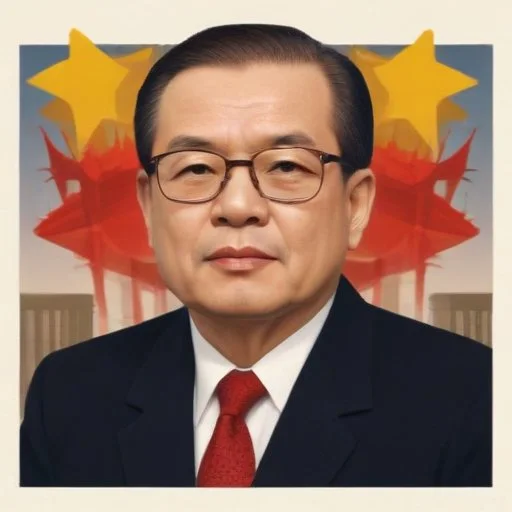
In the late 1980s, China was grappling with internal turmoil and external pressures. The economic reforms initiated by Deng Xiaoping had created new opportunities, but also exacerbated social and economic disparities. The Tiananmen Square protests, which began as a memorial for deceased Communist leader Hu Yaobang, quickly evolved into a pro-democracy movement, calling for greater political freedoms and an end to corruption.
Zhao Ziyang, a liberal reformer and Deng's chosen successor, was sympathetic to the protesters' demands and advocated for dialogue and reconciliation. However, his stance was seen as too soft by hardliners within the Party, and he was subsequently purged from power. Jiang Zemin, then the Shanghai party boss, was handpicked by Deng to replace Zhao, and soon consolidated power as the new General Secretary of the Chinese Communist Party.
Jiang's leadership marked a significant departure from Zhao's reformist agenda. He implemented a range of measures to strengthen the Party's grip on power, including the suppression of dissent, increased censorship, and the co-optation of economic elites. At the same time, Jiang introduced market-oriented economic reforms, which would propel China's rapid economic growth and integration into the global economy.
The aftermath of the Tiananmen Square protests and Jiang's rise to power had far-reaching cultural and social implications. The movement's ideals of democracy and liberalism were largely suppressed, and the Party's propaganda machine worked to erase the events of 1989 from public memory. However, the protests also galvanized a new generation of Chinese activists, intellectuals, and artists, who would continue to push for greater freedoms and accountability in the years to come.
Jiang's leadership was marked by controversy and criticism, both domestically and internationally. His role in suppressing the Tiananmen Square protests and his subsequent consolidation of power raised questions about human rights abuses and the Party's commitment to democracy. However, Jiang's economic reforms also earned him praise from international leaders and businessmen, who saw him as a key partner in China's rise to global prominence.
"The Party's leadership is the core of the Chinese political system." - Jiang Zemin, 1990
"Stability is the top priority; reform is the top task." - Jiang Zemin, 1992
The Tiananmen Square protests and Jiang Zemin's rise to power share parallels with other significant events in modern Chinese history, including the 1949 Communist takeover and the 1966 Cultural Revolution. Like these events, the 1989 protests and Jiang's leadership marked a turning point in China's political trajectory, with far-reaching consequences for the country's development and global influence.
Jiang Zemin's leadership had a lasting impact on China's future, shaping the country's economic, political, and social trajectory for decades to come. His authoritarian stance paved the way for the rise of subsequent leaders, including Hu Jintao and Xi Jinping, who would continue to consolidate power and suppress dissent. The Tiananmen Square protests and Jiang's response also set a precedent for the Party's handling of future protests and dissent, marked by increased surveillance, censorship, and repression.
Jiang Zemin was born on August 17, 1926, in Jiangsu Province, China. His early life was marked by poverty and hardship, which instilled in him a strong work ethic and ambition. Jiang's rise to power was facilitated by his connections with Deng Xiaoping, who saw potential in the young Communist leader. Jiang's tenure was marked by a calculated blend of authoritarianism and economic reform, earning him both praise and criticism from domestic and international observers.
Despite his controversial legacy, Jiang remains a significant figure in modern Chinese history, and his impact on China's development continues to shape the country's trajectory today.
The Tiananmen Square protests had a profound impact on Chinese art and literature, inspiring a new generation of creatives to express themselves in defiance of government censorship. The protester's use of iconic imagery, such as the "Goddess of Democracy" statue, continues to influence contemporary Chinese art.
In addition, the protests sparked a wave of protest music, with songs like "Nothing to My Name" by Cui Jian becoming anthems of the movement. The legacy of this cultural awakening can still be seen in China's contemporary art scene, which continues to push boundaries and challenge government narratives.
Jiang Zemin's economic reforms had far-reaching consequences for China's economy, propelling the country from a peripheral player to a major global power. The reforms aimed to increase foreign investment, boost economic growth, and improve living standards.
The results were staggering: China's GDP growth rate skyrocketed, and the country's economy surpassed that of Japan to become the second-largest in the world. However, critics argue that the reforms came at the cost of increased income inequality, environmental degradation, and human rights abuses.
Jiang Zemin's consolidation of power marked a significant shift in the Chinese Communist Party's approach to governance. By suppressing dissent and cementing his position, Jiang effectively ended the era of collective leadership that had defined Chinese politics since Deng Xiaoping's reforms.
This new era of authoritarian rule has had lasting implications for China's political trajectory, paving the way for subsequent leaders like Hu Jintao and Xi Jinping to further centralize power and suppress opposition.
Historians continue to debate the significance of the Tiananmen Square protests and Jiang Zemin's role in shaping modern Chinese history. Some view the protests as a pivotal moment in China's democratization, while others see them as a failed revolution that ultimately strengthened the Communist Party's grip on power.
Despite these differing interpretations, most agree that Jiang's leadership marked a critical juncture in China's development, and that his legacy continues to influence China's domestic and foreign policy today.