


The Army-McCarthy hearings, a series of televised Senate hearings, reached a boiling point on June 9, 1954, when Joseph N. Welch, special counsel for the United States Army, confronted Senator Joseph McCarthy. Welch's impassioned rebuke, "You've done enough. Have you no sense of decency, sir, at long last? Have you left no sense of decency?", would become an iconic moment in American history, marking a turning point in the nation's fascination with McCarthyism.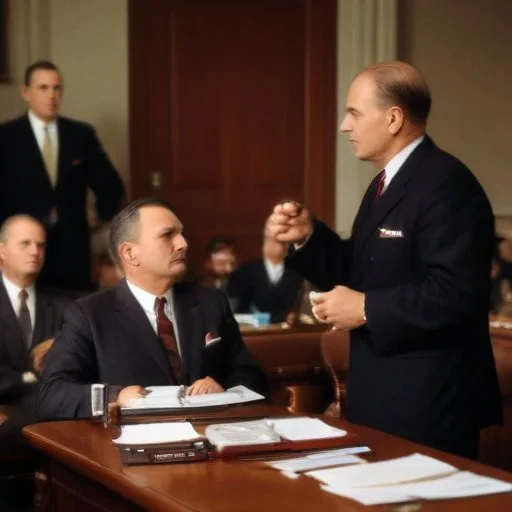
The Army-McCarthy hearings were a culmination of McCarthy's accusations of communist infiltration within the U.S. Army. The senator's crusade against perceived communist threats had been ongoing since the early 1950s, with the Army-McCarthy hearings serving as a pivotal moment in the controversy.
The Army-McCarthy hearings led to a significant shift in public opinion, with many Americans beginning to question McCarthy's tactics and motives. The event marked a decline in McCarthy's popularity and influence, ultimately contributing to his censure by the U.S. Senate in 1954.
The Welch-McCarthy confrontation has become an cultural touchstone, symbolizing the intersection of politics and morality. The event has been referenced and parodied in popular culture, including films, television shows, and literature.
The Army-McCarthy hearings and Welch's rebuke of McCarthy sparked intense controversy, with many Americans divided on the senator's actions and motives. The event highlighted concerns about government overreach, McCarthyism, and the Red Scare.
"You've done enough. Have you no sense of decency, sir, at long last? Have you left no sense of decency?" - Joseph N. Welch
The Army-McCarthy hearings share parallels with other significant events in American history, including the Red Scare, the House Un-American Activities Committee (HUAC), and the Watergate scandal, all of which involved concerns about government abuse of power and communist infiltration.
Welch's personal account of the event, as documented in his memoirs, provides a unique perspective on the emotions and motivations behind his famous rebuke.
The Army-McCarthy hearings and Welch's confrontation with McCarthy had a lasting impact on American politics, influencing the development of civil liberties and government accountability.
Welch's courageous stand against McCarthy earned him widespread recognition, including the Peabody Award for his role in exposing the dangers of McCarthyism.
The Army-McCarthy hearings have become an integral part of American history curricula, serving as a teachable moment on the importance of civil liberties, government accountability, and the dangers of McCarthyism.
| Date | Event |
|---|---|
| February 1954 | McCarthy begins accusing the U.S. Army of hiding communist spies |
| March 1954 | Army-McCarthy hearings commence |
| June 9, 1954 | Welch delivers his famous rebuke to McCarthy |
| June 17, 1954 | Army-McCarthy hearings conclude |
Welch's commitment to justice and moral principles was shaped by his upbringing in a small town in Iowa. His father, a lawyer himself, instilled in him a strong sense of right and wrong, which would later guide his actions during the Army-McCarthy hearings.
As a young lawyer, Welch worked tirelessly to defend the rights of the underprivileged, earning him a reputation as a champion of social justice. His dedication to his craft and his unwavering sense of morality made him the perfect candidate to take on McCarthy's witch hunt.
The televised confrontation between Welch and McCarthy marked a turning point in American cultural history, as it brought the controversy surrounding McCarthyism into the living rooms of millions of Americans.
The event has since been referenced and parodied in popular culture, from films like "Good Night, and Good Luck" to TV shows like "The Simpsons". The phrase "Have you no sense of decency, sir?" has become a rallying cry against government overreach and a symbol of moral courage.
The transcripts of the Army-McCarthy hearings provide a unique window into the tensions and Drama of the Cold War era. They reveal the machinations of McCarthy's tactics and the courage of Welch and other witnesses who dared to challenge him.
Archival materials, including photographs and newsreel footage, offer a visual record of the event, allowing us to relive the drama and tension of those fateful days.

The Army-McCarthy hearings have been subject to varying interpretations by historians over the years. Some have viewed the event as a triumph of democracy, while others have seen it as a cautionary tale about the dangers of government overreach.
Recent scholarship has sought to reexamine the role of Welch and other key players in the hearings, highlighting the complexities and nuances of the era.
The confrontation between Welch and McCarthy shares parallels with other significant events in American history, including the HUAC hearings and the Watergate scandal.
Comparative analysis reveals that these events share common themes, such as concerns about government abuse of power and the tension between national security and individual freedoms.