


"The death of Stalin was a tremendous event, not only for the Soviet people, but for the entire world." - Nikita Khrushchev
Vasily Stalin, Stalin's son, recalled the final days of his father's life: "I remember the smell of death in the room, the way his eyes seemed to sink into his skull. It was as if the life was draining out of him, and there was nothing we could do to stop it."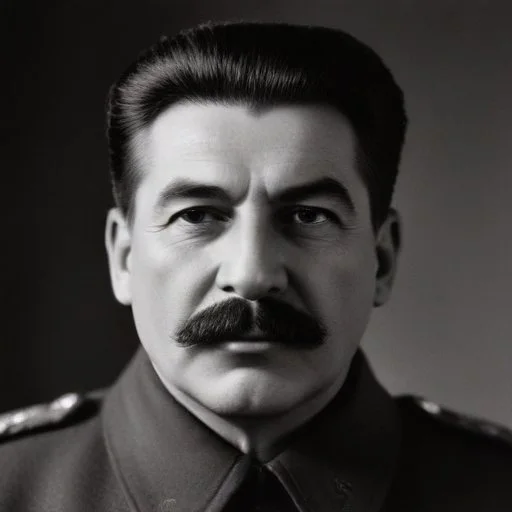
Lavrentiy Beria, Stalin's ruthless head of the secret police, was a master of terror and intimidation. Born in 1899 in Georgia, Beria rose through the ranks of the Soviet security apparatus, earning a reputation for brutality and cunning. As Stalin's trusted lieutenant, Beria was responsible for purging the Soviet leadership of perceived enemies, and his secret police terrorized the Soviet population. Beria's downfall came after Stalin's death, when Nikita Khrushchev orchestrated his downfall and eventual execution.
Beria's reign of terror was marked by a series of bloody purges, forced labor camps, and torture. He was notorious for his sadistic treatment of prisoners, and his office was said to be adorned with torture devices. Despite his monstrous reputation, Beria was also a skilled politician, able to navigate the treacherous waters of Soviet politics with ease.
After Stalin's death, Beria attempted to seize power, but Khrushchev outmaneuvered him, and Beria was arrested and executed in 1953. Beria's legacy as a symbol of Stalinist terror continues to haunt the Russian consciousness, a reminder of the horrors of the Soviet regime.
The death of Stalin marked the beginning of a cultural thaw in the Soviet Union. For decades, the arts had been stifled by Stalin's regime, with artists forced to conform to the strictures of socialist realism. With Stalin gone, a new generation of Soviet artists, writers, and musicians began to experiment with new forms and styles.
The cultural thaw was spearheaded by the likes of novelist Vladimir Dudintsev, poet Yevgeny Yevtushenko, and film director Sergei Paradjanov. These artists pushed the boundaries of what was acceptable, tackling themes of individuality, freedom, and creativity. The cultural thaw was not limited to the arts, as Soviet citizens began to question the authority of their leaders and demand greater freedom and autonomy.
The cultural thaw was a significant turning point in Soviet history, marking a shift away from the dogmatic certainties of Stalinism towards a more nuanced and complex understanding of the world. It paved the way for the Soviet Union's eventual collapse, as the once-monolithic regime began to fragment and dissolve.
Stalin's death in 1953 marked a significant turning point in the history of authoritarian regimes. As one of the most feared and reviled leaders of the 20th century, Stalin's demise sent shockwaves around the world. The fall of Stalin was followed by the downfall of other authoritarian leaders, including Adolf Hitler, Muammar Gaddafi, and Saddam Hussein.
These leaders' regimes shared certain characteristics, including a cult of personality, a centralized command economy, and a disregard for human rights. Their downfalls were often marked by a mixture of internal power struggles and external pressures, as their regimes became increasingly isolated and vulnerable.
The comparative analysis of Stalin's death and the fall of other authoritarian leaders highlights the fragility of these regimes, which often rely on a single individual's charisma and authority. When that individual falls, the regime is often left vulnerable to collapse, revealing the underlying weaknesses and contradictions that had been papered over by repression and propaganda.
Stalin's death has been the subject of intense historiographical debate, with scholars disagreeing on the significance and impact of his passing. Some historians, such as Robert Service, have seen Stalin's death as a watershed moment in Soviet history, marking the beginning of a new era of reform and liberalization.
Others, like Orlando Figes, have argued that Stalin's death was merely a pause in the Soviet Union's ongoing trajectory, with the ruling elite simply adapting to new circumstances while maintaining their grip on power. Still, others, such as Sheila Fitzpatrick, have focused on the cultural and social implications of Stalin's death, highlighting the ways in which it marked a shift in the Soviet Union's cultural and social landscape.
These differing perspectives on Stalin's death reflect the complexities and nuances of Soviet history, highlighting the need for a more nuanced understanding of this pivotal event.
Stalin's death occurred at a critical juncture in the Cold War, as the Soviet Union and the United States engaged in a global struggle for influence and power. The Korean War had ended just a year earlier, and the Eisenhower administration was pursuing a policy of containment towards the Soviet Union.
In this context, Stalin's death marked a significant turning point, as the Soviet Union began to reassess its foreign policy priorities. The new leadership, led by Nikita Khrushchev, sought to reduce tensions with the West, while maintaining Soviet influence in Eastern Europe and the Third World.
The geopolitics of Stalin's death also had significant implications for the Soviet Union's relations with its Eastern European allies, as the region began to experience a period of relative liberalization and relaxation. The death of Stalin marked a significant shift in the global balance of power, as the Soviet Union adapted to a new era of international relations.