


In 1975, Spain bid farewell to an era of authoritarian rule as Francisco Franco, the infamous dictator, passed away, marking the end of nearly four decades of iron-fisted control. As the curtains closed on Franco's regime, a new chapter unfolded with the declaration of Juan Carlos, the 37-year-old grandson of Spain's former king, Alfonso XIII, as the new King of Spain.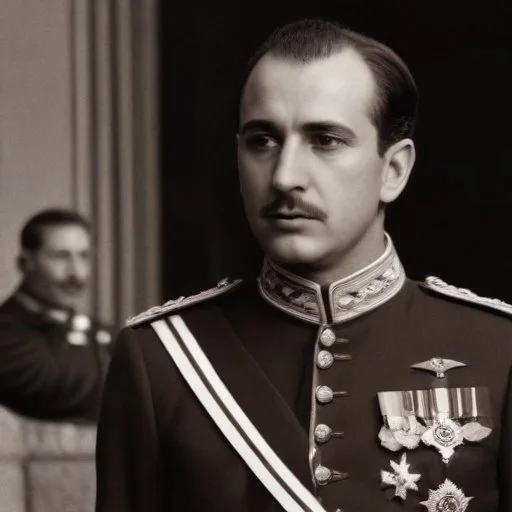
The transition from dictatorship to democracy was a delicate and complex process, but Juan Carlos was determined to steer Spain towards reform and moderation. As he took the throne, he vowed to leave behind Franco's repressive legacy and embark on a path of modernization and democratization.
Juan Carlos' ascension to the throne marked a significant shift in Spain's politics. He surrounded himself with reform-minded advisors and worked to dismantle the institutional framework of Franco's regime. One of his earliest moves was to appoint Adolfo Suárez as Prime Minister, who shared his vision for a democratic Spain.
The new government set out to revise the Spanish Constitution, which had been in place since 1966. The revised Constitution, adopted in 1978, enshrined democratic principles, guaranteed human rights, and established a parliamentary monarchy.
Juan Carlos' commitment to democracy was put to the test in 1981 when a group of military officers attempted a coup. The King's swift response, in which he condemned the coup and rallied the people, ensured the triumph of democracy over authoritarianism.
The following years saw significant reforms, including the decentralization of power, the recognition of regional autonomy, and the establishment of an independent judiciary. These changes paved the way for Spain's integration into the European Community and its transformation into a modern, democratic state.
Juan Carlos' reign, which spanned nearly four decades, left an indelible mark on Spanish history. His courage and vision played a crucial role in Spain's transition to democracy, earning him the respect and admiration of the Spanish people.
Today, as Spain looks back on its journey, it is clear that Juan Carlos' declaration as King marked a turning point in the country's history. His commitment to reform and democracy paved the way for a brighter future, one in which Spain has become a beacon of hope and freedom for generations to come.
"I swear to fulfill faithfully the duties of my office, to preserve the unity and independence of Spain, and to respect the Constitution and the laws."
— Juan Carlos, on his coronation day, November 27, 1975
The transition to democracy in Spain was not without its challenges. In the early years of Juan Carlos' reign, the country was plagued by political unrest, economic instability, and social turmoil. However, the King remained committed to his vision of a modern, democratic Spain.
One of the most significant hurdles was the need to address the legacy of Franco's regime. The dictator's reign had left deep scars, and many Spaniards were eager for justice and accountability. Juan Carlos navigated this complex landscape with care, establishing a commission to investigate human rights abuses and provide reparations to victims.
Meanwhile, the King also worked to rebuild relationships with the international community. Spain had been isolated during Franco's rule, and Juan Carlos was determined to re-establish ties with European nations and the United States. This effort culminated in Spain's admission to the European Community in 1986, a major milestone in its integration into the European Union.

Adolfo Suárez, Juan Carlos' appointed Prime Minister, played a crucial role in Spain's transition to democracy. A skilled politician with a talent for compromise, Suárez navigated the complex web of political interests and factions to shepherd through key reforms.
Born in 1932, Suárez had risen through the ranks of Franco's regime, but he had also secretly worked to undermine the dictator's authority. This unique position allowed him to build bridges between the old regime and the emerging democratic forces.
Suárez' leadership was instrumental in drafting the revised Constitution of 1978, which enshrined democratic principles and human rights. His commitment to democracy and his ability to build consensus earned him widespread respect, both in Spain and abroad.
The transition to democracy in Spain can be compared to other countries that have undergone similar transformations. One notable example is Portugal, which underwent a similar transition in the 1970s.
Like Spain, Portugal had been ruled by an authoritarian regime, and its transition was marked by similar challenges and struggles. However, the Portuguese experience was distinct in several key ways.
While Spain had a monarch to provide stability and legitimacy, Portugal had no monarch to anchor the transition. Instead, the country relied on a provisional government and a series of politicians who worked to establish democratic institutions.
Juan Carlos' commitment to democracy was rooted in a deep philosophical conviction. The King believed that democracy was not only the best way to ensure political stability but also the most effective way to promote economic growth and social justice.
This conviction was shaped by his upbringing and education, which emphasized the importance of individual liberty and human rights. The King's exposure to European monarchies and his experiences as a young man also influenced his views on democracy and its role in modern society.
The transition to democracy in Spain took place against the backdrop of a shifting global landscape. The 1970s were marked by significant geopolitical changes, including the decline of authoritarian regimes in Southern Europe and the rise of democracy in Latin America.
In this context, Spain's transition was seen as a key test of whether democracy could be successfully established in a country with a long history of authoritarian rule. The success of Spain's transition had significant implications for other countries in the region, and it helped to pave the way for further democratization in Europe and beyond.