


On a fateful day in 1879, Karl Benz, a brilliant engineer, filed for a patent on his groundbreaking twostroke gas engine, marking a significant milestone in the evolution of internal combustion engines. This pioneering invention, crafted in his Mannheim workshop, would soon power the world's first gasoline-powered automobile, reshaping the course of modern transportation.
In the midst of the Industrial Revolution, the late 19th century witnessed a surge in innovative experiments, driven by the quest for efficiency and precision. The era saw the rise of visionary engineers, and Karl Benz was one of them. Born in 1844, Benz grew up in a Germany undergoing rapid industrialization, which sparked his fascination with machinery and mechanics.
Benz's twostroke gas engine was a stroke of genius, combining the principles of internal combustion and mechanical engineering to create a lightweight, efficient, and reliable power source. The engine's design featured a unique two-stroke cycle, where the intake and exhaust strokes were combined, resulting in a more compact and powerful engine.
Karl Benz was not only a brilliant engineer but also a passionate innovator, driven by his vision of a revolutionary transportation system. His relentless pursuit of perfection and innovative approach paved the way for the development of modern automobiles. Benz's dedication to his craft earned him the title of "Father of the Automobile."
The twostroke gas engine's patent marked the beginning of a new era in modern transportation. The engine's reliability and efficiency paved the way for the development of automobiles, which would soon replace horse-drawn carriages as the primary mode of transportation. The impact of Benz's invention was profound, transforming the way people lived, worked, and traveled.
Initially, Benz's innovative design was met with skepticism, with many doubting the feasibility of his engine. However, through perseverance and determination, Benz proved his critics wrong, demonstrating the engine's capabilities and convincing the public of its potential.
"The love of inventing has never left me, and I continue to work on new ideas, even though I'm 75 years old." - Karl Benz
Benz's pioneering work on internal combustion engines paved the way for the development of modern automobiles, inspiring a new generation of innovators and engineers. His legacy continues to influence the automotive industry, with his name synonymous with quality, innovation, and reliability.
Karl Benz was honored with numerous awards and accolades for his contributions to the field of mechanical engineering and transportation. His legacy continues to inspire future generations, with his name etched in the annals of history as a true pioneer and innovator.
Karl Benz's revolutionary twostroke gas engine redefined the boundaries of mechanical engineering, paving the way for a new era of modern transportation. His pioneering spirit, innovative approach, and dedication to perfection continue to inspire generations, cementing his place as one of the most influential engineers of the 19th century.
Karl Benz's invention of the twostroke gas engine not only revolutionized the automotive industry but also had a significant impact on the development of other industries. The engine's design and functionality paved the way for the creation of more efficient and powerful engines, which in turn fueled the growth of industries such as aviation, marine, and agriculture.
The twostroke engine's compact design and lightweight construction made it an ideal power source for various applications, including motorcycles, portable generators, and even small aircraft. The engine's versatility and reliability enabled it to power a wide range of machines, further increasing its impact on various industries.
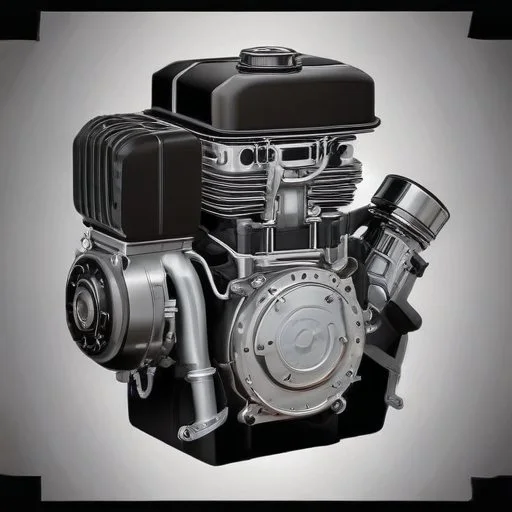
The advent of the gasoline-powered automobile, made possible by Karl Benz's twostroke gas engine, had a profound impact on urban planning and development. As automobile ownership became more widespread, cities began to sprawl, and new urban landscapes emerged.
The rise of the automobile also led to changes in social dynamics, as people were no longer limited by distance or public transportation. The automobile enabled individuals to travel greater distances, connecting them to new places, people, and opportunities.
The introduction of the gasoline-powered automobile brought about significant social changes, particularly in the realm of gender roles. With the automobile, women gained greater independence and mobility, allowing them to participate more fully in the workforce and engage in social activities outside the home.
The automobile also became a status symbol, reflecting the owner's wealth and social standing. As automobile ownership became more widespread, social classes became more defined, and the automobile became a powerful symbol of middle-class identity.
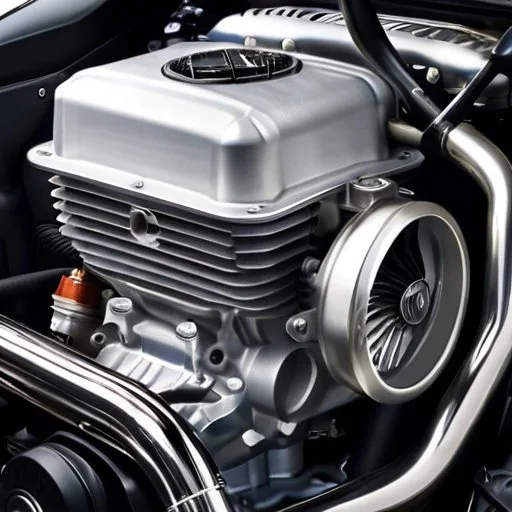
The economic impact of Karl Benz's twostroke gas engine was far-reaching, driving the growth of industries and creating new job opportunities. The engine's increased efficiency and power enabled industries to produce goods more quickly and cheaply, leading to increased productivity and economic growth.
The rise of the automobile industry also led to the development of ancillary industries, such as road construction, tourism, and services related to automobile ownership. The industry's growth created new employment opportunities, stimulating local economies and contributing to national growth.
Bertha Benz: The Unsung Heroine of the Automobile
Bertha Benz, Karl Benz's wife, played a crucial role in the development and promotion of the first gasoline-powered automobile. A strong supporter of her husband's work, Bertha Benz often took the automobile on long drives to demonstrate its capabilities and reliability.
Bertha's determination and resourcefulness helped to prove the practicality of the automobile, paving the way for its widespread adoption. Her contributions to the development of the automobile industry have been largely overlooked, but her legacy as a pioneering female figure in the history of transportation remains.