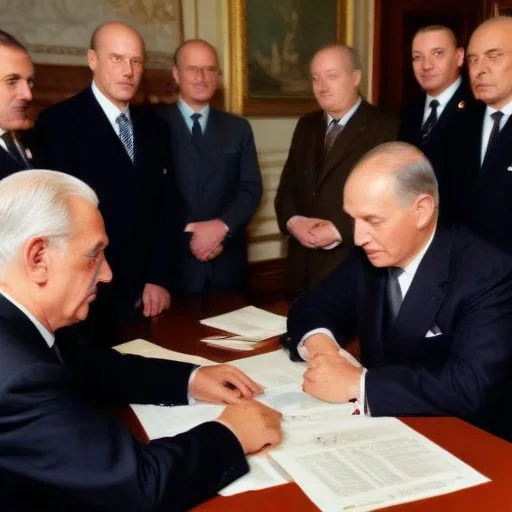
Fifteen nations sign pact to outlaw war
In a move to bring peace to a world still reeling from the devastation of World War I, the Kellogg-Briand Pact was signed by fifteen nations on August 27, 1928, with the bold aim of outlawing war as an instrument of national policy. This groundbreaking agreement, named after its architects, US Secretary of State Frank Kellogg and French Foreign Minister Aristide Briand, marked a pivotal moment in international relations. By the time the pact was fully ratified, a remarkable sixty-one nations had put their names to the historic document, demonstrating a collective commitment to finding alternatives to armed conflict. Though the pact's ideals were sadly not enough to prevent the outbreak of World War II, its spirit of cooperation and pursuit of peace continues to inspire diplomacy to this day.