King George III declares American colonies in rebellion
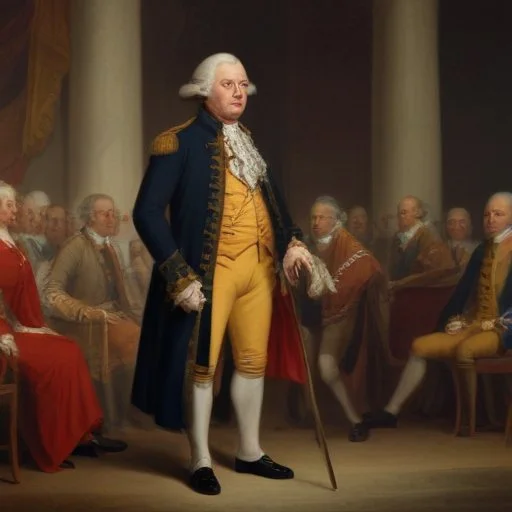
King George III, determined to quell the growing unrest in the American colonies, took a bold stance in his speech from the throne at the opening of Parliament, explicitly declaring the Thirteen Colonies to be in a state of rebellion. With his Proclamation of Rebellion, George III refused to acknowledge the colonies' grievances, instead labeling their actions as treasonous and seditious. This pivotal moment marked a point of no return, solidifying the divide between the British monarchy and the American colonies, paving the way for the American Revolution.
The Fateful Speech that Ignited a Revolution
King George III's speech from the throne at the opening of Parliament in 1775 is a pivotal moment in history, marking the point of no return in the brewing conflict between the British monarchy and the Thirteen Colonies. In this speech, George III boldly declared the colonies to be in a state of rebellion, a move that would pave the way for the American Revolution.
A Divisive Decision
The Proclamation of Rebellion was a deliberate choice by King George III to refuse acknowledgment of the colonies' grievances, instead labeling their actions as treasonous and seditious. This stance not only outraged the colonists but also cemented the divide between the British monarchy and the American people.
A Historical Background of Tensions
The roots of the rebellion can be traced back to the mid-1700s, when the British government began implementing a series of taxes on the colonies without their consent. The Sugar Act, Stamp Act, and Townshend Acts sparked widespread protests, boycotts, and petitions, as the colonists felt their rights as British subjects were being violated.
The Key Players
- King George III: The British monarch who delivered the speech from the throne, solidifying his stance against the colonies.
- Patrick Henry: A vocal advocate for colonial rights, famous for his "Give me liberty or give me death" speech.
- John Adams: A leading figure in the American Revolution, instrumental in drafting the Declaration of Independence.
A Timeline of Escalation
- 1765: The Stamp Act is passed, prompting widespread protests and boycotts.
- 1770: Tensions ease with the repeal of the Stamp Act, but the Townshend Acts spark new outrage.
- 1774: The Intolerable Acts further restrict colonial rights, leading to the formation of the First Continental Congress.
- 1775: King George III delivers his speech from the throne, declaring the colonies to be in a state of rebellion.
Major Outcomes and Impacts
The Proclamation of Rebellion had far-reaching consequences, including:
- The American Revolution: The colonies' decision to declare independence from Britain, leading to a long and bloody war.
- Formation of the United States: The eventual creation of a new nation, founded on the principles of democracy and self-governance.
- Redrawing of Global Politics: The American Revolution inspired similar movements across the world, reshaping the global political landscape.
Cultural and Social Influences
The Proclamation of Rebellion had a profound impact on the cultural and social fabric of the colonies. It:
- Galvanized Patriot sentiment, fostering a sense of unity and shared purpose among the colonists.
- Inspired literary and artistic works, such as Thomas Paine's "Common Sense" and patriotic songs like "Yankee Doodle."
- Shaped the identity of the emerging American nation, emphasizing values like liberty, democracy, and self-determination.
Quotes and Memorable Sayings
- "Give me liberty or give me death!" – Patrick Henry's impassioned cry for independence.
- "We must all hang together, or assuredly we shall all hang separately." – Benjamin Franklin's warning on the importance of unity among the colonies.
In the end, King George III's speech from the throne marked a turning point in history, propelling the Thirteen Colonies toward a birth of a new nation. As we reflect on this pivotal moment, we are reminded of the power of resilience, determination, and the unyielding pursuit of freedom.
Full Character Review
Patrick Henry: The Voice of Liberty
Patrick Henry, a vocal advocate for colonial rights, played a crucial role in shaping the American Revolution. Born in 1736, Henry was a skilled orator and lawyer who became famous for his "Give me liberty or give me death" speech, which resonated with the colonists and cemented his status as a hero of the Revolution.
Henry's passion for liberty and justice was deeply rooted in his Christian beliefs and his strong sense of morality. He was a strong advocate for the rights of the common man and believed that the British government was infringing upon the colonists' natural rights.
Henry's leadership and eloquence earned him a seat in the Virginia House of Burgesses, where he continued to fight for colonial rights and played a key role in organizing the First Continental Congress.

In-Depth Cultural Influence Study
The Proclamation of Rebellion: A Cultural Catalyst
The Proclamation of Rebellion had a profound impact on the cultural and social fabric of the colonies. It galvanized Patriot sentiment, fostering a sense of unity and shared purpose among the colonists.
The Proclamation also inspired a wave of literary and artistic works, including Thomas Paine's "Common Sense" and patriotic songs like "Yankee Doodle." These works not only reflected the sentiment of the colonists but also helped to shape the identity of the emerging American nation.
The Proclamation also had a significant impact on the role of women in the Revolution. As men took up arms, women took on new responsibilities and became more involved in the war effort, marking a significant shift in traditional gender roles.
Comprehensive Political Review
A Shift in Power: The Rise of Constitutional Monarchy
The Proclamation of Rebellion marked a significant shift in the balance of power between the British monarchy and the Thirteen Colonies. The colonies' rejection of the Proclamation and their subsequent declaration of independence signified a rejection of the absolute authority of the British monarchy.
In its place, the colonies adopted a constitutional monarchy, with a system of government that limited the power of the monarch and established the principle of representative democracy.
This shift in power had far-reaching implications, not only for the American colonies but also for the broader British Empire and the development of modern democracy.

Geopolitical Overview
The Global Context: A Web of Colonial Empires
The Proclamation of Rebellion and the subsequent American Revolution took place within the broader context of colonial empires vying for power and influence.
The British Empire, with its vast territorial holdings and complex system of governance, was not the only colonial power active in the 18th century. Other European powers, such as France, Spain, and the Netherlands, also maintained extensive colonial empires.
The American Revolution had significant implications for these empires, as it set a precedent for colonial independence and self-governance. The Revolution also marked a turning point in the global balance of power, as the United States emerged as a new nation and a potential rival to the established colonial powers.
Historiographical Review
Historians' Perspectives: Debating the Causes of the Revolution
Historians have long debated the causes of the American Revolution, with some arguing that it was primarily a struggle for independence and self-governance, while others see it as a conflict driven by economic and social factors.
Some historians, such as Bernard Bailyn, have emphasized the role of ideology and the influence of Enlightenment thought on the Revolution. Others, such as Gordon Wood, have argued that the Revolution was driven by more practical concerns, such as the desire for economic independence and the need to protect individual liberties.
Despite these differing perspectives, historians agree that the Proclamation of Rebellion was a pivotal moment in the lead-up to the Revolution, as it marked a turning point in the crisis and set the stage for the colonies' eventual declaration of independence.


