


In a groundbreaking moment that would shape the course of history, King John of England begrudgingly affixed his royal seal to the Magna Carta, a revolutionary document that limited his absolute power and established the rule of law. For the first time, a monarch was held accountable to the people, and the seeds of democracy were sown.
Medieval England was a tumultuous landscape, with the king's extravagant spending and abuse of power sparking widespread discontent. The nobility, tired of John's tyrannical rule, began to organize a rebellion. The Church, once a steadfast ally, also turned against the king, weary of his interference in ecclesiastical matters.
In June 1215, a group of influential barons, led by Stephen Langton, Archbishop of Canterbury, converged on Runnymede, a lush meadow in Surrey. They presented King John with an ultimatum: sign the Magna Carta, a charter of liberties that protected the rights of the nobility, the Church, and commoners, or face the consequences of civil war.
The Magna Carta, comprising 63 clauses, was a sweeping reform document that curtailed the king's authority. It established due process, protected the Church's rights, and safeguarded the privileges of nobles and commoners alike. The most significant provision, Clause 39, stated that "no free man shall be seized or imprisoned, or stripped of his rights or possessions, or outlawed or exiled, nor will we proceed with force against him, except by the lawful judgement of his equals or by the law of the land."
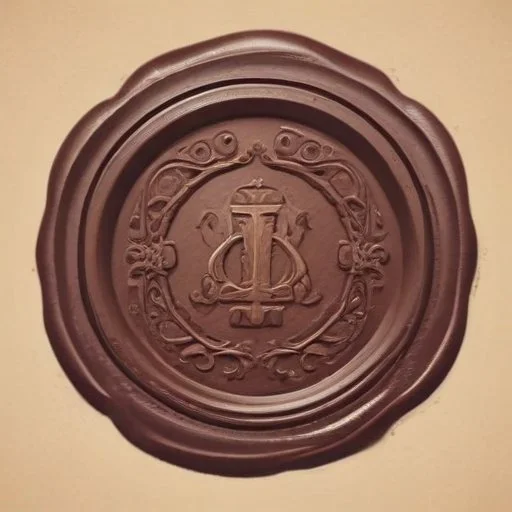
King John, realizing his power was waning, reluctantly appended his seal to the Magna Carta on June 15, 1215. The document was sealed, but the king's intentions were far from genuine. He had no intention of honoring the charter's provisions, and soon sought to have it annulled by the Pope.
Despite King John's duplicitous nature, the Magna Carta endured, influencing the development of constitutional law and democracy worldwide. It has been revered as a symbol of liberty, inspiring generations of reformers, from the American Founding Fathers to anti-apartheid activists in South Africa.
In conclusion, King John's reluctant seal on the Magna Carta marked a pivotal moment in human history, sowing the seeds of democracy and limiting the power of monarchs. This ancient document continues to inspire and influence nations, a testament to the enduring power of the human quest for freedom and justice.
The significance of the Magna Carta lies not only in its content, but also in its historical context. The document emerged during a time of great upheaval in medieval Europe, when the nobility and the Church were increasingly assertive in their demands for power and influence.
Scholars have argued that the Magna Carta was a product of this tumultuous environment, reflecting the tensions between the monarch and the nobility, as well as the growing influence of the Church.
Furthermore, the Magna Carta can be seen as a precursor to later constitutional documents, such as the English Bill of Rights and the US Constitution. Its emphasis on due process and the rule of law has had a lasting impact on the development of democratic institutions.
Stephen Langton, Archbishop of Canterbury, played a crucial role in the creation and presentation of the Magna Carta. A skilled diplomat and advocate for the rights of the nobility and the Church, Langton was instrumental in bringing together the rebel barons and negotiating with King John.
Langton's experiences as a canon lawyer and his knowledge of ecclesiastical law likely influenced the document's emphasis on due process and the protection of individual rights.
Despite his key role in the Magna Carta's creation, Langton's subsequent career was marked by controversy and exile. Nevertheless, his legacy as a champion of liberty and justice has endured.
The Magna Carta's influence on art and literature is often overlooked, but it has had a profound impact on Western cultural heritage. The document's emphasis on individual rights and freedoms has inspired countless works of art, literature, and music.
From Shakespeare's depiction of King John in his play of the same name, to the art of the Pre-Raphaelite Brotherhood, which often featured Magna Carta-inspired themes, the document's cultural significance is undeniable.
In modern times, the Magna Carta has continued to inspire artistic expression, with works such as the 2015 opera King John and the Magna Carta sculpture at Runnymede Meadows.

The original Magna Carta was written on a single sheet of vellum, measuring approximately 23 inches by 17 inches.
The document's text is written in Latin, with a distinctive medieval script that reflects the scribes' expertise.
Four surviving copies of the original Magna Carta remain, with one each housed at Salisbury Cathedral, Lincoln Cathedral, and the British Library, and a fourth held at Hereford Cathedral.
The Magna Carta's provisions had significant social implications, particularly for women and the lower classes.
The document's protection of individual rights and due process paved the way for later social reforms, such as the abolition of feudalism and the expansion of suffrage.
In modern times, the Magna Carta's legacy continues to inspire social and political activism, with its emphasis on human rights and dignity serving as a rallying cry for marginalized communities.