


The Kingdom of Dublin, a Viking stronghold for centuries, crumbled beneath the siege of Norman invaders, marking a pivotal moment in Irish history. This significant event signaled the end of Viking rule and the dawn of Norman influence on the Emerald Isle.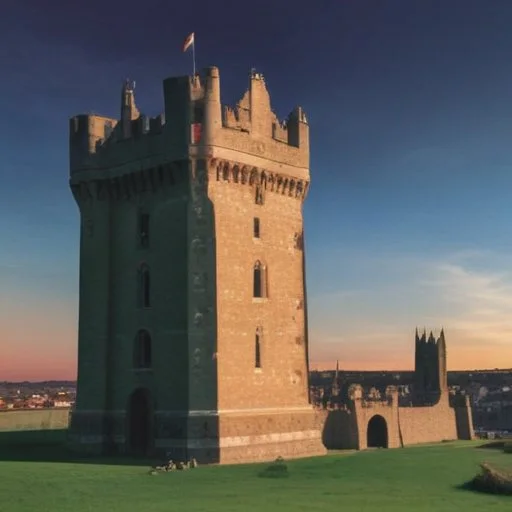
In the 12th century, the Kingdom of Dublin was the epicenter of Viking power in Ireland. The Norsemen had established a thriving trade hub, with Dublin serving as a crucial link between Scandinavia and the British Isles. However, the Vikings' grip on power was beginning to loosen, and the Norman Conquest of England in 1066 would soon set in motion a chain of events that would forever alter the course of Irish history.
At the vanguard of the Norman invasion was Strongbow, Earl of Pembroke, a skilled military commander with a reputation for ruthlessness. Strongbow was aided by his allies, including Dermot MacMurrough, the deposed King of Leinster, who had sought Norman assistance to reclaim his throne. This unlikely alliance would prove decisive in the fate of the Kingdom of Dublin.
The Norman conquest of Dublin had far-reaching consequences for Ireland. The Viking era was brought to a close, and the Normans introduced feudalism, chivalry, and Roman Catholicism to the Emerald Isle. The Norman influence would shape Irish culture, language, and politics for centuries to come.
The Norman conquest also led to significant cultural and social changes in Ireland. The introduction of Norman French and Latin further diversified the Irish language, while the construction of castles, churches, and monasteries transformed the Irish landscape. The Norman aristocracy also intermarried with the native Irish, fostering a new ruling class.
The Norman conquest of Dublin remains a contentious topic in Irish historical discourse. While some view it as a necessary step towards modernization and European integration, others see it as a violent imposition of foreign rule, erasing Ireland's unique cultural identity.
According to the 12th-century Irish chronicler, Giraldus Cambrensis, Strongbow's arrival in Dublin was met with a mix of awe and trepidation by the native Irish. Cambrensis wrote that the Norman invaders were "tall, fair-haired, and of imposing stature," striking fear into the hearts of the Dubliners.
The Norman conquest of Dublin bears striking similarities to the Norman Conquest of England in 1066. Both events saw the introduction of feudalism, the imposition of foreign rule, and the eventual assimilation of the native population.
The fall of the Kingdom of Dublin to Norman invaders marks a watershed moment in Irish history, setting in motion a chain of events that would shape the course of Ireland's development for centuries to come.
Dermot MacMurrough, the deposed King of Leinster, played a crucial role in the Norman invasion of Ireland. His thirst for power and revenge drove him to seek military aid from the Normans, sparking a chain of events that would change the course of Irish history.
MacMurrough's legacy is complex and multifaceted. While some view him as a traitor to the Irish people, others see him as a shrewd politician who recognized the need for foreign aid to reclaim his throne.
Little is known about MacMurrough's early life, but his later years were marked by a series of power struggles and alliances with rival Irish kingdoms.
The Norman Conquest of Dublin introduced a wealth of new cultural influences to Ireland, including language, architecture, and art. The fusion of Norman and Irish cultures resulted in a unique blend of styles, as seen in the beautiful Anglo-Norman castles that dot the Irish landscape.
The introduction of Norman French and Latin had a profound impact on the Irish language, leading to the development of Middle Irish and eventually Modern Irish.
The Norman Conquest also led to the establishment of universities and monasteries, which became centers of learning and cultural exchange.The Norman Conquest of Dublin took place against a backdrop of shifting alliances and power struggles in medieval Europe. The Norman Conquest of England in 1066 had established the Normans as a dominant force in the region, and their expansion into Ireland was a natural extension of their territorial ambitions.
The Viking Kingdom of Dublin, situated strategically on the Irish Sea, was a vital trade hub that connected Scandinavia, Britain, and the Continent. Control of Dublin was essential for any power seeking to dominate the region.
The Norman Conquest of Dublin marked the beginning of a new era of geopolitical competition in the British Isles, as rival powers vied for control of the region.
The Norman Conquest of Dublin had a profound impact on the Irish economy, introducing new trade networks, agricultural practices, and feudal systems of land ownership. The establishment of a strong central authority led to increased stability and security, attracting merchants and traders from across Europe.
The introduction of primogeniture, where the eldest son inherits the family title and lands, led to the consolidation of landholdings and the emergence of a new aristocracy.
The Norman Conquest also led to the development of a new urban centers, as Dublin and other towns became hubs of commerce and industry.The Norman Conquest of Dublin led to a fundamental shift in the political landscape of Ireland, as the old Viking kingdoms gave way to a new system of feudal lordships and fiefs. The Normans introduced a strong central authority, which gradually assimilated the native Irish kingdoms.
The conquest also led to the emergence of a new ruling class, as Norman lords and vassals established themselves as the dominant power in Ireland.
The Norman Conquest marked the beginning of a new era of political competition and realignment in Ireland, as rival factions and interest groups vied for power and influence.