


Iraq's declaration of independence on October 3, 1932, marked a watershed moment in the country's history, casting off the yoke of British colonialism and embarking on a journey of self-governance. This hard-won freedom was the culmination of years of struggle and negotiation, cementing Iraq's status as a sovereign nation.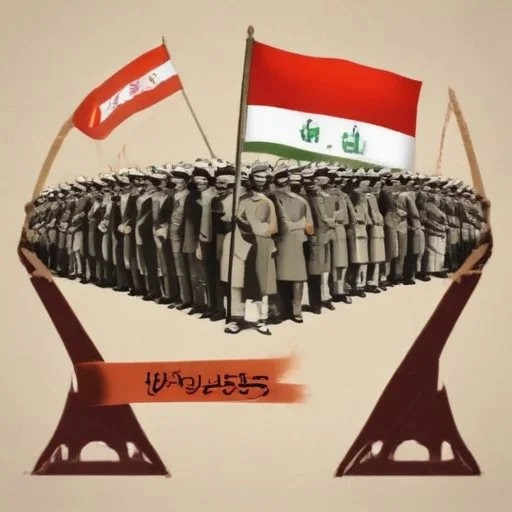
The roots of Iraq's independence movement can be traced back to the aftermath of World War I, when the Ottoman Empire's defeat led to the imposition of British mandate over the region. The British, keen to expand their empire, exploited Iraq's rich oil reserves, sparking widespread resentment among the native population. The subsequent uprisings and rebellions, including the 1920 Iraqi Revolt, laid the groundwork for the country's eventual independence.
The Anglo-Iraqi Treaty of 1930, signed on June 30, 1930, was a critical stepping stone towards Iraqi independence. The treaty established Iraq as a fully sovereign state, albeit with certain concessions to British influence. King Faisal I, a visionary leader, played a pivotal role in negotiating the terms of the treaty, which paved the way for Iraq's eventual independence.
The road to independence was paved by a cast of influential characters, including:
Iraq's independence sparked a cultural renaissance, as the country embarked on a journey of nation-building. The newfound freedom kindled a sense of national pride, with the revival of traditional arts, literature, and music. The establishment of a national education system and the promotion of Arabic as the official language further solidified Iraq's cultural identity.
Iraq's independence was not without its challenges. The country faced criticism from neighboring nations, who viewed the Anglo-Iraqi Treaty as a British ploy to maintain its influence in the region. Internally, there were concerns about the treaty's concessions to British interests, which some saw as undermining Iraq's sovereignty.
Iraq's independence had far-reaching implications for the region and the world:
One Iraqi citizen, recalling the day of independence, remarked:
"I remember the streets of Baghdad overflowing with people, waving flags and chanting slogans. It was a day of unbridled joy, a sense of pride that we had never felt before. We knew that our country was finally free, and that we were masters of our own destiny."
Iraq's independence served as a beacon of hope for other nations struggling under colonial rule. The country's determination and resilience in the face of adversity inspired a generation of Arab nationalists, who sought to challenge the status quo and forge their own paths towards independence.
Iraq's declaration of independence in 1932 marked a triumphant moment in the country's history, a testament to the power of perseverance and the human spirit. As the nation looks to the future, its legacy of freedom and self-determination continues to inspire generations to come.
The roots of Iraq's independence movement can be traced back to the 1920s, when the country was still under British mandate. The British, keen to exploit Iraq's oil reserves, imposed harsh economic policies that led to widespread poverty and discontent among the native population. This resentment simmered for years, eventually boiling over into open rebellion in 1920.
The 1920 Iraqi Revolt, led by tribal leaders and nationalist groups, was a key moment in the country's struggle for independence. Although the revolt was ultimately crushed by British forces, it marked a turning point in the country's history, galvanizing opposition to British rule and paving the way for future nationalist movements.

Faisal al-Dawalibi, a prominent Iraqi statesman, played a crucial role in the country's independence movement. Born in 1899, Dawalibi was a member of the Iraqi nationalist party, Al-Ahd, and was heavily involved in the country's struggle for independence. He served as the president of the Council of Ministers during the critical period leading up to independence, helping to negotiate the Anglo-Iraqi Treaty of 1930 and guiding the country through its early years of self-governance.
A skilled diplomat and politician, Dawalibi was instrumental in building relationships with neighboring countries and securing recognition for Iraq's sovereignty on the international stage. His commitment to Iraqi independence and his vision for a unified Arab nation made him a respected figure across the Middle East.
The dawn of independence in Iraq had a profound impact on the country's cultural scene. With the lifting of British restrictions, Iraqi artists, writers, and musicians were free to express themselves without fear of censorship or repression. This led to a cultural renaissance, as Iraqi creatives explored new forms of artistic expression and drew inspiration from their country's rich cultural heritage.
The establishment of a national education system and the promotion of Arabic as the official language further solidified Iraq's cultural identity. Literary figures like Muhammad Mahdi al-Jawahiri and Abdul Malik al-Thaalabi flourished in this new environment, producing works that celebrated Iraqi culture and identity.

The Anglo-Iraqi Treaty of 1930 was a masterstroke of diplomatic maneuvering by King Faisal I. By negotiating a treaty that secured British recognition of Iraqi independence, Faisal was able to outmaneuver his opponents and secure a vital victory for the Iraqi people.
Faisal's diplomatic skills were honed during years of negotiation with British officials, during which he walked a tightrope between asserting Iraqi sovereignty and avoiding British reprisals. His leadership during this critical period helped to establish Iraq as a sovereign nation, paving the way for future generations of Iraqi leaders.
The economic implications of Iraq's independence were far-reaching and profound. With control over its natural resources, Iraq was able to invest in infrastructure development, modernize its economy, and diversify its exports.
The establishment of a national bank and the introduction of a new currency, the Iraqi dinar, helped to stabilize the economy and facilitate trade with neighboring countries. Iraq's oil reserves, once exploited by British companies, were now under Iraqi control, generating revenue that fueled the country's economic growth.