


The Knesset's resolution to declare Jerusalem as the capital of Israel is a landmark event that has left an indelible mark on the nation's identity and the world's geopolitical landscape. On that fateful day, the Israeli parliament officially solidified Jerusalem's status as the country's unified capital, a decision that would spark international debate and controversy.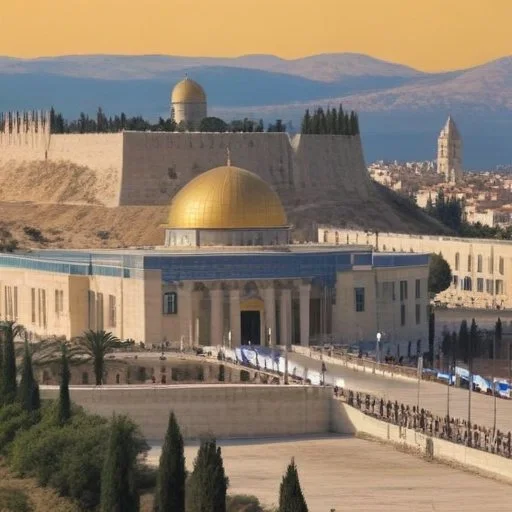
Jerusalem, a city revered by Jews, Christians, and Muslims alike, has been the epicenter of religious, cultural, and political significance for centuries. The city's rich tapestry is woven from the threads of its storied past, where ancient civilizations, empires, and dynasties have risen and fallen. For the Jewish people, Jerusalem represents the very essence of their existence, a sacred site where the Temple of Solomon once stood and where their ancestors yearned to return for centuries.
In the aftermath of the 1948 Arab-Israeli War, Jerusalem was divided between Israel and Jordan, with the city's eastern sector falling under Jordanian rule. TheArmistice Agreement of 1949 established a precarious status quo, leaving the city's future uncertain. The Knesset's decision was a bold response to the international community's reluctance to recognize Jerusalem as Israel's capital, and a testament to the nation's unwavering commitment to its emotional and historical attachment to the city.
The Knesset's declaration sparked a maelstrom of international criticism, with the United Nations condemning the move as a violation of international law. The European Union, the Soviet Union, and the Arab League were among the chorus of voices decrying the decision. Despite the backlash, Israel remained resolute in its commitment to Jerusalem, and the city has since become an integral part of the nation's identity.
The Knesset's declaration has had far-reaching implications for the city of Jerusalem, the state of Israel, and the global community. Today, Jerusalem stands as a testament to the power of determination and conviction, a beacon of hope for those seeking a unified and peaceful coexistence. As the city continues to evolve and grow, its status as the eternal capital of Israel remains an unwavering constant, a symbol of the unbreakable bond between the Jewish people and their beloved homeland.
"Jerusalem is the heart of the Jewish people, and the Jewish people are the heart of Jerusalem." – David Ben-Gurion
1948: The Arab-Israeli War ends, with Jerusalem divided between Israel and Jordan.
1949: The Armistice Agreement establishes a fragile status quo, leaving Jerusalem's future uncertain.
1950: The Knesset declares Jerusalem the capital of Israel, sparking international controversy.
1967: Israel captures East Jerusalem during the Six-Day War, reuniting the city under Israeli rule.
1980: Israel passes the Jerusalem Law, officially annexing East Jerusalem and declaring the city Israel's "complete and united" capital.
1995: The Israeli government begins a series of diplomatic efforts to promote Jerusalem's unity and status as the capital.
Today: Jerusalem remains a contested city, with the Israeli-Palestinian conflict ongoing and the city's status a subject of continued international debate.
The concept of a unified Jerusalem dates back to the 19th century, when Zionist leaders like Theodor Herzl and Ze'ev Jabotinsky advocated for the city's centrality to the Jewish people. However, it wasn't until the 1940s that the idea of declaring Jerusalem as the capital of Israel gained momentum.
In the lead-up to the Knesset's declaration, a series of secret meetings took place between Israeli officials and leaders of the international community. These meetings, which involved figures like US Secretary of State George Marshall and UK Foreign Secretary Ernest Bevin, were meant to gauge the international reaction to such a declaration.
Despite the warnings from the international community, the Knesset remained resolute in its decision. The declaration was crafted with the explicit intention of countering the 1947 UN Partition Plan, which had proposed dividing Jerusalem into separate Jewish and Arab zones.

One of the key figures behind the Knesset's declaration was David Ben-Gurion, Israel's first Prime Minister. Ben-Gurion was a passionate advocate for Jerusalem's status as the capital, and his leadership played a crucial role in shaping the nation's foreign policy.
Ben-Gurion's commitment to Jerusalem was deeply personal. As a young man, he had been part of the Jewish settlement movement in Palestine, and he saw Jerusalem as the epicenter of the Zionist dream.
Despite his strong stance on Jerusalem, Ben-Gurion was also a pragmatic leader who recognized the need for international diplomacy. He worked tirelessly to build relationships with world leaders, including US President Harry Truman, to secure recognition for Israel's sovereignty over the city.
The Knesset's declaration of Jerusalem as the capital of Israel shares striking parallels with other historical events. For instance, the 1804 declaration of Haiti as the first independent black nation in the world was also met with international opposition and skepticism.
Like Israel, Haiti had to navigate complex international relations to assert its sovereignty. Both nations faced significant diplomatic challenges in the aftermath of their declarations, but ultimately managed to carve out their own paths.
Another parallel can be drawn with the 1846 declaration of the Republic of Texas, which also faced opposition from the Mexican government and the international community. Like Israel, Texas had to fight to establish its legitimacy and sovereignty, eventually becoming a part of the United States.
The Knesset's declaration of Jerusalem as the capital of Israel has had a profound impact on cultural and religious identities. For Jews around the world, the declaration reinforced Jerusalem's status as the spiritual center of the Jewish people.
The declaration also sparked a resurgence in Jewish cultural and artistic expression, as artists, writers, and musicians responded to the new status quo.
Today, Jerusalem is a city that seamlessly blends ancient traditions with modern cultural expression. The city's vibrant cultural scene is a testament to the power of the Knesset's declaration, which has inspired generations of artists and creatives.
The Knesset's declaration of Jerusalem as the capital of Israel marked a significant shift in the nation's political landscape. The declaration was a bold assertion of Israel's sovereignty, and a rejection of the international community's attempts to dictate the city's fate.
The declaration also marked a turning point in Israel's relations with the Arab world. The move was seen as a challenge to Arab claims to the city, and sparked a wave of diplomatic protests and condemnations.
Despite the backlash, the Knesset's declaration has had a lasting impact on Israel's political identity. The move cemented Jerusalem's status as the emotional and symbolic heart of the nation, and has continued to shape Israel's foreign policy to this day.