


The capture of Seoul by Chinese and North Korean forces for the second time during the Korean War is a pivotal moment in modern history, marking a devastating shift in the conflict's momentum and a crushing blow to the South Korean and UN forces.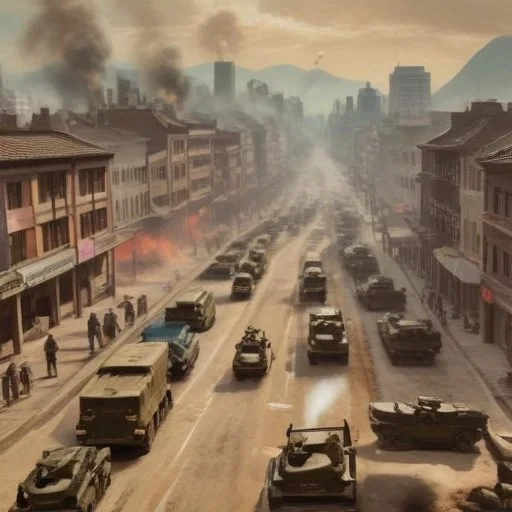
Seoul, the vibrant capital city of South Korea, had already endured the horrors of war once before, when it was initially captured by North Korean forces in June 1950. After a series of intense battles, UN forces had managed to reclaim the city in September of the same year. However, this second occupation would prove to be a far more brutal and prolonged affair.
Codenamed the Third Phase Campaign, the surprise counterattack launched by Chinese and North Korean forces in January 1951 caught the UN forces off guard. The communist forces, buoyed by their recent victories, surged across the 38th parallel, rapidly advancing and pushing the enemy back.
As the communist forces reoccupied Seoul, the city was left in a state of utter devastation. Buildings lay in ruins, streets were littered with debris, and the once-thriving streets were now empty and silent. The civilian population, already weary from years of war, was forced to endure the harsh conditions of occupation, struggling to survive in a city ravaged by conflict.
The recapture of Seoul marked a significant shift in the war's momentum, forcing the UN forces to regroup and reassess their strategy. The battle for Seoul would continue to rage on, with both sides suffering heavy losses, but for now, the city was firmly back in communist hands.
One eyewitness, a young Seoul resident named Ji-Hyun, recalled the terror of living under occupation, saying, "The sound of gunfire and artillery fire was constant, day and night. We lived in fear of being caught in the crossfire, or worse, being targeted by the communist forces." Ji-Hyun's family was forced to flee their home, leaving behind everything they owned, in a desperate bid to escape the fighting.
The second capture of Seoul would have far-reaching consequences, cementing the city's status as a symbol of resistance and resilience in the face of overwhelming odds. The war would ultimately claim millions of lives, but the spirit of the Korean people, forged in the fires of conflict, would endure.
The memories of those who fought and died in the battle for Seoul will never be forgotten. Their sacrifices, like those of Ji-Hyun's family, serve as a poignant reminder of the devastating cost of war, and the importance of striving for peace in a world torn apart by conflict.
The capture of Seoul by Chinese and North Korean forces for the second time during the Korean War is a powerful testament to the human spirit, and a solemn reminder of the devastating consequences of war. As we reflect on this pivotal moment in history, we are left to wonder: what is the true cost of freedom, and what lengths will we go to in order to achieve it?
The Third Phase Campaign, launched by Chinese and North Korean forces, can be compared to other significant military operations in modern history. The speed and ferocity of the counterattack drew parallels with the German Blitzkrieg during World War II, which also caught enemy forces off guard. Similarly, the effective utilization of terrain and guerrilla tactics by the North Korean forces echoes the Viet Cong's strategy during the Vietnam War.
However, the campaign's success can also be attributed to the vastly different military doctrines employed by the communist forces. In contrast to the UN forces' conventional warfare approach, the Chinese and North Korean armies adopted a more flexible and adaptive strategy, allowing them to outmaneuver and outflank their opponents.
Furthermore, the campaign highlights the importance of intelligence gathering and psychological warfare in modern conflict. The communist forces' ability to gather accurate intelligence on UN troop movements and exploit the psychological vulnerabilities of their opponents played a crucial role in their success.

General Peng Dehuai, the commander of the Chinese People's Volunteer Army, played a pivotal role in the Third Phase Campaign. A seasoned veteran of the Chinese Civil War, Peng brought a wealth of experience and tactical expertise to the battlefield. His leadership and strategic thinking were instrumental in the communist forces' success, earning him recognition as one of the most important military leaders of the Korean War.
Peng's military career was marked by a series of impressive victories, including the capture of Seoul. However, his outspoken criticism of Mao Zedong's military strategy eventually led to his removal from power and purge during the Cultural Revolution.
The Third Phase Campaign and the subsequent capture of Seoul occurred against the backdrop of a rapidly changing global geopolitical landscape. The Korean War was one of the first major conflicts of the Cold War, with the United States and the Soviet Union engaging in a proxy war on the Korean peninsula.
The involvement of China in the conflict marked a significant shift in the global balance of power, as the communist nation began to assert its influence on the world stage. The campaign also highlighted the importance of the 38th parallel as a flashpoint in the Cold War, with the division between North and South Korea serving as a symbol of the ideological struggle between communism and capitalism.

The capture of Seoul had a profound impact on Korean culture, as the city's rich cultural heritage was threatened by the devastation of war. Many of Seoul's historic landmarks and cultural institutions were damaged or destroyed during the conflict, leading to a loss of cultural identity and national pride.
However, the war also spurred a resurgence of Korean cultural expression, as artists, writers, and musicians sought to explore the trauma and resilience of the Korean people. The capture of Seoul became a powerful symbol of resistance and defiance in the face of oppression, inspiring generations of Koreans to rebuild and restore their cultural identity.
The Third Phase Campaign and the capture of Seoul raised significant political questions about the role of the United States and the United Nations in international conflict. The failure of the UN forces to defend Seoul and the subsequent defeat of the South Korean army led to a re-evaluation of military strategy and coalition-building in the face of communist aggression.
The campaign also highlighted the complexities of coalition warfare, as the diverse interests and military doctrines of the UN forces often led to conflicting strategies and approaches. The capture of Seoul ultimately led to a re-examination of the role of the United States as a global leader and the limits of its military power in the face of communist expansion.