


In the swirling chaos of the Korean War, a gruesome chapter was written in the annals of South Korean history – the Bodo League massacre, where tens of thousands of suspected communist sympathizers were brutally executed in a wave of anticommunist hysteria. This tragic event, shrouded in secrecy for decades, remains one of the most devastating and little-known atrocities of the 20th century.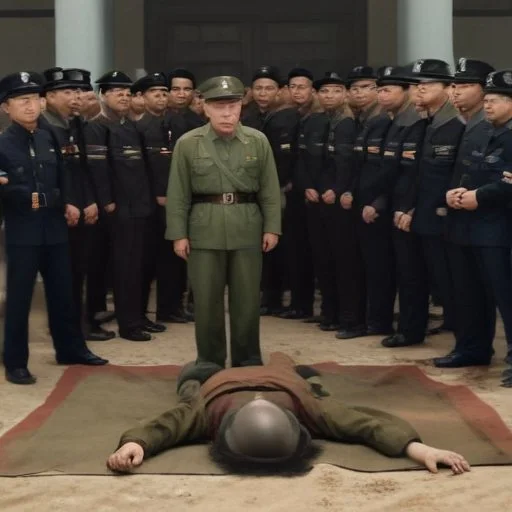
In the summer of 1950, as North Korean forces swept across the 38th parallel, South Korean President Syngman Rhee's government was gripped by an intense anticommunist fervor. The Bodo League, a vaguely defined organization rumored to be sympathetic to the communist cause, became the focal point of this paranoia. In a bid to "cleanse" the country of perceived internal threats, Rhee's government sanctioned a campaign of terror that would ultimately claim the lives of between 60,000 to 200,000 people.
Beginning in July 1950, police and military units, often with the tacit approval of local officials, rounded up anyone suspected of being affiliated with the Bodo League or holding leftist views. Prisoners were subjected to torture, forced confessions, and brutal executions, often in public displays intended to cow the population into submission. The massacre was brutal, swift, and merciless, with entire families and communities torn apart by the reigning atmosphere of fear and suspicion.
The Bodo League massacre was not just a statisticky count of lives lost – it was a human tragedy that ravaged families, communities, and entire social networks. The victims were not just numbers; they were fathers, mothers, sons, daughters, brothers, and sisters, many of whom were innocent of any wrongdoing. Their stories, silenced for so long, cry out for remembrance and justice.
In the aftermath of the massacre, the South Korean government worked tirelessly to erase the event from the national consciousness. Official records were destroyed, witnesses were intimidated, and survivors were forced to live with the trauma of their experiences in silence. It would take decades for the truth to begin to surface, and even today, the full extent of the atrocities remains shrouded in uncertainty.
In recent years, a new generation of historians, activists, and scholars has worked to exhume the hidden history of the Bodo League massacre. Through painstaking research, oral histories, and forensic analysis, they have slowly pieced together the fragmented narrative of this dark chapter in South Korean history.
As South Korea comes to terms with its troubled past, the Bodo League massacre serves as a powerful reminder of the dangers of unchecked power, fear-mongering, and political repression. It is a testament to the enduring power of human resilience and the importance of confronting the darkest aspects of our collective history. Only by acknowledging the past can we hope to build a brighter, more just future for all.
The Bodo League massacre stands as a poignant reminder of the devastating consequences of political repression and the importance of confronting the darkest aspects of our shared human experience.
The Bodo League massacre was not an isolated incident, but rather part of a broader pattern of political repression in South Korea during the Cold War era. In the years leading up to the massacre, the Rhee regime had already established a network of secret police and intelligence agencies tasked with rooting out suspected communists and leftists. This atmosphere of fear and suspicion created a fertile ground for the massacre to take place.
The massacre also had far-reaching consequences for the Korean War itself. As news of the atrocities spread, it helped to galvanize international support for the North Korean regime, further entrenching the conflict. The massacre also led to a breakdown in relations between South Korea and the United States, which had been providing military aid to the Rhee regime.
Despite its significance, the Bodo League massacre remains a largely forgotten chapter in the history of the Korean War. This omission is particularly striking given the extensive documentation of human rights abuses in North Korea during the same period. The erasure of the massacre from historical records is a testament to the power of the South Korean state to shape public memory and narratives.
Syngman Rhee, the President of South Korea during the Bodo League massacre, was a complex figure with a long and checkered past. Born in 1875, Rhee was a prominent independence activist during the Japanese colonial period, and later served as the President of the Provisional Government of the Republic of Korea in exile.
Despite his commitment to democracy, Rhee's rule was marked by increasing authoritarianism and intolerance of political dissent. His regime was notorious for its use of torture, censorship, and extrajudicial killings to silence opponents and maintain power.
Rhee's role in the Bodo League massacre remains shrouded in mystery, but it is clear that he created an environment in which the massacre could take place. His regime's obsession with rooting out communism led to a culture of fear and paranoia, in which the massacre was seen as a necessary evil.
The Bodo League massacre bears uncomfortable parallels with other episodes of state-sponsored violence during the Cold War era. In Indonesia, for example, the 1965 massacre of suspected communists led to the deaths of an estimated 500,000 people. In Chile, the 1973 coup against Salvador Allende led to the torture and disappearance of thousands of leftists.
These episodes of violence were often justified as necessary measures to prevent the spread of communism. However, they also served to consolidate the power of authoritarian regimes and crush political dissent. The Bodo League massacre stands as a stark reminder of the dangers of unchecked state power and the importance of protecting human rights.
In comparative terms, the Bodo League massacre is notable for its sheer scale and brutality. While other episodes of state-sponsored violence during the Cold War era were often more targeted and selective, the Bodo League massacre was characterized by its indiscriminate and wholesale slaughter of civilians.
The Bodo League massacre has had a profound impact on South Korean culture and society. The trauma and silence surrounding the massacre have been passed down through generations, shaping the country's collective memory and identity.
In recent years, the massacre has become a catalyst for a new wave of artistic and cultural expression in South Korea. Filmmakers, writers, and artists have begun to explore the massacre and its legacy, using it as a metaphor for the country's fraught relationship with its past.
The massacre has also led to a growing awareness of the importance of human rights and social justice in South Korea. Civil society groups and activists have used the massacre as a rallying cry for greater accountability and transparency in government, and for the protection of human rights and dignity.
The historiography of the Bodo League massacre is marked by a stark contrast between the official narrative of the Rhee regime and the suppressed memories of survivors and victims' families. For decades, the regime's propaganda machine portrayed the massacre as a necessary measure to protect national security, while erasing the victims from historical records.
In the 1980s and 1990s, a new generation of historians and scholars began to challenge this narrative, using oral testimonies and archival research to piece together a more accurate account of the massacre. This historiographical shift has been marked by a growing recognition of the massacre as a grave human rights violation, rather than a necessary evil.
Today, the Bodo League massacre remains a contested and politicized topic in South Korean historiography, with ongoing debates about its significance and legacy. However, the growing body of research and testimony has helped to establish the massacre as a central episode in the country's modern history.