


In June 1999, the world witnessed a pivotal moment in history as Operation Joint Guardian began, marking the entry of a NATO-led United Nations peacekeeping force, Kosovo Force (KFOR), into the ravaged province of Kosovo in the Federal Republic of Yugoslavia. This multinational coalition, comprising over 30 countries, embarked on a mission to maintain peace and order in the war-torn region, bringing relief to the battered civilian population.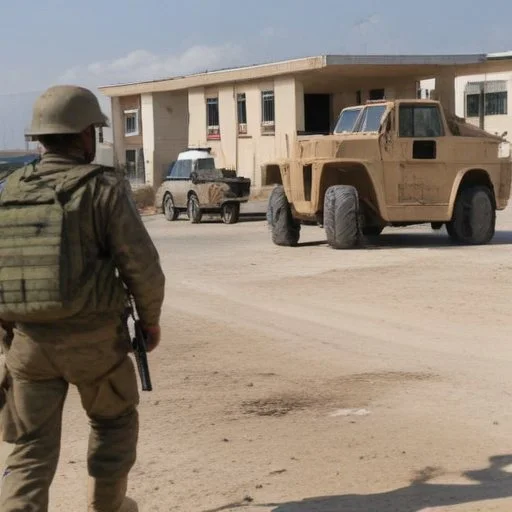
The conflict in Kosovo had been brewing since the 1990s, fueled by ethnic tensions between Albanian Kosovo separatists and the Serbian government. The situation escalated into a full-blown war in 1998, with reports of human rights abuses, forced displacement, and mass killings. The international community, led by NATO, responded with a series of airstrikes against Yugoslavian targets, ultimately paving the way for KFOR's deployment.
June 1999: KFOR begins its deployment in Kosovo, marking the start of Operation Joint Guardian.
June-July 1999: KFOR establishes its headquarters in Pristina, the capital of Kosovo, and starts to assume responsibility for maintaining security and stability in the region.
July 1999: The United Nations Security Council passes Resolution 1244, authorizing the deployment of KFOR and setting the framework for the peacekeeping mission.
Operation Joint Guardian brought an end to the conflict in Kosovo, paving the way for the return of refugees, the rebuilding of infrastructure, and the establishment of a new political framework for the province.
The KFOR-led mission provided a safe environment for humanitarian organizations to operate, enabling the distribution of aid and the delivery of essential services to the local population.
The successful deployment of KFOR had a profound impact on the cultural and social fabric of Kosovo. The operation helped to rebuild trust between the different ethnic communities, paving the way for the eventual declaration of independence in 2008.
The legacy of Operation Joint Guardian continues to inspire international cooperation and collaboration in the face of conflict and instability.
Despite its overall success, Operation Joint Guardian was not without its challenges and controversies. Allegations of human rights abuses and violence against civilians by some KFOR troops led to investigations and disciplinary actions.
The operation also faced criticism for its slow response to the humanitarian crisis in the early stages of the conflict, highlighting the need for more effective coordination and communication between international organizations and governments.
"The deployment of KFOR marks a new chapter in the history of Kosovo, a chapter of peace, stability, and hope." - Kofi Annan, Secretary-General of the United Nations
"Today, we take a major step forward in our efforts to bring peace and stability to the people of Kosovo." - General Wesley Clark, SACEUR of NATO
The courage and resilience of the people of Kosovo in the face of war and hardship serve as a powerful inspiration to people around the world. The successful deployment of KFOR is a testament to the power of international cooperation and the importance of standing up against human rights abuses and aggression.
As we reflect on the legacy of Operation Joint Guardian, we are reminded of the importance of compassion, empathy, and collective action in the pursuit of peace and stability.
The lessons learned from Operation Joint Guardian have informed subsequent peacekeeping missions and international interventions, including those in Afghanistan, Iraq, and Libya.
The operation has also contributed to the development of more effective strategies for conflict prevention and resolution, highlighting the importance of early intervention, cooperation, and dialogue.
The humanitarian response to the Kosovo conflict led to the establishment of numerous charitable organizations and initiatives, providing aid and support to affected communities.
The legacy of Operation Joint Guardian continues to inspire charitable work and social contributions, including efforts to rebuild and restore communities affected by conflict and natural disasters.
KFOR is an acronym for Kosovo Force, but it is also a play on the word "force" in the sense of a strong and united international effort.
The operation involved the deployment of over 50,000 troops from more than 30 countries, making it one of the largest and most diverse peacekeeping missions in history.
General Wesley Clark, a seasoned military leader, played a crucial role in planning and executing Operation Joint Guardian. Born on December 23, 1944, in Chicago, Illinois, Clark graduated from the United States Military Academy at West Point in 1966. He went on to serve in various capacities, including as the Director of Strategic Plans and Policy, before becoming the Supreme Allied Commander Europe (SACEUR) of NATO in 1997.
Clark's leadership and strategic vision were instrumental in shaping the success of Operation Joint Guardian. His ability to coordinate with international partners and balance the interests of various stakeholders was critical in maintaining peace and stability in Kosovo.
Clark's efforts during Operation Joint Guardian earned him numerous accolades, including the Presidential Medal of Freedom, the highest civilian honor in the United States.
,
The successful deployment of KFOR marked a significant turning point in the cultural and social fabric of Kosovo. The operation helped to rebuild trust between the different ethnic communities, paving the way for the eventual declaration of independence in 2008.
The restoration of cultural heritage sites, such as the medieval monastery of Visoki Dečani, and the revival of traditional festivals and events, like the Dokufest International Documentary Film Festival, signaled a new era of cultural rebirth in Kosovo.
The international community's commitment to preserving cultural diversity and promoting inter-ethnic dialogue contributed to the growth of a vibrant cultural scene in Kosovo, fostering a sense of national identity and pride among its people.
,The conflict in Kosovo was deeply entrenched in the complexities of Balkan politics and the legacy of Yugoslavia's dissolution. The region's tumultuous history, marked by ethnic tensions and competing nationalisms, created a volatile environment that ultimately led to the humanitarian crisis of the late 1990s.
The international community's response to the crisis was shaped by the geopolitical dynamics of the time, including the rise of NATO as a key player in global security and the evolving role of the United Nations in peacekeeping and conflict resolution.
The success of Operation Joint Guardian had far-reaching implications for regional security, setting a precedent for international intervention in humanitarian crises and influencing the development of EU and NATO policies in the Balkans.
,
The deployment of KFOR involved significant economic investments, with estimates suggesting that the operation cost the international community upwards of $10 billion per year.
Despite these costs, Operation Joint Guardian also generated substantial economic benefits, including the creation of new jobs, stimulation of local economies, and infrastructure development.
The establishment of a stable and secure environment in Kosovo enabled the return of refugees, the rebuilding of infrastructure, and the growth of foreign investment, ultimately contributing to the province's long-term economic development.
,Historians have engaged in ongoing debates about the nature and implications of Operation Joint Guardian, with some viewing it as a landmark success in humanitarian intervention and others criticizing its methodology and outcomes.
One area of contention concerns the role of NATO in the conflict, with some scholars arguing that the alliance's actions were justified by the need to protect civilians, while others see it as an exercise in imperialist expansion.
The legacy of Operation Joint Guardian continues to be shaped by these historiographical debates, as scholars strive to understand the complexities of humanitarian intervention and its impact on global politics and human rights.
,