


Kristallnacht, also known as the Night of Broken Glass, is infamous for the brutal and widespread attacks on Jewish communities in Germany and Austria, carried out by the Nazi regime and its sympathizers on November 9-10, 1938. This devastating event marked a turning point in the escalation of anti-Semitic violence, leaving in its wake a trail of destruction, death, and despair.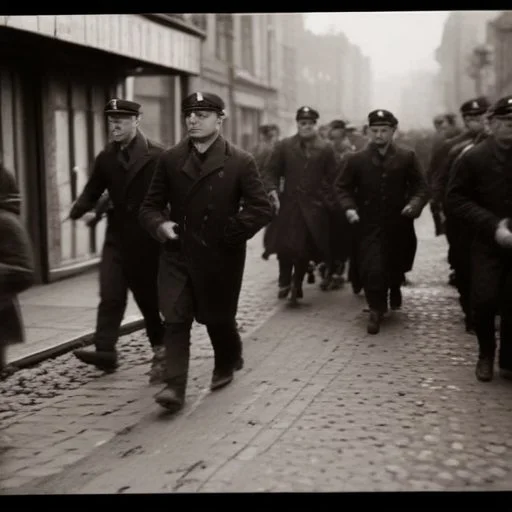
The Nazi Party, led by Adolf Hitler, had been steadily increasing its anti-Semitic rhetoric and propaganda since the early 1930s. The Nuremberg Laws, introduced in 1935, stripped Jews of their citizenship and prohibited them from marrying non-Jews or engaging in certain professions. As the Nazi regime consolidated its power, the climate of hostility and intolerance towards Jews continued to intensify.
On November 7, 1938, Herschel Grynszpan, a 17-year-old Jewish refugee, assassinated Ernst vom Rath, a German diplomat, at the German embassy in Paris. This event provided the Nazis with a pretext to unleash their pent-up fury on the Jewish population.
On the night of November 9, 1938, a wave of violence swept across Germany and Austria, as Nazi stormtroopers, civilians, and rioters targeted Jewish communities. Synagogues were set ablaze, homes and businesses vandalized, and Jewish-owned properties looted. The streets were filled with the sounds of shattering glass, screams, and gunfire.
The two days of violence resulted in:
The international community was shocked and outraged by the brutal display of anti-Semitic violence. The British and French governments condemned the attacks, and the United States recalled its ambassador to Germany. However, the response was largely inadequate, and the Nazis continued to escalate their persecution of the Jewish population.
Kristallnacht serves as a somber reminder of the dangers of unchecked hatred, intolerance, and xenophobia. It is a powerful symbol of the devastating consequences of silence and inaction in the face of persecution. Today, Kristallnacht is commemorated worldwide as a day of remembrance and warning, ensuring that the horrors of the past will never be forgotten.
Many survivors of Kristallnacht have shared harrowing accounts of their experiences, including eyewitness descriptions of the violence and terror they witnessed. One such account is that of Marion Finkelstein, who vividly recalled the sound of shattering glass and the screams of her family members as their home was attacked:
"I remember the sound of the glass breaking, the screams of my family, and the feeling of helplessness. It was as if the world had gone mad."
Kristallnacht marked a turning point in the escalation of anti-Semitic violence, paving the way for the horrors of the Holocaust. The event served as a chilling reminder of the dangers of unchecked hatred and intolerance, highlighting the urgent need for international action to protect vulnerable communities.
In the years leading up to Kristallnacht, the Nazi regime had been systematically dismantling the social and economic structures that had protected Jewish communities in Germany. The 1935 Nuremberg Laws, which stripped Jews of their citizenship and prohibited them from marrying non-Jews, had created a sense of uncertainty and fear among Jewish populations. The Nazis had also begun to confiscate Jewish property, banning Jews from certain professions and restricting their access to education and employment opportunities.
The Kristallnacht pogrom was not an isolated incident, but rather the culmination of years of anti-Semitic rhetoric and violence. The Nazi regime had been openly hostile towards Jews, using propaganda to dehumanize and demonize them. The brutality of Kristallnacht was a stark reminder of the dangers of unchecked hatred and intolerance.

Herschel Grynszpan, the 17-year-old Jewish refugee who assassinated Ernst vom Rath, was a complex figure whose motivations remain somewhat unclear. Born in Germany, Grynszpan had fled to Paris to escape the rising tide of anti-Semitism in his homeland. His sister, Berta, had been denied entry to Poland and was stranded in the no-man's land between Germany and Poland, prompting Grynszpan to take drastic action.
Grynszpan's actions, while tragic, were a desperate attempt to draw attention to the plight of Jewish refugees like his sister. His actions, however, were seized upon by the Nazi regime as a pretext to unleash their fury on Jewish communities.
Kristallnacht was not an isolated incident of anti-Semitic violence in Europe. The 1930s and 1940s saw a wave of pogroms and violent attacks on Jewish communities across the continent. The 1936 pogrom in Przytyk, Poland, and the 1941 pogrom in Iași, Romania, were just two examples of the widespread violence and intolerance that plagued Jewish communities during this period.
While Kristallnacht was one of the most brutal and widespread attacks on Jewish communities, it was part of a larger pattern of anti-Semitic violence that was endemic in Europe during the 1930s and 1940s.

Kristallnacht had a profound impact on Jewish culture and identity, both in Germany and around the world. The attack on Jewish communities and the destruction of synagogues and cultural institutions forced many Jews to re-evaluate their place in German society. For many, the attack marked the end of a centuries-long history of Jewish life in Germany.
The trauma of Kristallnacht has been passed down through generations of Jews, serving as a powerful reminder of the dangers of hatred and intolerance. Today, Kristallnacht is commemorated around the world as a day of remembrance and warning, highlighting the importance of protecting vulnerable communities from persecution.
The Nazi regime's response to Kristallnacht was telling of their ideological commitment to anti-Semitism. The regime's official response to the violence was a carefully crafted mixture of condemnation and justification, with Propaganda Minister Joseph Goebbels blaming the Jews for the violence and promising to take further action to protect the German people.
The international community's response to Kristallnacht was woefully inadequate, with many countries failing to take decisive action to protect Jewish communities from persecution. The event marked a turning point in the escalation of anti-Semitic violence, highlighting the urgent need for international action to protect vulnerable communities.