


In the summer of 1783, the tranquility of Iceland's wilderness was shattered by the cataclysmic eruption of Laki, a volcano that would unleash eight months of unprecedented fury, claiming over 9,000 lives and casting a shadow of despair over the land for seven long years. This apocalyptic event would etch its name in history as one of the deadliest and most destructive volcanic eruptions of all time.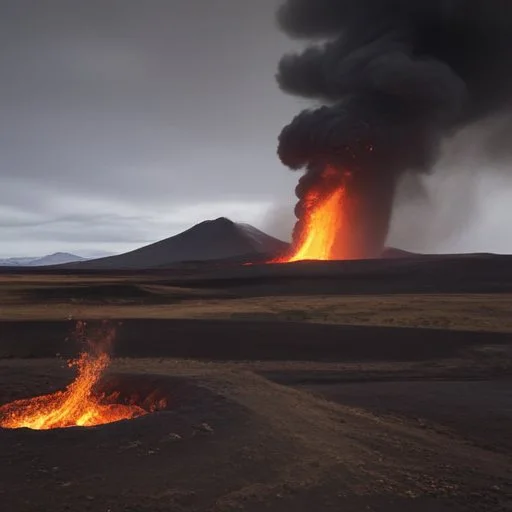
Iceland, situated on the Mid-Atlantic Ridge, has always been a land of contrasts, where fire and ice coexist in an eternal struggle. The island's unique geology, with over 130 volcanoes, has shaped its history, culture, and people. Laki, a relatively unknown volcano before 1783, was about to demonstrate the full fury of nature's power.
On June 8, 1783, Laki began to stir, spewing forth toxic gases, lava, and ash into the atmosphere. The initial eruption was followed by a series of devastating explosions, which continued unabated for eight months. The volcano's relentless fury was evident in the sheer scale of destruction: over 100 million tons of sulfur dioxide were released, casting a poisonous pall over the island.
The eruption's impact on Iceland's population was catastrophic. Over 9,000 people, approximately one-quarter of the island's population, perished in the disaster. The toxic gases and ash fall destroyed crops, livestock, and infrastructure, leaving the survivors to face the bleak prospect of famine. The once-thriving communities were reduced to mere specters of their former selves, with entire villages abandoned and left to decay.
The Laki eruption's impact was not limited to Iceland. The massive cloud of sulfur dioxide and ash particles drifted over Europe, disrupting the climate and causing widespread crop failures. The subsequent famine and disease outbreaks affected numerous countries, including Denmark, Norway, and even as far as England.
The Laki eruption left an indelible mark on Iceland's history, people, and landscape. The disaster led to significant changes in the country's agricultural practices, with a greater emphasis on sustainable farming methods. The eruption also spurred scientific inquiry, with pioneering researchers such as Sígríður Þorsteinsdóttir contributing to our understanding of volcanic activity and its impact on the environment.
The Laki eruption's human toll is poignantly captured in the words of Jon Steingrimsson, a local pastor who lived through the disaster:
"The ash fall was so thick that it was impossible to see anything outside... The people were in a state of utmost despair, and many lost their minds."
The Laki eruption's impact is often likened to other notable volcanic events, such as the 1815 Mount Tambora eruption, which caused the "Year Without a Summer." While both events share similarities, Laki's unique combination of toxic gases, ash fall, and prolonged eruption duration set it apart as one of the most devastating volcanic events in recorded history.
The Laki eruption's devastating effects on Iceland's population and landscape also had a profound impact on the country's culture. The disaster led to a renewed focus on folklore and storytelling, as people sought comfort and meaning in traditional tales and legends. The eruption also spurred a resurgence in Icelandic literature, with writers such as Jónas Hallgrímsson and Matthías Jochumsson drawing inspiration from the catastrophe.
The Laki eruption also influenced the development of Icelandic art, with many painters and sculptors creating works that reflected the disaster's horrors and the resilience of the Icelandic people.
Today, the Laki eruption remains an integral part of Icelandic cultural heritage, serving as a poignant reminder of the country's tumultuous history and its people's unyielding spirit.
The Laki eruption's impact on Iceland's economy was catastrophic. The destruction of crops and livestock led to widespread famine, and the subsequent decline in trade and commerce resulted in a significant decrease in the country's GDP. The disaster also led to a shortage of goods and services, causing inflation to soar.
The eruption's effects were not limited to Iceland, as the resulting climate disruptions affected trade and commerce across Europe. The subsequent famine and disease outbreaks led to a decline in economic productivity, further exacerbating the economic crisis.
It would take decades for Iceland's economy to recover from the devastating effects of the Laki eruption, but the disaster ultimately spurred significant changes in the country's economic policies and practices.
The Laki eruption's devastating effects on Icelandic society were multifaceted and far-reaching. The disaster led to a significant decline in social cohesion, as communities were forced to fend for themselves in the face of unimaginable hardship.
The eruption also had a profound impact on the country's social dynamics, as the traditional structures of authority and power were challenged by the crisis. The disaster led to a shift in the balance of power, as local leaders and clergy played a crucial role in coordinating relief efforts and maintaining social order.
Despite the unimaginable suffering, the Laki eruption also brought about a sense of community and solidarity, as Icelanders came together to support one another in the face of disaster.
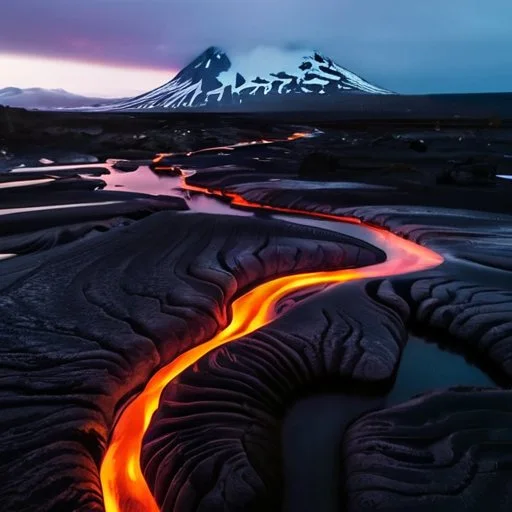
The Laki eruption's environmental impact was catastrophic, with the release of massive amounts of toxic gases and ash particles into the atmosphere. The resulting acid rain and air pollution had a devastating effect on Iceland's ecosystem, leading to widespread deforestation and the decline of indigenous species.
The eruption also had a profound impact on the country's water resources, as rivers and streams became contaminated with toxic substances. The disaster led to the development of new conservation strategies, as Icelanders sought to mitigate the environmental damage and restore their country's natural beauty.
Today, the Laki eruption serves as a poignant reminder of the importance of environmental stewardship and the need for sustainable practices in the face of natural disasters.
Sígríður Þorsteinsdóttir, a pioneering Icelandic scientist, played a crucial role in understanding the Laki eruption and its impact on the environment. Her groundbreaking research on volcanic activity and its effects on climate and ecosystems paved the way for future scientists.
Despite the challenges and obstacles she faced as a female scientist in a male-dominated field, Sígríður remained committed to her work, driven by a fierce determination to uncover the truth about the Laki eruption.
Honored by her country for her contributions to science, Sígríður's legacy continues to inspire future generations of scientists and scholars, serving as a testament to the power of dedication and perseverance.