


Vatican City, the smallest country in the world, came into existence on June 7, 1929, when the Lateran Treaty was officially ratified. This momentous event marked the creation of a sovereign city-state, with the Pope as its head of state, nestled within Rome, Italy.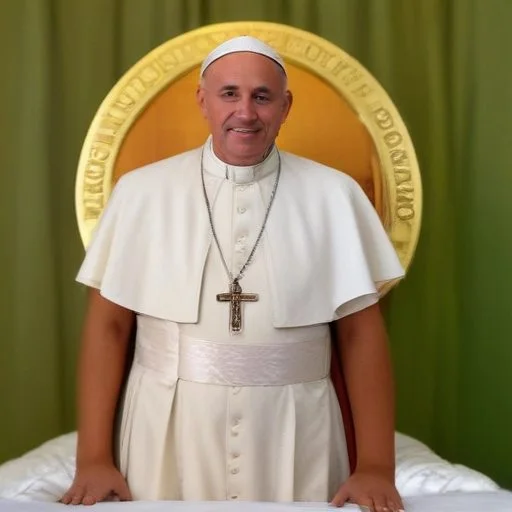
The Lateran Treaty was the culmination of a long-standing dispute between the Holy See and the Kingdom of Italy. In 1870, the Papal States, a territorial entity that had existed for over a thousand years, was annexed by the Kingdom of Italy, leaving the Pope without a temporal domain. This led to a decades-long struggle between the two entities, with the Pope claiming sovereignty over a small portion of land.
The Lateran Treaty had far-reaching consequences, both for the Holy See and the Kingdom of Italy. With the establishment of Vatican City, the Pope gained sovereignty over a small but significant territory, allowing the Catholic Church to maintain its independence and autonomy. The treaty also recognized the Church's right to appoint its own ambassadors and engage in diplomatic relations with other countries.
The creation of Vatican City had a profound impact on the cultural and social landscape of Rome and beyond. The tiny city-state became a beacon of spirituality, attracting millions of pilgrims and tourists from around the world. The Vatican's independence also allowed it to maintain its unique cultural and artistic heritage, including the Sistine Chapel and St. Peter's Basilica.
The Lateran Treaty can be compared to other historical events that have shaped the relationship between church and state. The Concordat of Worms (1122) and the Treaty of Westphalia (1648) are two examples of similar agreements that established the boundaries between religious and secular authorities.
The Lateran Treaty set a precedent for future agreements between the Holy See and other countries, including the signing of concordats with countries such as Germany (1933) and Poland (1993). The treaty also paved the way for the Vatican's increased involvement in international relations and global affairs.
Vatican City's birth on June 7, 1929, marked a significant turning point in history, shaping the course of the Catholic Church and the world at large. As we look back on this momentous event, we are reminded of the power of diplomacy and the importance of preserving the independence of religious institutions.
The road to the Lateran Treaty was paved by decades of tension between the Holy See and the Kingdom of Italy. Following the annexation of the Papal States in 1870, the Pope was left without a temporal domain, sparking a long-standing dispute over sovereignty. The Pope's refusal to recognize the Italian government's authority led to a period of self-imposed exile, known as the "Roman Question."
In the early 20th century, Benito Mussolini's rise to power in Italy presented an opportunity for reconciliation. Mussolini, seeking to consolidate his power and improve relations with the Catholic Church, began secret negotiations with the Holy See in 1926. After three years of diplomatic efforts, the Lateran Treaty was signed in 1929, marking a major breakthrough in the relationship between the two entities.

Francesco Pacelli: The Architect of the Lateran Treaty
Francesco Pacelli, the brother of Pope Pius XII, played a crucial role in the negotiations leading to the Lateran Treaty. As the Vatican's Secretary of State, Pacelli worked tirelessly to secure an agreement that would recognize the Holy See's sovereignty over a small but significant territory.
Pacelli's diplomatic skills and deep understanding of the complex issues at stake were instrumental in brokering a deal that satisfied both the Holy See and the Kingdom of Italy. His efforts helped to establish Vatican City as a sovereign state, paving the way for the Pope to regain his independence and authority.
The creation of Vatican City had a profound impact on the cultural landscape of Rome and beyond. The tiny city-state became a beacon of spirituality, attracting millions of pilgrims and tourists from around the world. The Vatican's independence also allowed it to maintain its unique cultural and artistic heritage, including the Sistine Chapel and St. Peter's Basilica.
The Lateran Treaty also facilitated the growth of a thriving art scene in Vatican City. The Pope, now freed from the constraints of the Italian government, was able to patronize artists and encourage the development of a distinctly Vatican style. This led to the creation of some of the most iconic works of art in the Catholic Church's repertoire.

The Lateran Treaty marked a significant shift in the balance of power between the Holy See and the Kingdom of Italy. By recognizing the Vatican's sovereignty over a small territory, the treaty established a new paradigm for the relationship between church and state.
The treaty also had significant implications for the international community. It set a precedent for future agreements between the Holy See and other countries, paving the way for the Vatican to engage in diplomatic relations and assert its influence on the global stage.
The Lateran Treaty was signed against the backdrop of a rapidly changing global landscape. The rise of fascist and nationalist movements in Europe, coupled with the growing threat of communism, created an environment in which the Holy See felt compelled to assert its independence and authority.
The treaty was also influenced by the broader geopolitical context of the time. The Holy See's desire for sovereignty was motivated in part by a desire to counterbalance the growing influence of secular governments and to protect the Catholic Church's interests in an increasingly uncertain world.