


On a fateful day in 1990, Latvia's Supreme Council took a bold stance against the oppressive regime of the Soviet Union, voting to restore the country's independence and shattering the chains of decades-long occupation. This daring move ignited a beacon of hope for a self-governed future, paving the way for Latvia's transformation into a modern, democratic state.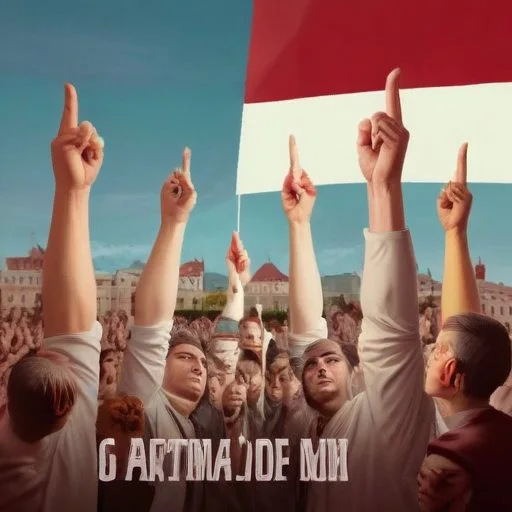
Latvia's struggle for independence was far from a sudden impulse. The seeds of resistance had been sown decades earlier, when the Soviet Union annexed the Baltic state in 1940. As the years passed, Latvians continued to yearn for autonomy, their desire for freedom and self-determination simmering beneath the surface.
Anatolijs Gorbunovs, the Chairman of the Supreme Council, emerged as a key figure in Latvia's independence movement. His leadership and vision played a crucial role in mobilizing the nation and guiding it towards freedom.
The events leading up to independence unfolded with remarkable swiftness:
The declaration of independence had far-reaching consequences, both domestically and internationally:
Latvia's independence declaration not only reshaped the country's political landscape but also had a profound impact on its cultural and social identity:
The event sparked a resurgence of national pride, as Latvians reclaimed their heritage and celebrated their unique cultural traditions.
Anatolijs Gorbunovs, reflecting on the declaration of independence, said: "We did not want to be a part of the Soviet Union, we wanted to be a free and independent nation."
This sentiment encapsulates the spirit of Latvia's independence movement, a testament to the enduring power of the human desire for freedom and self-determination.
Today, Latvia's declaration of independence serves as a shining example of courage and resilience, inspiring generations to come. As the world continues to grapple with the complexities of governance and sovereignty, Latvia's story reminds us that even in the darkest of times, freedom is within reach, and that the human spirit can overcome even the most formidable obstacles.
Anatolijs Gorbunovs, the Chairman of the Supreme Council, was a driving force behind Latvia's independence movement. Born on February 13, 1942, in Liepāja, Latvia, Gorbunovs grew up during the Soviet occupation and was deeply committed to restoring his country's sovereignty. He spent years working in the Latvian government, gradually building a reputation as a shrewd politician and passionate advocate for independence. As Chairman of the Supreme Council, Gorbunovs played a crucial role in mobilizing the nation and guiding it towards freedom.
Gorbunovs' leadership was marked by his unwavering dedication to the cause and his ability to bring people together. His vision for an independent Latvia inspired countless individuals to join the movement, and his tireless efforts ultimately led to the declaration of independence on May 4, 1990.

The Molotov-Ribbentrop Pact, signed on August 23, 1939, between the Soviet Union and Nazi Germany, marked a crucial turning point in Latvia's history. This non-aggression treaty, brokered by Soviet Foreign Minister Vyacheslav Molotov and German Foreign Minister Joachim von Ribbentrop, divided Eastern Europe into Soviet and German spheres of influence. Latvia, along with Estonia and Lithuania, fell under Soviet control, paving the way for the Soviet occupation that would last for decades.
The pact's secret protocol, made public in 1940, revealed the extent of Soviet and German territorial ambitions. The agreement led to the annexation of Latvia by the Soviet Union, which would eventually spark the nation's struggle for independence. The Molotov-Ribbentrop Pact remains a significant historical event that set the stage for Latvia's long and arduous path to freedom.
The declaration of independence sparked a cultural renaissance in Latvia, as the nation began to reclaim its heritage and celebrate its unique traditions. The Latvian language, once suppressed by the Soviet occupation, was revitalized, and literature, music, and art flourished. The traditional Latvian folk song and dance, as well as the country's rich folklore, were rediscovered and proudly showcased to the world.
The revival of Latvian culture also led to a renewed interest in the country's historical landmarks and architectural treasures. The Riga Old Town, a UNESCO World Heritage Site, was meticulously restored, and the iconic Freedom Monument, dedicated to those who fought for Latvia's independence, became a powerful symbol of national pride.
The ripple effect of Latvia's declaration of independence was felt far beyond its borders. The event inspired similar movements in neighboring Estonia and Lithuania, sparking a wave of protests and demonstrations across the Baltic States. As the three countries worked together to gain international recognition, their collective efforts contributed to the dissolution of the Soviet Union.
The Baltic States' coordinated efforts also led to the creation of the Council of the Baltic States, a regional organization aimed at promoting cooperation and stability in the region. This historic partnership paved the way for the Baltic States to join the European Union and NATO, solidifying their positions in the international community.
The declaration of independence had far-reaching consequences beyond the Baltic States. The event marked a significant shift in the global political landscape, as the Soviet Union's grip on Eastern Europe began to loosen. The international community took notice of the Baltic States' bravery, and the event galvanized support for pro-democracy movements around the world.
Latvia's independence also sent a powerful message to other nations struggling under Soviet occupation. The event inspired hope and sparked a chain reaction of independence movements, contributing to the eventual collapse of the Soviet Union. As a newly independent nation, Latvia played a crucial role in shaping the post-Cold War era, fostering dialogue, and promoting international cooperation.