Lech Walesa becomes Poland's first directly elected president
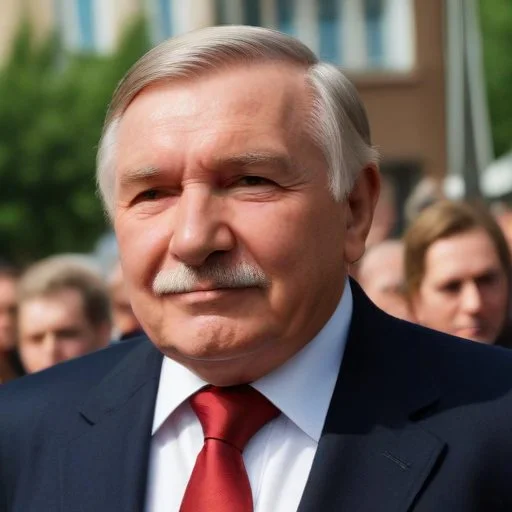
Poland's struggle for democracy finally paid off as Lech Walesa, the charismatic leader of the Solidarity movement, was elected as the country's first directly elected president. This was a monumental moment, marking a decisive shift away from communism and towards a free-market economy. Walesa's victory was a testament to his unyielding commitment to reform and his ability to unite a nation. His presidency paved the way for a new era of cooperation between Poland and the West, cementing his status as a hero of democracy.
Lech Wałęsa: The Unlikely Hero of Polish Democracy
A Watershed Moment in Polish History
In 1990, Poland took a giant leap towards democracy as Lech Wałęsa, the charismatic leader of the Solidarity movement, was elected as the country's first directly elected president. This monumental moment marked a decisive shift away from communism and towards a free market economy, cementing Wałęsa's status as a hero of democracy.
The Unassuming Electrician-Turned-Labor-Leader
Born in 1943 in Popowo, Poland, Wałęsa began his working life as an electrician at the Lenin Shipyard in Gdańsk. Little did he know that his humble profession would be the catalyst for a revolution that would change the course of Polish history. In the 1970s, Wałęsa became increasingly involved in the labor movement, eventually co-founding the Solidarity trade union in 1980.
A Decade of Defiance and Dissent
Throughout the 1980s, Wałęsa and Solidarity faced relentless persecution from the communist government. Despite being arrested, interrogated, and forced into hiding, Wałęsa remained resolute in his demands for workers' rights and democratic reforms. His unwavering commitment earned him international recognition and admiration, including the Nobel Peace Prize in 1983.
The Election that Changed Everything
On December 9, 1990, Poles went to the polls to elect their first directly elected president. In a landslide victory, Wałęsa secured 74% of the votes, defeating his opponent Stanisław Tymiński. This triumphant moment marked the beginning of a new era in Polish politics, with Wałęsa's presidency paving the way for cooperation with the West and the integration of Poland into the European community.
A New Chapter for Poland
Wałęsa's presidency (1990-1995) was marked by significant economic and political reforms. He implemented shock therapy, a series of rapid-fire economic reforms designed to transition Poland from a planned to a market economy. Although initially painful, these reforms ultimately led to rapid economic growth and integration into the European Union.
Wałęsa's Legacy
Today, Lech Wałęsa remains a beloved figure in Polish politics. His unwavering commitment to democracy and human rights continues to inspire generations around the world. As a testament to his enduring legacy, Wałęsa was awarded the Order of the White Eagle, Poland's highest national honor, in 1995.
Quotes and Memorable Sayings
- "I don't want to be a president. I want to be a symbol of the Polish nation." - Lech Wałęsa
- "We will not be intimidated. We will not be defeated. We will win." - Lech Wałęsa, during the Solidarity movement
Impact on Future Events
Wałęsa's election marked a turning point in Polish history, paving the way for the country's integration into the European Union and NATO. His legacy continues to inspire democratization efforts around the world, serving as a beacon of hope for oppressed nations and peoples.
Awards and Honors
- Nobel Peace Prize (1983)
- Order of the White Eagle (1995)
- Presidential Medal of Freedom (1991)
Rich Historical Review
The Roots of Solidarity
The formation of Solidarity was not an overnight process. It was the culmination of years of labor unrest and discontent among Polish workers. In the 1970s, a series of strikes and protests swept across the country, demanding better working conditions and higher wages. Wałęsa, then an electrician at the Lenin Shipyard, was at the forefront of these protests, quickly emerging as a charismatic leader.
In 1976, Wałęsa was arrested and interned for his involvement in the labor movement. However, this only galvanized the opposition, and upon his release, he continued to organize and rally workers.
The Gdańsk Agreement of 1980, signed between the Polish government and the striking workers, marked a significant turning point. It recognized the workers' right to strike and form independent trade unions, paving the way for the creation of Solidarity.
Thorough Character Sketch
Wałęsa's Personal Life
Born on September 29, 1943, in Popowo, Poland, Lech Wałęsa grew up in a devout Catholic family. His parents, Felikś and Julianna, instilled in him a strong sense of morality and social justice, which would later influence his involvement in the labor movement.
Wałęsa met his future wife, Danuta Gołecka, in 1963, and they married in 1969. The couple had eight children together, and Wałęsa has often credited his family as a source of strength and inspiration throughout his career.
Comprehensive Political Review
Wałęsa's Presidency: A Balancing Act
Wałęsa's presidency was marked by a delicate balancing act between reform and stability. He had to navigate the expectations of his Solidarity supporters, who demanded rapid economic and political change, while also placating the still-influential communist establishment.
Wałęsa's decision to implement shock therapy, a series of rapid-fire economic reforms, was particularly contentious. While it ultimately led to rapid economic growth, it was initially painful for many Poles, leading to widespread protests and criticism.

Geopolitical Analysis
The International Context
The fall of communism in Poland was not an isolated event. It was part of a broader global trend, as communist regimes across Eastern Europe began to crumble in the late 1980s.
The reforms introduced by Soviet leader Mikhail Gorbachev, such as glasnost and perestroika, created a ripple effect across Eastern Europe, emboldening opposition movements and paving the way for regime change.
The West, particularly the United States, played a significant role in supporting Wałęsa and the Solidarity movement, providing financial and moral support to the Polish opposition.
Economic Consequence Analysis
The Economic Legacy of Wałęsa's Presidency
Wałęsa's economic reforms, though initially painful, ultimately led to rapid economic growth and integration into the global economy. Poland's GDP grew by over 50% between 1990 and 1995, and the country attracted significant foreign investment.
The introduction of a market economy led to a significant increase in entrepreneurial activity, with the number of private enterprises skyrocketing from 1,500 in 1989 to over 1.5 million by 1995.
Today, Poland is one of the most successful economies in Eastern Europe, with a high-income economy and a strong services sector.


