


In the heart of East Germany, a spark of defiance ignited on a fateful Monday evening in Leipzig, setting the stage for a groundbreaking movement that would shake the foundations of communism and pave the way for democratic reforms.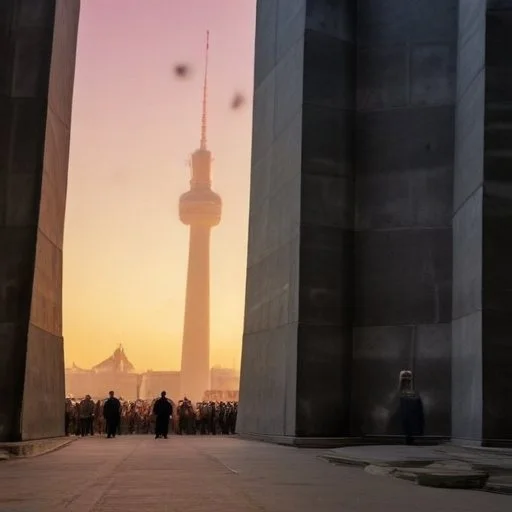
The Nikolaikirche, a humble church nestled in the city center, became the unexpected epicenter of a grassroots revolution. It was here, on September 4, 1989, that a small group of courageous individuals gathered to demand freedom, democracy, and reform, defying the iron grip of the communist regime.
The initial gathering, though small, marked the beginning of a weekly ritual that would soon swell into a tidal wave of dissent. As the weeks passed, the numbers grew, and the voices demanding change grew louder, echoing through the streets of Leipzig and beyond.
| September 4, 1989 | The first Monday demonstration takes place at Nikolaikirche, Leipzig |
| September 11, 1989 | The second Monday demonstration sees a significant increase in attendance, with over 1,000 participants |
| October 9, 1989 | Tens of thousands of demonstrators gather, marking a turning point in the movement |
| November 9, 1989 | The Berlin Wall falls, as the East German government announces new travel regulations |
The Leipzig demonstrations also had a profound impact on the city's cultural landscape. The revolution sparked a creative renaissance, with artists, musicians, and writers drawing inspiration from the spirit of defiance and hope.
For those who participated, the Leipzig demonstrations remain an unforgettable experience. As one eyewitness recounts, "It was as if the very air was electric, charged with the promise of change. We knew we were part of something momentous, something that would alter the course of history."
The Leipzig demonstrations serve as a testament to the power of grassroots activism and the human spirit's capacity for change. As a beacon of hope, Leipzig's revolution continues to inspire generations, reminding us that even in the darkest of times, the possibility for transformation and freedom is always within reach.
The Leipzig demonstrations were not an isolated event, but rather part of a larger wave of protests sweeping across Eastern Europe in the late 1980s. The Polish trade union movement, Solidarity, had been gaining momentum since the early 1980s, and the Hungarian government had begun to implement reforms in the late 1980s. This created a ripple effect, inspiring dissident movements in other Eastern Bloc countries, including East Germany. The Leipzig demonstrations were a key part of this broader movement, which ultimately contributed to the collapse of communism in Eastern Europe.
In the months leading up to the first demonstration, a series of smaller protests had taken place in Leipzig, with activists distributing pamphlets and organizing petititons. However, it was the August 1989, protest in Prague, which drew tens of thousands of people, that galvanized the East German dissident movement. The Leipzig demonstrations were the culmination of this growing momentum, marking a turning point in the struggle for democracy and freedom in East Germany.
The role of the Catholic ChurchThe Catholic Church played a significant role in the Leipzig demonstrations, providing a safe haven for dissident activities and offering moral support to the protesters. The Church's stance on human rights and democracy helped to legitimize the protest movement, giving it a sense of moral authority and credibility. This was especially important in East Germany, where the communist regime had sought to suppress religion and promote atheism.

Christian Führer, the charismatic pastor of Nikolaikirche, was a key figure in the Leipzig demonstrations. Born in 1943, Führer was a pastor in the Lutheran Church of East Germany and had been involved in the dissident movement for several years before the demonstrations began. His leadership and vision played a crucial role in mobilizing the masses and providing a sense of direction to the protest movement.
Führer's approach was distinct from other dissident leaders, as he emphasized the importance of non-violent protest and dialogue with the authorities. This approach helped to create a sense of inclusivity and moral authority, which contributed to the movement's success. Führer's role in the Leipzig demonstrations has been recognized internationally, and he continues to be an important figure in German politics and civil society.
The Leipzig demonstrations had a profound impact on the city's cultural landscape. The revolution sparked a creative renaissance, with artists, musicians, and writers drawing inspiration from the spirit of defiance and hope. The city's streets became a canvas for political graffiti and murals, while underground clubs and bars became hubs for dissident activity.
The demonstrations also inspired a new generation of musicians, who saw the power of music as a tool for social change. The punk rock scene, in particular, flourished in Leipzig, with bands like "Schleim-Keim" and "Die Firma" using their music to critique the communist regime and promote democratic values.

The Leipzig demonstrations marked a significant shift in the political landscape of East Germany. The protests demonstrated that the communist regime was no longer able to suppress dissent through violence and intimidation alone. The demonstrations showed that the people were willing to take a stand and demand change, despite the risks involved.
The regime's response to the demonstrations was initially heavy-handed, with police using batons and tear gas to disperse the crowds. However, as the protests continued to grow in size and intensity, the regime was forced to reconsider its approach. The eventual decision to allow East Germans to travel to the West marked a major concession, and paved the way for the eventual collapse of the Berlin Wall.
The Leipzig demonstrations took place against the backdrop of a rapidly changing geopolitical landscape. The Soviet Union, under Mikhail Gorbachev, was introducing reforms and reducing its grip on Eastern Europe. This created an opportunity for dissident movements to emerge and challenge the communist regimes in Eastern Europe.
The demonstrations in Leipzig were closely watched by governments and dissident movements across Eastern Europe. The success of the Leipzig demonstrations inspired similar protests in other countries, including Czechoslovakia, Hungary, and Poland. The demonstrations marked a key moment in the collapse of communism in Eastern Europe, and paved the way for the reunification of Germany and the expansion of the European Union.