


Lennox Sebe, the self-proclaimed "President for Life" of the South African Bantustan of Ciskei, was abruptly ousted from power in a bloodless military coup led by Brigadier Oupa Gqozo in 1990. This sudden and unexpected transfer of power marked a significant shift in the region's balance of power, leaving many to wonder what sparked this daring move.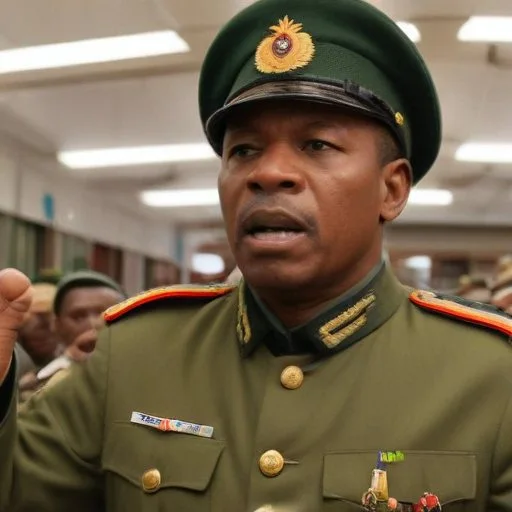
Lennox Sebe's rise to power was marked by controversy and Criticism. As a prominent figure in the apartheid era, Sebe was handpicked by the South African government to lead the Ciskei Bantustan, a move seen as a way to pacify the black population and maintain white minority rule. Sebe's regime was characterized by authoritarianism, corruption, and human rights abuses, earning him the ire of many within and outside Ciskei.
Brigadier Oupa Gqozo, a relatively unknown figure at the time, emerged as the mastermind behind Sebe's ouster. A high-ranking military officer, Gqozo capitalized on Sebe's unpopularity and the growing discontent among the Ciskei population. His bold move marked a new era in Ciskei politics, as he vowed to restore democracy and accountability to the region.
The ousting of Lennox Sebe and the rise of Brigadier Gqozo had far-reaching consequences for Ciskei and the broader South African landscape. The event marked a shift towards democratization and accountability, paving the way for the eventual dismantling of apartheid and the birth of a new, democratic South Africa.
The coup also had significant cultural and social implications, as Ciskei began to transition from a repressive authoritarian regime to a more democratic society. The event inspired a new generation of activists and leaders, who saw Gqozo's bold move as a catalyst for change.
While Gqozo's coup was widely hailed as a positive development, it was not without controversy. Critics argued that the move was undemocratic and that Gqozo's government failed to fully address the human rights abuses and corruption of the Sebe regime. Nevertheless, the event remains a significant milestone in South Africa's journey towards democracy and equality.
The ousting of Lennox Sebe and the rise of Brigadier Gqozo had a profound impact on South African politics and society. The event served as a precursor to the eventual collapse of apartheid and the birth of a democratic South Africa, earning Gqozo a place in history as a champion of democracy and freedom.
Lennox Sebe, the self-proclaimed "President for Life" of Ciskei, was a complex figure with a multifaceted personality. Behind the authoritarian façade, Sebe was a skilled politician who navigated the treacherous waters of apartheid South Africa with remarkable agility. His rise to power was marked by strategic alliances and calculated risks, which ultimately earned him the ire of the South African government.
Sebe's fall from grace was equally dramatic, with Brigadier Gqozo's bloodless coup catching him off guard. As he fled into exile, Sebe's reputation was left in tatters, a testament to the transience of power and the unpredictability of African politics.

Ciskei, one of the four original Bantustans created by the apartheid government, was a microcosm of the larger struggle for democracy and equality in South Africa. The region's history was inextricably linked to the policies of apartheid, which sought to marginalize and disenfranchise the black population.
As a result, Ciskei became a hotbed of resistance and activism, with Sebe's regime embodying the contradictions of apartheid. His ouster marked a significant shift in the region's politics, paving the way for the eventual dismantling of apartheid and the birth of a democratic South Africa.
The fall of Lennox Sebe's regime marked a significant turning point in Ciskei's cultural landscape. As the region transitioned from authoritarianism to democracy, a new wave of artists, writers, and musicians emerged, inspired by the promise of freedom and equality.
This cultural renaissance was characterized by a renewed sense of identity and purpose, as Ciskei's people began to reclaim their heritage and traditions. The event inspired a new generation of creatives, who saw Gqozo's coup as a catalyst for change and a symbol of the power of collective action.

Brigadier Gqozo's bloodless coup was a masterclass in political maneuvering, characterized by precision, speed, and cunning. The coup's success was predicated on Gqozo's ability to build alliances with key stakeholders, including senior military officers and disgruntled Sebe loyalists.
The event highlighted the importance of timing and strategy in political theater, as Gqozo capitalized on Sebe's unpopularity and the growing discontent among the Ciskei population. The coup's aftermath revealed the true extent of Sebe's regime's corruption and authoritarianism, further galvanizing public opinion against the deposed leader.
The ousting of Lennox Sebe had significant economic implications for Ciskei, as the region transitioned from a command economy to a more democratic and accountable system.
Gqozo's government inherited a legacy of corruption and mismanagement, which had stifled economic growth and development in the region. The new administration's commitment to transparency and accountability paved the way for foreign investment and economic reforms, laying the foundation for Ciskei's integration into the post-apartheid South African economy.