


In a groundbreaking moment, Leonid Kravchuk became the first president of Ukraine on December 1, 1991, marking a significant departure from Soviet rule and paving the way for Ukrainian independence. This pivotal event not only reshaped the country's political landscape but also had far-reaching consequences for the Ukrainian people and the global community.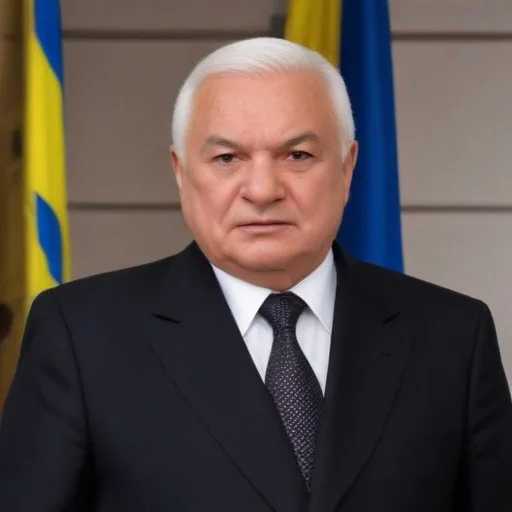
As the Soviet Union's grip began to loosen, Ukraine's demands for independence grew louder. The Ukrainian nationalist movement, fueled by a desire for self-governance and cultural preservation, gained momentum in the late 1980s. Kravchuk, a seasoned politician with a knack for navigating the complex web of Soviet politics, emerged as a key figure in this movement.
Kravchuk's political career spanned over three decades, during which he transitioned from a loyal Communist Party member to a vocal advocate for Ukrainian independence. As the first secretary of the Ukrainian Communist Party, Kravchuk played a crucial role in shaping the country's political trajectory. His gradual shift towards nationalism earned him widespread support among the Ukrainian populace.
The presidential election of 1991 was a watershed moment in Ukrainian history. Kravchuk's victory, with a resounding 61.6% of the vote, marked a decisive break from Soviet dominance. As the first president of Ukraine, Kravchuk vowed to forge a new path, free from the shackles of Soviet control.
Kravchuk's election had a profound impact on Ukrainian culture and society. The resurgence of Ukrainian language, literature, and art became a symbol of national pride. The country's rich cultural heritage, long suppressed under Soviet rule, began to flourish once more.
Despite his popularity, Kravchuk faced criticism for his handling of the economy and his perceived slow pace of reform. However, his commitment to Ukrainian independence and his role in shaping the country's future earned him a special place in the hearts of the Ukrainian people.
Leonid Kravchuk's election as the first president of Ukraine will forever be etched in the annals of history. His unwavering dedication to Ukrainian independence and his vision for a sovereign nation continue to inspire generations. As Ukraine looks to the future, Kravchuk's legacy serves as a reminder of the power of perseverance and the importance of preserving national identity.
Leonid Kravchuk's early life was marked by hardship and perseverance. Born on January 10, 1934, in Velykyi Zhytyn, Ukraine, he grew up in a peasant family that struggled to make ends meet. Despite the challenges, Kravchuk's parents instilled in him a strong love for learning, which propelled him to pursue higher education.
Kravchuk's academic achievements were impressive, earning him a degree in history from Kiev State University in 1958. He later went on to study at the Ukrainian Academy of Sciences, where he developed a deep understanding of Ukrainian history and culture.
Kravchuk's personal life was also marked by significant events. He married his wife, Antonina, in 1957, and they had two children together. Despite his busy political career, Kravchuk always prioritized his family life, often crediting his wife with being his greatest source of support.
The economic landscape of Ukraine underwent a significant transformation following Kravchuk's election. One of his primary goals was to transition the country from a planned to a market-based economy.
To achieve this, Kravchuk implemented a range of reforms, including privatization of state-owned enterprises, liberalization of prices, and decentralization of economic decision-making. These measures aimed to stimulate economic growth, increase foreign investment, and improve living standards for the Ukrainian people.
While the road to economic reform was not without its challenges, Kravchuk's efforts paved the way for Ukraine's integration into the global economy. The country began to attract foreign investment, and its economy started to experience modest growth.
The election of Leonid Kravchuk had a profound impact on Ukrainian culture, as the country began to shake off the shackles of Soviet dominance.
The Ukrainian language, literature, and art, which had been suppressed under Soviet rule, experienced a resurgence in popularity. Kravchuk's government actively promoted the use of Ukrainian language in official settings, and cultural institutions such as museums, theaters, and libraries received increased funding.
The cultural renaissance of the 1990s was marked by a renewed sense of national pride, as Ukrainians began to reclaim their cultural heritage. The country's rich traditions, folklore, and historical landmarks became symbols of national identity, and Kravchuk's government encouraged their preservation and promotion.
The geopolitical context in which Kravchuk's election took place was complex and volatile. The Soviet Union, once a dominant world power, was on the brink of collapse.
The Ukrainian independence movement, which Kravchuk led, was part of a broader trend of nationalist sentiment sweeping across Eastern Europe. The erosion of Soviet influence created a power vacuum, and Ukraine's declaration of independence sent shockwaves throughout the region.
Kravchuk's leadership during this period was instrumental in navigating Ukraine's transition to independence. His ability to balance the country's relations with Russia, the European Union, and other global powers helped to establish Ukraine as a sovereign state.
Leonid Kravchuk's election as Ukraine's first president marked a significant shift in the country's political landscape.
As a former Communist Party member, Kravchuk's transition to a nationalist leader was a remarkable one. His ability to adapt to changing circumstances and navigate the complex web of Ukrainian politics earned him the respect of his peers and the admiration of the Ukrainian people.
Kravchuk's presidency was characterized by a commitment to democratic principles, and he played a crucial role in shaping Ukraine's political institutions. His leadership helped to establish Ukraine as a stable democracy, and his legacy continues to influence Ukrainian politics today.