


Falun Gong, a revolutionary spiritual practice that would soon captivate millions, was first introduced to the public by Li Hongzhi on a fateful day in Changchun, Peoples Republic of China. This pioneering lecture marked the beginning of a grassroots movement that would sweep across China, leaving an indelible mark on the country's spiritual landscape.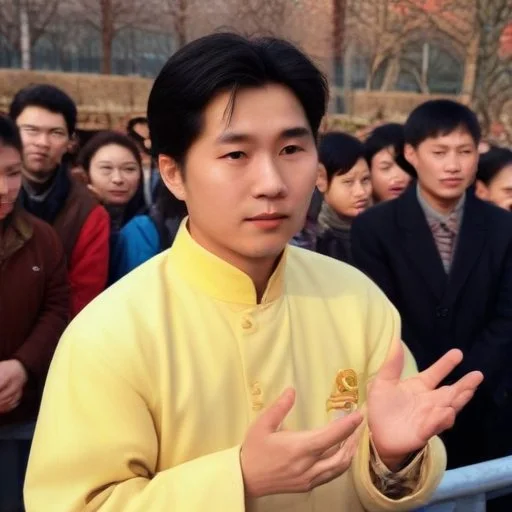
In the midst of China's rapid modernization, many individuals were seeking a deeper connection with their spiritual selves. The country's traditional practices, such as qigong and taiji, were experiencing a resurgence in popularity. It was against this backdrop that Li Hongzhi, a humble qigong master, began to develop his unique spiritual practice, Falun Gong.
Li Hongzhi, a native of Changchun, was an enigmatic figure with a deep understanding of traditional Chinese culture and spirituality. His extensive knowledge of qigong, Buddhism, and Taoism enabled him to craft a practice that was both accessible and profound. With his gentle demeanor and compassionate nature, Li Hongzhi possess a quiet authority that inspired confidence in those who encountered him.
In his inaugural lecture, Li Hongzhi emphasized the importance of cultivating three fundamental principles: compassion, truthfulness, and forbearance. He stressed that these virtues were essential for spiritual growth and self-improvement. By sharing his wisdom, Li Hongzhi provided a roadmap for individuals seeking to elevate their moral character and find inner peace.
The impact of Li Hongzhi's lecture was immediate and profound. News of the practice spread rapidly, drawing in individuals from all walks of life. As more people became acquainted with Falun Gong, practice sites began to sprout up across China, providing a safe space for practitioners to gather, meditate, and share their experiences. The grassroots movement had begun, and it would soon become a cultural phenomenon.
Falun Gong's emphasis on traditional Chinese values and its accessibility made it a beacon for those seeking a deeper connection with their heritage. The practice also drew parallels with China's rich cultural traditions, fostering a sense of national pride and cultural renaissance. As a result, Falun Gong became an integral part of China's spiritual landscape, offering a new avenue for self-expression and personal growth.
Li Hongzhi's inaugural lecture not only introduced Falun Gong to the world but also left an indelible mark on China's spiritual history. The practice has since become a global movement, with millions of practitioners worldwide. As a testament to its enduring appeal, Falun Gong continues to inspire individuals to cultivate their moral character, find inner peace, and strive for spiritual enlightenment.
The introduction of Falun Gong in 1992 came at a time when China was undergoing rapid modernization and economic growth. Amidst this transformation, many Chinese citizens were seeking a deeper connection with their cultural heritage and spiritual traditions. Li Hongzhi's pioneering lecture tapped into this sentiment, offering a unique blend of traditional Chinese values and modern spiritual practices.
In the years leading up to the lecture, the Chinese government had been promoting a campaign to revive traditional Chinese culture, which included the encouragement of qigong and taiji practices. This created a fertile ground for Li Hongzhi's message to take root, as many individuals were already open to exploring new forms of spiritual expression.
The lecture's timing also coincided with the emergence of a growing middle class in China, which had greater disposable income and more leisure time to pursue personal development and spiritual enrichment. This demographic shift helped to fuel the rapid spread of Falun Gong across the country.

Li Hongzhi's early life and upbringing played a significant role in shaping his spiritual philosophy. Born in 1951, Li grew up during a time of great social and cultural upheaval in China, including the tumultuous years of the Cultural Revolution.
Despite the challenges, Li's family instilled in him a strong sense of traditional Chinese values, including a deep respect for Confucianism, Buddhism, and Taoism. These influences would later shape the core principles of Falun Gong, including the emphasis on compassion, truthfulness, and forbearance.
Li's humble beginnings and grassroots approach to spiritual teaching also resonated with many Chinese citizens who were seeking a more authentic and accessible form of spiritual practice. His down-to-earth demeanor and willingness to engage with ordinary people helped to build a strong connection with his audience, paving the way for the rapid growth of Falun Gong.
Falun Gong's impact on Chinese culture was profound, as it helped to revive interest in traditional practices such as qigong, taiji, and meditation. The practice also drew parallels with China's rich cultural heritage, fostering a sense of national pride and cultural renaissance.
The practice's emphasis on traditional Chinese values also helped to promote a sense of cultural continuity, as it drew upon the country's rich philosophical and spiritual traditions. By promoting these values, Falun Gong helped to create a sense of cultural identity and belonging among its practitioners.

Falun Gong's unique blend of traditional Chinese values and modern spiritual practices set it apart from other qigong and meditation practices popular at the time. While other practices focused primarily on physical health and wellness, Falun Gong emphasized the cultivation of moral character and spiritual growth.
In contrast to other spiritual movements, Falun Gong's emphasis on personal responsibility and self-improvement resonated with many Chinese citizens who were seeking a more individualized and empowering approach to spiritual growth. This distinct approach helped to differentiate Falun Gong from other practices, contributing to its rapid growth and popularity.
Falun Gong's philosophical and ideological framework is deeply rooted in traditional Chinese thought, particularly in the principles of Buddhism, Taoism, and Confucianism. The practice's emphasis on compassion, truthfulness, and forbearance reflects a profound understanding of these philosophical traditions.
Li Hongzhi's unique interpretation of these principles, however, distinguishes Falun Gong from other spiritual practices. By emphasizing the importance of moral character and self-improvement, Falun Gong offers a distinct pathway to spiritual growth and enlightenment.
This blend of traditional and modern ideas has contributed to Falun Gong's enduring appeal, as it offers a fresh and innovative approach to spiritual development that is both rooted in Chinese cultural heritage and relevant to contemporary concerns.