


On February 22, 1946, a diplomatic dispatch unlike any other arrived from the US embassy in Moscow, proposing a radical shift in how the United States should deal with the Soviet Union. This 5,000-word cable, later dubbed the Long Telegram, was the brainchild of George Kennan, a seasoned diplomat and chargé d'affaires at the US embassy in Moscow, who had grown weary of the Soviet Union's evasive tactics and lack of transparency.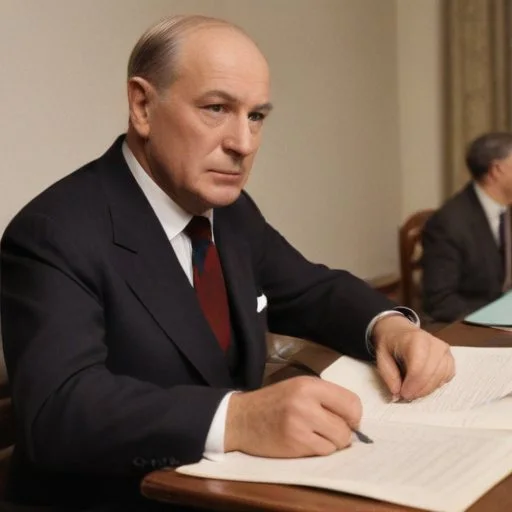
Kennan's candid assessment was rooted in his deep understanding of Soviet politics and mentality, garnered from years of service in Moscow. In the Long Telegram, he warned of Soviet intentions, outlining their expansionist policies, manipulation of international relations, and disregard for democratic values. This comprehensive analysis provided a glimpse into the Soviet Union's inner workings, painting a picture of a nation hell-bent on spreading its influence and undermining Western democracies.
Kennan's recommendation was clear: the United States should adopt a firm, yet nuanced approach to counterbalance Soviet aggression. Rather than opting for direct confrontation, he advocated for a policy of containment, which would prevent the Soviet Union from expanding its influence without resorting to military action. This approach would require patience, persistence, and a deep understanding of Soviet psychology – qualities that Kennan believed were essential in navigating the complex landscape of Cold War geopolitics.
The Long Telegram's impact was immediate and profound. It resonated with policymakers in Washington, who were grappling with the challenges of the post-war world. The telegram's influence can be seen in the subsequent development of the Truman Doctrine and the Marshall Plan, both of which were designed to counterbalance Soviet expansion in Europe. The Long Telegram marked a turning point in American foreign policy, as the United States began to assume a more assertive role in the world, guided by Kennan's wisdom and insight.
George Kennan was more than just the author of the Long Telegram. He was a diplomatic pioneer, known for his intellectual curiosity and his ability to see beyond the veil of Soviet propaganda. Throughout his career, Kennan was driven by a passion for understanding the complexities of international relations and a commitment to promoting American values and interests. The Long Telegram remains his most enduring legacy, a testament to the power of diplomatic insight and the importance of informed policy-making.
The Long Telegram's influence extends far beyond the Cold War era. It marked a shift in American foreign policy, as the United States began to assume a more assertive role in the world. The telegram's emphasis on containment over confrontation has informed policy-making for generations, shaping the way the United States engages with rival powers and promoting a culture of strategic thinking and diplomacy. As a testament to its enduring relevance, the Long Telegram remains a required reading for diplomats, policymakers, and scholars of international relations, a reminder of the importance of informed policy-making and the power of diplomatic insight.
The post-World War II era was marked by a power vacuum, with the United States and the Soviet Union emerging as the two dominant world powers. The Soviet Union, led by Joseph Stalin, was determined to expand its influence and spread communism throughout Europe and Asia. The United States, meanwhile, was focused on promoting democracy and capitalist values. This ideological divide created an atmosphere of tension and mistrust, setting the stage for the Cold War.
In this context, the Long Telegram was a timely warning, alerting the US government to the Soviet Union's true intentions and highlighting the need for a robust response. The telegram's emphasis on containment over confrontation resonated with policymakers in Washington, who were grappling with the challenges of maintaining national security in a rapidly changing world.

George Kennan was a career diplomat with a deep understanding of Soviet politics and culture. Born in 1904, Kennan was a product of the US Foreign Service, serving in various posts around the world, including Moscow, Berlin, and Lisbon. His extensive experience and linguistic skills (he was fluent in Russian, German, French, and Portuguese) made him an invaluable asset to the US government.
Kennan's intellectual curiosity and passion for understanding the complexities of international relations drove him to develop innovative approaches to diplomacy. His skepticism towards Soviet intentions and his advocacy for a policy of containment put him at odds with some of his colleagues, who favored a more conciliatory approach. Despite these challenges, Kennan remained a vocal critic of Soviet aggression, earning him a reputation as one of the most astute and prescient diplomats of his generation.
The Long Telegram itself was a remarkable document, totalling over 5,000 words and providing a detailed analysis of Soviet politics and intentions. Written in a clear and concise style, the telegram was free from diplomatic jargon, making it accessible to policymakers and scholars alike.
The telegram's significance extended beyond its content, as it marked a turning point in the use of diplomatic cables as a means of communication. The Long Telegram's length and depth set a new standard for diplomatic reporting, paving the way for more detailed and nuanced analysis in the years to come.

The Long Telegram's emphasis on containment over confrontation reflected a deeper philosophical and ideological divide between the United States and the Soviet Union. The telegram's author, George Kennan, was a strong advocate for democratic values and saw the Soviet Union's expansionist policies as a threat to these principles.
The Long Telegram's influence can be seen in the subsequent development of the Truman Doctrine and the Marshall Plan, both of which were designed to promote democracy and counterbalance Soviet influence in Europe. The telegram's legacy extends beyond the Cold War era, shaping the way the United States engages with rival powers and promoting a culture of strategic thinking and diplomacy.
Historians have long debated the significance of the Long Telegram, with some viewing it as a seminal moment in the development of American foreign policy. Others have criticized the telegram's emphasis on containment, arguing that it contributed to a policy of militarization and confrontation.
Regardless of interpretation, the Long Telegram remains a critical document in the study of Cold War history, offering a unique insight into the thinking of American policymakers during this tumultuous period. As such, it continues to be studied by scholars and policymakers alike, providing a valuable lesson in the importance of informed policy-making and diplomatic insight.