


In the sweltering summer of 1830, the streets of Paris erupted in a triumphant cry: "Vive la Réforme!" as King Charles X, the last absolute monarch of France, was forced to relinquish his grip on power. In the aftermath of the three-day July Revolution, the National Assembly turned to the Duke of Orléans, Louis Philippe, to assume the throne, marking the beginning of the July Monarchy.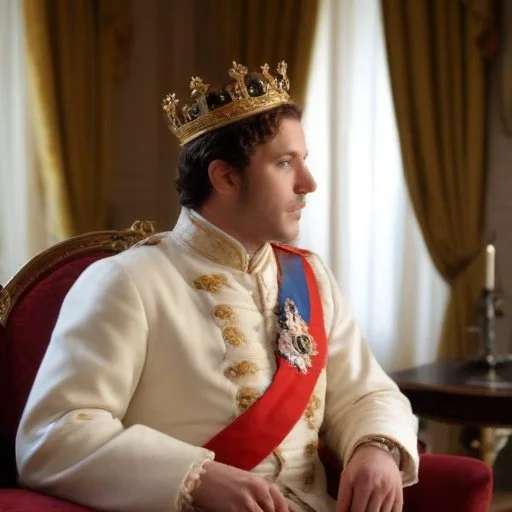
Louis Philippe, known for his liberal leanings and willingness to compromise, was the ideal figure to navigate the treacherous waters of French politics. His reputation as a reformer and advocate for constitutional monarchy made him an attractive choice for the National Assembly, which sought to establish a more representative and inclusive government.
The downfall of Charles X was a culmination of years of discontent among the French people, who grew increasingly disillusioned with the absolute monarchy's restrictive policies and disregard for civil liberties. The final straw came when Charles X, in a last-ditch attempt to reclaim power, issued the Four Ordinances, which aimed to curtail freedom of the press, suppress opposition, and restrict voting rights. The move was met with widespread protests and violence, ultimately forcing the king to abdicate on August 2, 1830.
With Louis Philippe at the helm, the July Monarchy promised a new era of reform and cooperation between the monarchy and the people. The Charter of 1830, adopted in August of that year, established the principles of constitutional monarchy, enshrining the rights of citizens and limiting the power of the throne. This historic document marked a significant departure from the authoritarian rule of Charles X and paved the way for future democratic reforms.
The July Monarchy had far-reaching implications for French society and culture. The freedom of the press, which Louis Philippe championed, enabled the proliferation of newspapers, journals, and literary works, fostering a cultural renaissance in France. The era also witnessed significant social changes, including the expansion of education and the emergence of a middle class.
Louis Philippe's reign was not without its challenges. Critics accused him of being overly cautious and unwilling to implement radical reforms, while others saw him as a pragmatic leader who navigated the treacherous landscape of French politics with skill and diplomacy. Despite these criticisms, the July Monarchy endured for 18 years, until the Revolution of 1848 brought an end to Louis Philippe's reign.
The July Monarchy, though imperfect, laid the foundations for France's gradual transition to democracy. Louis Philippe's commitment to reform and compromise paved the way for future generations of French leaders, including the Third Republic, which would eventually emerge in the late 19th century. Today, the legacy of the July Monarchy serves as a testament to the power of democratic ideals and the enduring spirit of French republicanism.
As the July Monarchy's legacy continues to shape the course of French history, we are reminded that even in the face of turmoil and upheaval, the spirit of compromise and reform can pave the way for a brighter, more democratic future.
Louis Philippe, the Duke of Orléans, was born on October 6, 1773, to Louis Philippe Joseph, Duke of Orléans, and Louise Marie Adélaïde de Bourbon. He was a member of the House of Orléans, a cadet branch of the Bourbon dynasty. Throughout his life, Louis Philippe was known for his liberal leanings and his willingness to compromise, earning him the nickname "the Citizen King." He was also a skilled politician and diplomat, able to navigate the complex web of alliances and rivalries that defined European politics in the early 19th century.
Louis Philippe's early life was marked by turmoil and upheaval. He was forced to flee France during the French Revolution and spent several years in exile, during which time he traveled extensively throughout Europe and developed a deep appreciation for the principles of constitutional monarchy.
Despite his royal heritage, Louis Philippe was a strong advocate for liberal reforms and the limitations of monarchical power. He believed in the principles of democracy and was willing to work with the National Assembly to implement reforms that would benefit the French people.

The July Monarchy was not an isolated event, but rather part of a broader tapestry of European politics and diplomacy. The early 19th century was marked by a complex web of alliances and rivalries between European powers, including Britain, France, Prussia, and Austria.
The French Revolution had sent shockwaves throughout Europe, and the subsequent rise of Napoleon Bonaparte had further destabilized the continent. The Congress of Vienna, which met in 1815, had attempted to restore the balance of power in Europe, but the July Monarchy marked a significant shift in the dynamics of European politics.
France, under Louis Philippe, was poised to become a major player in European affairs, and the July Monarchy marked the beginning of a new era of French diplomacy and international relations.
The July Monarchy was not the only experiment in constitutional monarchy in 19th-century Europe. The British monarchy, under Queen Victoria, was also evolving towards a more constitutional system, although the process was much more gradual.
In contrast, the July Monarchy was marked by a more dramatic shift towards democracy, with the adoption of the Charter of 1830 and the establishment of a constitutional monarchy. While the British system was characterized by a stronger monarchical presence, the July Monarchy was marked by a greater emphasis on popular sovereignty and representation.
These differing approaches to constitutional monarchy reflect fundamentally different visions of democracy and the role of the monarch in modern society.

The July Monarchy had a profound impact on French culture and society. The newfound freedom of the press, championed by Louis Philippe, led to a proliferation of newspapers, journals, and literary works, fostering a cultural renaissance in France.
The era also witnessed significant social changes, including the expansion of education and the emergence of a middle class. These changes helped to create a more vibrant and diverse cultural landscape in France, with a greater emphasis on individual liberty and creativity.
The July Monarchy's cultural impact can be seen in the works of authors such as Victor Hugo, Honoré de Balzac, and Eugène Delacroix, who were all active during this period.
Historians have long debated the significance of the July Monarchy and its impact on French history. Some have seen it as a key moment in the transition towards democracy, while others have viewed it as a failed experiment in constitutional monarchy.
Marxist historians, such as Karl Marx himself, have seen the July Monarchy as a bourgeoisie revolution, which paved the way for the rise of capitalism in France. Others, such as Alexis de Tocqueville, have viewed it as a turning point in the development of modern democracy.
Regardless of their interpretation, historians agree that the July Monarchy was a pivotal moment in French history, marking a significant shift towards democratization and constitutional government.