


The siege of Damascus, led by King Louis VII of France, remains a pivotal moment in the tumultuous history of the Second Crusade. This ill-fated campaign, marked by misjudgment and internal strife, would ultimately spell disaster for the French forces and cast a long shadow over the entire Crusade.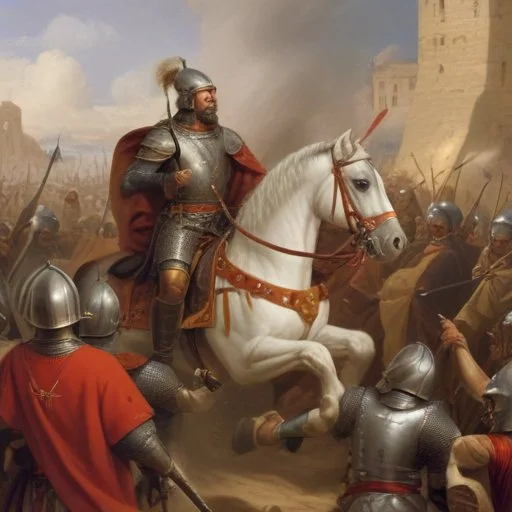
In the wake of Edessa's fall in 1144, the Christian world was galvanized into action. The Second Crusade, a response to the perceived threat to the Holy Land, drew in monarchs and nobles from across Europe. Among them was King Louis VII of France, driven by a fierce determination to reclaim the sacred city of Jerusalem.
June 1148 marked the beginning of Louis VII's fateful journey to Damascus, a strategic stronghold in the heart of the Muslim world. The French army, accompanied by a contingent of Templar Knights, marched across the unforgiving desert landscape, braving the scorching sun and treacherous terrain.
This toxic cocktail of factors would soon unravel the French army's momentum and expose its fatal flaws.
The siege of Damascus commenced on July 24, 1148. However, the French forces were quickly bogged down by the ferocious Muslim defense. Despite initial gains, the Crusaders soon found themselves beleaguered by the unrelenting heat, dwindling supplies, and dwindling morale.
As the siege dragged on, internal discord and rivalry among the Crusader leaders came to a head. The Templar Knights, sensing defeat, withdrew their support, leaving Louis VII's forces exposed and vulnerable. On July 28, 1148, the French army was forced to abandon its siege and retreat, marking a crushing defeat for the Crusade.
The debacle at Damascus dealt a devastating blow to the Second Crusade's momentum. The failed campaign would cast a long shadow over the remaining Crusades, as well as the reputation of King Louis VII. The fiasco served as a stark reminder of the perils of underestimating the Muslim world and the importance of unity among Christian forces.
The siege of Damascus serves as a poignant reminder of the complexities and challenges inherent in military campaigns. It also highlights the enduring importance of cooperation, strategic planning, and adaptability in the face of adversity. As we reflect on this tumultuous chapter in history, we are reminded of the need for humility, empathy, and understanding in our pursuit of peaceful coexistence.
Delve deeper into the intricacies of the Second Crusade and the pivotal siege of Damascus through these revered historical accounts.
The siege of Damascus was not an isolated event, but rather part of a larger struggle for control of the Holy Land. The Second Crusade, launched in response to the fall of Edessa in 1144, was a complex and multi-faceted campaign that involved multiple Christian factions and Muslim states. The French forces, led by King Louis VII, were just one of many armies that marched towards Jerusalem, but their defeat at Damascus marked a turning point in the Crusade.
In the aftermath of the siege, the French army regrouped and launched a series of smaller campaigns in the surrounding region. However, these efforts were ultimately unsuccessful, and the Crusade began to falter. The failure of the Second Crusade marked a significant shift in the balance of power in the region, as Muslim states began to gain the upper hand against their Christian counterparts.

King Louis VII of France, the leader of the French forces during the siege of Damascus, was a complex and multifaceted figure. A devout Christian and skilled military leader, Louis was driven by a desire to reclaim the Holy Land for Christendom. However, his leadership during the siege was marked by indecision and inflexibility, which ultimately contributed to the defeat of his army.
Despite his failure at Damascus, Louis VII remained a significant figure in European politics, and he would go on to play a key role in the development of the Third Crusade. His legacy as a military leader and diplomat continues to be debated among historians, but his role in the siege of Damascus remains a central part of his story.
The siege of Damascus is often compared to the failed siege of Antioch during the First Crusade. Both campaigns were marked by disunity among Christian leaders, logistical challenges, and underestimated Muslim resistance. However, the siege of Damascus was unique in its scale and scope, involving a larger and better-equipped army than the earlier campaign.
Despite these differences, both sieges share a common thread: the failure of Christian forces to adapt to the unforgiving environment of the Middle East. The Crusades were marked by a series of costly mistakes, from the failure to prepare for the desert climate to the underestimation of Muslim military prowess. The siege of Damascus was just one chapter in this larger narrative of failure and defeat.
The siege of Damascus took place against the backdrop of a rapidly shifting geopolitical landscape. The rise of Nur ad-Din, a powerful Muslim leader, had created a new balance of power in the region, as Christian and Muslim states vied for control of key territories. The failure of the French forces at Damascus marked a significant shift in this balance of power, as Muslim states began to gain the upper hand.
In the aftermath of the siege, the region was plunged into a period of turmoil and instability, as rival factions and states jockeyed for power. The legacy of the siege of Damascus would continue to shape the region for centuries to come, as Christian and Muslim forces clashed in a series of bloody conflicts.
The Historiography of the Siege of Damascus is a complex and multifaceted field of study. Historians have long debated the causes and consequences of the siege, with some arguing that it marked a turning point in the Second Crusade, while others see it as a minor setback in a larger campaign.
One key area of debate is the role of King Louis VII in the siege. Some historians have portrayed him as a brave but flawed leader, while others see him as a reckless and incompetent commander. This debate reflects a broader ongoing discussion about the nature of leadership and decision-making during the Crusades.