


Madeleine Albright, a Czech-born American diplomat, etched her name in history books as the first woman to serve as the United States Secretary of State. This groundbreaking appointment, made by President Bill Clinton in 1997, marked a significant milestone in American politics, solidifying Albright's position as a powerful player on the global stage.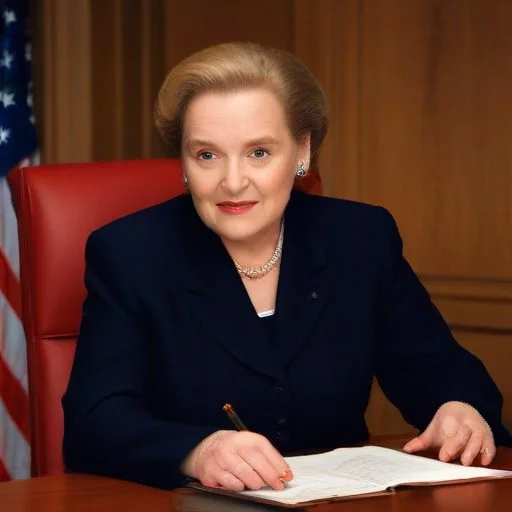
Albright's journey to the Secretary of State position was a culmination of years of public service and dedication to international relations. Born in 1937, she fled her native Czechoslovakia with her family to escape the Nazi occupation. She later immigrated to the United States, where she earned her bachelor's degree from Wellesley College and her Ph.D. in Public Law and Government from Columbia University.
As Secretary of State, Albright brought a unique perspective to the role, drawing from her experiences as a refugee, a woman, and a seasoned diplomat. Her appointment marked a significant shift in American foreign policy, as she championed causes such as global cooperation, human rights, and democracy.
During her tenure, Albright played a crucial role in shaping America's response to several global crises, including the Balkans conflict, the Middle East peace process, and the expansion of NATO.
Albright's legacy extends far beyond her impressive diplomatic achievements. She has inspired generations of women to pursue careers in public service and international relations, shattering glass ceilings and paving the way for future female leaders.
"The question is, what can we do to make sure that women are able to participate fully in the development of their countries?" Madeleine Albright
Albright's contributions to international relations and public service have been recognized with numerous awards and honors, including the Presidential Medal of Freedom, the nation's highest civilian honor.
Today, Albright continues to be a vocal advocate for human rights, democracy, and global cooperation, inspiring future generations of leaders to follow in her footsteps.
Madeleine Albright's appointment as the first female Secretary of State marked a significant milestone in American history, paving the way for future generations of women to pursue careers in public service and international relations. As a trailblazing diplomat, she has left an indelible mark on the world stage, inspiring countless individuals to strive for a more just and equitable world.
Madeleine Albright's Early Life and Influences
Madeleine Albright's early life was marked by displacement and adaptation, experiences that would later shape her views on international relations. Born in Prague, Czechoslovakia, in 1937, Albright fled her homeland with her family to escape the Nazi occupation. This traumatic event instilled in her a deep understanding of the human cost of war and the importance of diplomacy.
Albright's father, Josef Korbel, a Czech diplomat, played a significant role in shaping her worldview. His experiences as a diplomat influenced her interest in international relations and her commitment to public service.
Albright's education at Wellesley College and later at Columbia University further solidified her passion for international relations and her desire to make a difference in the world.

The Geopolitical Context of Albright's Appointment
In 1997, the world was witnessing a significant shift in global politics. The Cold War had ended, and the United States was emerging as a sole superpower. This new era of international relations presented opportunities for the United States to assert its influence and shape global events.
The appointment of Madeleine Albright as Secretary of State was a strategic move by President Clinton to capitalize on this changing geopolitical landscape. Albright's experience in international relations and her commitment to democracy and human rights made her an ideal candidate to navigate the complexities of global politics.
Madeleine Albright's Cultural Impact on Women in Diplomacy
Madeleine Albright's appointment as Secretary of State sent a powerful message to women around the world: that they too could aspire to the highest echelons of power and influence. Her trailblazing career inspired a generation of women to pursue careers in diplomacy and international relations.
Albright's cultural impact extended beyond the realm of politics. She became a symbol of what it means to be a strong, intelligent, and determined woman. Her legacy continues to inspire women to pursue careers in public service and to challenge the status quo.

Albright's Approach to Foreign Policy
Madeleine Albright's approach to foreign policy was marked by a commitment to diplomacy, democracy, and human rights. She believed that the United States had a moral obligation to promote these values around the world.
Albright's foreign policy approach was also characterized by a willingness to engage with international organizations and to work with other nations to address global challenges. Her leadership played a crucial role in shaping America's response to several global crises, including the Balkans conflict and the Middle East peace process.
Historical Perspectives on Albright's Legacy
Madeleine Albright's legacy can be seen as part of a broader historical narrative of women's empowerment and the evolution of American foreign policy. Her appointment as Secretary of State marked a significant milestone in the struggle for women's equality in public life.
Historians will remember Albright as a pioneering figure who challenged the traditional male-dominated world of international relations. Her legacy will continue to inspire future generations of women to pursue careers in diplomacy and public service.