


Margaret Thatcher's triumph in the 1979 United Kingdom general election marked a groundbreaking moment in British history, catapulting her to become the first female Prime Minister of the United Kingdom. This monumental achievement shattered the glass ceiling, paving the way for women in politics and cementing her place as a pioneering figure in modern British politics.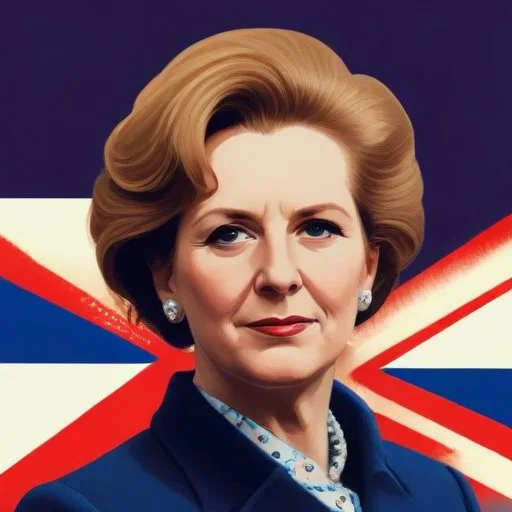
In the late 1970s, Britain was grappling with economic stagnation, high inflation, and widespread industrial unrest. The Labour government, led by James Callaghan, had struggled to address these issues, creating an environment ripe for change. Enter Margaret Thatcher, a stalwart of the Conservative Party, who capitalized on the nation's discontent and presented a vision for radical reform.
Thatcher's campaign focused on the principles of free-market economics, limited government intervention, and individual freedom. Her message resonated with a nation weary of state control and bureaucratic red tape. With her characteristic conviction and authority, Thatcher presented a compelling alternative to the status quo, promising to restore Britain's economic fortunes and national pride.
The election results, announced on May 3, 1979, delivered a crushing defeat to the Labour Party, with the Conservatives securing a majority of 43 seats. Thatcher's victory was nothing short of a landslide, with the Conservatives winning 339 seats to Labour's 269. The magnitude of this victory granted Thatcher a mandate to implement her radical reform agenda.
The following day, May 4, 1979, Margaret Thatcher took office as the first female Prime Minister of the United Kingdom. Her inauguration marked a significant turning point in British politics, as she set about implementing her vision for a liberated economy and a more assertive Britain on the world stage.
Margaret Thatcher's rise to power had a profound impact on British society and culture. Her uncompromising style and unapologetic advocacy for free-market principles earned her the nickname 'The Iron Lady.' This moniker became synonymous with Thatcher's unwavering commitment to her ideals, and her willingness to challenge the status quo.
Thatcher's reign was not without controversy. Her policies were often criticized for exacerbating social and economic inequalities, particularly in the north of England and Wales. The miners' strike of 1984-85, which pitted the government against the National Union of Mineworkers, is a notable example of the intense social unrest that characterized her tenure.
Despite these controversies, Thatcher remains an iconic figure in British politics, celebrated by many for her unwavering conviction and reviled by others for her perceived intransigence. Love her or loathe her, Margaret Thatcher's impact on British politics is undeniable, and her legacy continues to shape the nation's discourse on economics, politics, and society.
In comparison to her predecessors, Margaret Thatcher's leadership style was distinctively assertive and decisive. While Harold Wilson and James Callaghan had adopted a more conciliatory approach to industrial relations, Thatcher took a firm stance against union power, ultimately leading to the miners' strike. This marked a significant shift in the government's approach to labor disputes, reflecting Thatcher's commitment to free-market principles.
In contrast to the Labour Party's focus on state control and centralized planning, Thatcher's policies emphasized individual freedom and limited government intervention. This ideological divide between the two major parties contributed to the 1979 election result, with the Conservatives securing a landslide victory.

Margaret Thatcher's rise to power was fueled by her unwavering conviction and unapologetic advocacy for free-market principles. Her ironclad determination earned her the nickname "The Iron Lady," which became synonymous with her unyielding commitment to her ideals. This persona was cultivated through her unwavering stance on issues such as trade union reform and privatization.
Thatcher's leadership style was characterized by her ability to connect with voters on a personal level. Her humble beginnings, as the daughter of a grocer, resonated with the working class, while her strong convictions appealed to those seeking a decisive leader. This unique blend of relatability and conviction helped Thatcher build a strong electoral coalition.
The environmental impact of Thatcher's policies was significant, particularly in the context of industrial privatization. The sale of state-owned industries, such as British Coal, led to the closure of uneconomical mines, resulting in widespread job losses and environmental degradation in mining communities. The increased focus on free-market principles also led to deregulation in industries such as energy and transportation, which had negative environmental consequences.
The introduction of market-oriented economic policies also led to an increase in carbon emissions, as the government's focus shifted from environmental protection to economic growth. This legacy of environmental neglect has been criticized by environmental groups and scholars, who argue that Thatcher's policies contributed to the UK's poor environmental record.

Historians have debated the significance of Margaret Thatcher's victory in the 1979 general election, with some arguing that it marked a fundamental shift in British politics. Thatcher's emphasis on free-market principles and limited government intervention challenged the post-war consensus, which had emphasized state control and centralized planning. This ideological shift had far-reaching consequences, as Thatcher's policies influenced British politics for decades to come.
Other historians have emphasized the role of Thatcher's leadership style in shaping her government's policies. Her ironclad determination and conviction in the face of opposition helped to galvanize support for her reforms, even in the face of intense criticism from trade unions and the Labour Party.
Margaret Thatcher's rise to power had a profound impact on British society and culture. Her policies, particularly those related to privatization and trade union reform, contributed to a shift in the national zeitgeist, as the country moved away from state control and towards a more individualistic, market-oriented economy. This cultural shift was reflected in popular media, with films such as Chariots of Fire (1981) and The Full Monty (1997) capturing the spirit of Thatcherite Britain.
Thatcher's persona, particularly her strong convictions and unwavering leadership style, also influenced British popular culture. Her image was often caricatured in the media, with Spitting Image's portrayal of Thatcher as a dominant, assertive figure becoming a cultural touchstone.