


Martin Luther King, Jr. Day, a federal holiday commemorating the life and legacy of the civil rights icon, was officially observed for the first time in all 50 US states on January 20, 1986. This milestone marked a significant triumph for the civil rights movement, as the nation came together to acknowledge the ongoing struggle for racial equality and social justice.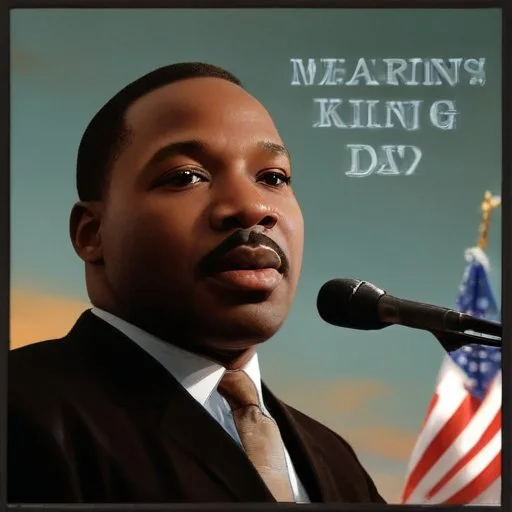
The concept of a national holiday honoring Martin Luther King, Jr. began as early as 1968, just four days after his assassination. However, it wasn't until 15 years later that the dream became a reality. The journey was marked by tireless efforts from civil rights leaders, politicians, and ordinary citizens who fought to ensure King's message of love, unity, and equality continued to inspire generations to come.
1968: Four days after Martin Luther King, Jr.'s assassination, Congressman John Conyers, Jr. introduces the first bill to establish a national holiday in King's honor.
1983: After years of advocacy and protests, Congress passes Public Law 98-144, authorizing the creation of Martin Luther King, Jr. Day.
January 20, 1986: Martin Luther King, Jr. Day is officially observed for the first time in all 50 US states.
The successful implementation of Martin Luther King, Jr. Day had far-reaching consequences, including:
Martin Luther King, Jr. Day has had a profound impact on American culture, inspiring:
Some of Martin Luther King, Jr.'s most memorable quotes include:
Martin Luther King, Jr. Day continues to inspire Americans to work towards a more just and equitable society. As we reflect on King's life and legacy, we are reminded of the power of courage, compassion, and determination in creating a brighter future for all.
The celebration of Martin Luther King, Jr. Day has had a profound impact on American culture, extending beyond the civil rights movement to influence various aspects of society.
One notable example is the realm of music, where King's message of love and unity inspired a new wave of socially conscious artists.
Stevie Wonder's 1981 song "Happy Birthday" became an anthem for the movement, while other artists like U2, Public Enemy, and Tracy Chapman referenced King's legacy in their work.
This cultural resonance has contributed to the holiday's enduring relevance, as new generations of artists and musicians continue to draw inspiration from King's vision of a more just and equitable society.
Congressman John Conyers, Jr. was a pivotal figure in the campaign to establish Martin Luther King, Jr. Day.
Born in 1929, Conyers was a Democrat from Michigan who served in the US House of Representatives for over 50 years.
As a founding member of the Congressional Black Caucus, Conyers was a vocal advocate for civil rights and social justice, introducing the first bill to establish a national holiday in King's honor just four days after his assassination.
Conyers' tireless efforts helped to keep King's legacy alive, ultimately contributing to the passage of Public Law 98-144 in 1983.
The establishment of Martin Luther King, Jr. Day has had a significant impact on education in the United States.
The holiday has provided an opportunity for schools to incorporate lessons on King's life and legacy, as well as the broader civil rights movement, into their curricula.
This has helped to promote greater understanding and appreciation of the ongoing struggle for racial equality and social justice, as well as the importance of service and volunteerism.
Furthermore, the holiday has inspired the development of innovative educational programs and resources, such as the Martin Luther King, Jr. Papers Project at Stanford University.
Martin Luther King, Jr.'s philosophy of nonviolent resistance was deeply rooted in his Christian faith and the principles of Mohandas Gandhi.
King's emphasis on love and compassion as a means of achieving social change challenged traditional notions of power and protest, inspiring a new generation of activists to adopt nonviolent methods.
This philosophical approach has had a lasting impact on social movements around the world, influencing figures such as Nelson Mandela and the Dalai Lama.
King's message of love and unity continues to resonate today, offering a powerful framework for addressing the complex social and political challenges of our time.
The movement to establish Martin Luther King, Jr. Day was a prime example of social change dynamics in action.
The campaign involved a diverse range of actors, from civil rights leaders and politicians to artists and ordinary citizens, working together to achieve a common goal.
Through a combination of grassroots organizing, protests, and lobbying, the movement was able to build momentum and secure legislative support for the holiday.
This successful campaign serves as a model for social change efforts, demonstrating the power of collective action and strategic advocacy in achieving lasting impact.