


On March 21, 1965, Martin Luther King Jr. led a procession of 3,200 brave men and women on a 54-mile journey from Selma to Montgomery, Alabama, marking the third and finally successful civil rights march in the fight against racial segregation and inequality.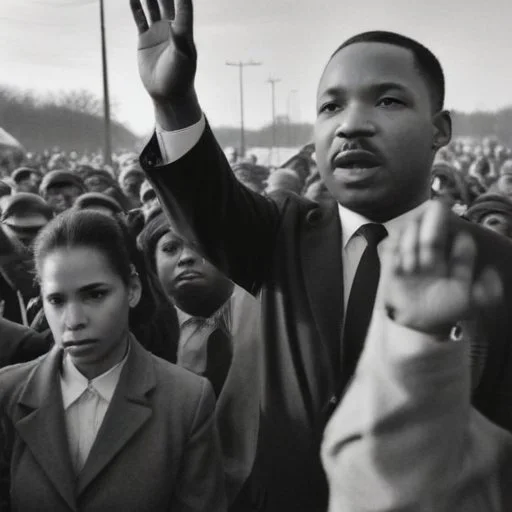
The march was a response to the brutal attacks on peaceful protesters just weeks prior, known as Bloody Sunday. On March 7, 1965, over 500 civil rights activists, including King, had attempted to march from Selma to Montgomery to demand voting rights for African Americans. However, they were met with violence from state and local law enforcement, who attacked them with tear gas and billy clubs, forcing them to retreat.
The third march, led by King, was different. With the world watching, the marchers were determined to reach Montgomery and deliver their message to Governor George Wallace. The march was a testament to the power of nonviolent resistance, a philosophy King had long advocated for. As they walked, the marchers sang hymns and chanted slogans, their collective voice ringing out for justice and equality.
The successful march from Selma to Montgomery was a major turning point in the civil rights movement. The march helped to galvanize public opinion, and it played a significant role in the passage of the Voting Rights Act of 1965, which outlawed racial discrimination in voting.
The march also marked a shift in the civil rights movement, as it increasingly focused on voting rights and political empowerment, rather than just desegregation.
"How long? Not long, because 'no lie can live forever.' How long? Not long, because 'you shall reap what you sow.'" - Martin Luther King Jr., from his speech at the conclusion of the march in Montgomery.
The march from Selma to Montgomery was a defining moment in American history, and it continues to inspire social and cultural change to this day. The march has been the subject of numerous films, songs, and books, and it remains a powerful symbol of the struggle for racial equality.
In conclusion, the march from Selma to Montgomery was a testament to the power of nonviolent resistance and the unwavering commitment of Martin Luther King Jr. and the civil rights movement. It marked a major turning point in the fight against racial segregation and inequality, and it continues to inspire and educate people around the world.
At the forefront of the march was Martin Luther King Jr., a charismatic leader who had been instrumental in the civil rights movement. Born in Atlanta, Georgia, King was a Baptist minister who became involved in the struggle for African American rights at a young age. He was heavily influenced by Gandhi's philosophy of nonviolent resistance and applied it to the civil rights movement.
Ralph Abernathy, a close friend and colleague of King's, played a crucial role in organizing the march. Abernathy was a fellow Baptist minister who had worked alongside King in the Southern Christian Leadership Conference (SCLC). He was a skilled strategist and helped to coordinate the logistics of the march.
John Lewis, a young civil rights leader, was brutally beaten on Bloody Sunday. Despite his injuries, Lewis continued to be involved in the movement and was a key figure in the Student Nonviolent Coordinating Committee (SNCC).

The successful march from Selma to Montgomery had a significant economic impact on the state of Alabama. The procession of marchers brought national attention to the city, which led to a surge in tourism and economic growth.
The march also led to an increase in funding for civil rights organizations, allowing them to further their work in fighting racial segregation and inequality.
In addition, the march helped to pave the way for the passage of the Civil Rights Act of 1968, which prohibited discrimination in the sale and rental of housing. This legislation had a profound impact on the housing market and helped to reduce segregation in housing.
The march from Selma to Montgomery took place during a tumultuous time in American history. The civil rights movement was gaining momentum, and the march became a focal point for the nation.
The geopolitical context of the march was characterized by a growing divide between the northern and southern states. The northern states were largely supportive of the civil rights movement, while the southern states were resistant to change.
The march also took place during the height of the Cold War, and the Soviet Union was critical of the US government's response to the civil rights movement. This added an international dimension to the march and highlighted the need for the US to address its own human rights abuses.
The march from Selma to Montgomery has had a lasting cultural impact on American society. The march has been the subject of numerous films, songs, and books, and continues to inspire social and cultural change to this day.
The march has also been commemorated in various ways, including the establishment of the Selma to Montgomery National Historic Trail. This trail recognizes the significance of the march and provides a physical reminder of the struggles and sacrifices made during the civil rights movement.
In addition, the march has inspired a new generation of civil rights activists, who continue to fight for racial equality and social justice.
The march from Selma to Montgomery was deeply rooted in the philosophy of nonviolent resistance. This philosophy, popularized by Gandhi, emphasized the use of nonviolent means to achieve social and political change.
The march also reflected the Christian values of love and compassion, which were central to the civil rights movement. King's leadership and eloquence were influenced by his Christian faith, and he often drew on biblical themes in his speeches and sermons.
The march was also guided by a strong sense of moral urgency, as the participants were driven by a conviction that racial segregation and inequality were morally wrong.