


The Malta Summit, held on December 2-3, 1989, was a pivotal meeting between U.S. President George H. W. Bush and Soviet General Secretary Mikhail Gorbachev, marking a significant shift in the longstanding rivalry between the two superpowers. This historic gathering, which took place off the coast of Malta, signaled a potential end to the decades-long Cold War between NATO and the Warsaw Pact.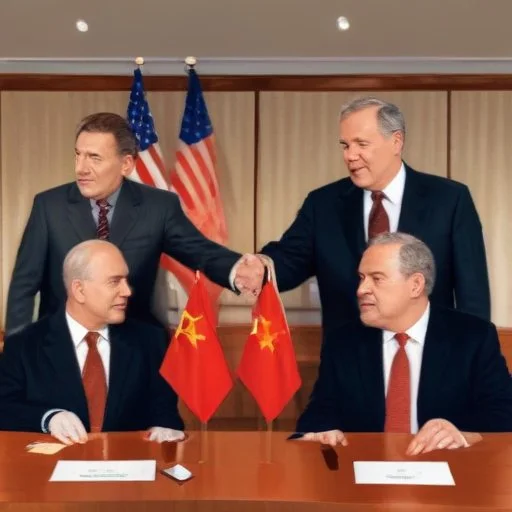
The Cold War, which began in the aftermath of World War II, had been characterized by a prolonged period of political and military tension between the United States and the Soviet Union. The two nations, with their respective alliances, had been engaged in a series of proxy wars, espionage, and propaganda campaigns, which had created an atmosphere of fear and mistrust.
Two leaders, with vastly different backgrounds and ideologies, played a crucial role in shaping the Malta Summit:
During the Malta Summit, Bush and Gorbachev issued joint statements that hinted at a significant thaw in the Cold War. The two leaders acknowledged the need for cooperation and expressed a willingness to work together on issues such as arms control, regional conflicts, and economic development.
The meeting was marked by a sense of optimism and a newfound willingness to engage in dialogue. The joint statement, issued at the end of the summit, emphasized the importance of "building a new relationship" between the two nations, based on "mutual respect, trust, and cooperation."
The Malta Summit had far-reaching consequences, including:
The Malta Summit had a profound impact on popular culture and society, symbolizing a new era of cooperation and detente between the East and West.
The summit was seen as a sign of hope and optimism, marking a shift away from the fear and mistrust that had characterized the Cold War era. It paved the way for increased cultural exchange, tourism, and economic cooperation between the two nations.
George H. W. Bush later recalled the Malta Summit as a "moment of great hope" and a "turning point" in the Cold War. He credited Gorbachev's willingness to engage in dialogue as a key factor in the success of the summit.
Gorbachev, in his memoirs, described the meeting as a "breakthrough" and a "new beginning" in Soviet-American relations. He praised Bush's pragmatic approach to diplomacy and his willingness to listen to Soviet concerns.
The Malta Summit set the stage for a series of historic events, including the collapse of the Soviet Union in 1991 and the end of the Cold War.
The summit demonstrated that even the most unlikely of leaders could find common ground and work together to achieve a common goal. It paved the way for future diplomatic efforts, including the signing of the Strategic Arms Reduction Treaty (START I) in 1991 and the Cooperative Threat Reduction Program in 1992.
The Malta Summit remains a significant milestone in modern history, marking a turning point in the Cold War and a new era of cooperation between the United States and the Soviet Union.
It serves as a testament to the power of diplomacy and dialogue, demonstrating that even in the most challenging of times, nations can find common ground and work together to achieve peace and prosperity.
Mikhail Gorbachev's Rise to Power
Gorbachev's path to becoming the General Secretary of the Communist Party of the Soviet Union was marked by a series of strategic alliances and calculated risks. Born in 1931 in Stavropol, Russia, Gorbachev rose through the ranks of the Soviet government, earning a degree in law from Moscow State University and eventually becoming the First Secretary of the Stavropol Regional Committee.
His reforms, aimed at reviving the stagnant Soviet economy, caught the attention of the Soviet leadership, and in 1985, he was appointed General Secretary.

A Comparative Analysis of the Malta Summit and the Yalta Conference
The Malta Summit and the Yalta Conference, both significant events in modern history, share some striking similarities. Both summits brought together leaders from opposing sides of a global conflict, with the aim of finding common ground and paving the way for a more peaceful future.
However, the tone and outcome of the two summits differ significantly. The Yalta Conference, held in 1945, was marked by a sense of urgency and compromise, as the Allies sought to hasten the end of World War II. In contrast, the Malta Summit was characterized by a sense of optimism and cooperation, as the leaders of the United States and the Soviet Union sought to end the Cold War.
The Road to Malta: A Series of Secret Diplomatic Meetings
In the months leading up to the Malta Summit, a series of secret diplomatic meetings took place, laying the groundwork for the historic gathering. In September 1989, U.S. Secretary of State James Baker met with Soviet Foreign Minister Eduard Shevardnadze in Jackson Hole, Wyoming, to discuss the Soviet withdrawal from Afghanistan.
These clandestine meetings, often held in remote locations, helped to build trust and establish a sense of mutual respect between the two nations, ultimately paving the way for the Malta Summit.
The Cultural Significance of the Malta Summit
The Malta Summit marked a significant shift in popular culture, as the symbols of the Cold War began to fade. The summit's emphasis on cooperation and dialogue sparked a renewed interest in international cultural exchange, with increased tourism and cultural collaborations between the United States and the Soviet Union.
The summit also inspired a new wave of diplomacy-themed films, such as "Thirteen Days" and "The SUMMIT," which dramatized the tensions and triumphs of international diplomacy.
The Geopolitical Context of the Malta Summit
The Malta Summit took place against the backdrop of a rapidly changing geopolitical landscape. The fall of the Berlin Wall, just weeks before the summit, had sent shockwaves throughout Europe, and the Soviet Union's grip on Eastern Europe was beginning to slip.
In this context, the Malta Summit marked a turning point in the Cold War, as the leaders of the United States and the Soviet Union sought to adapt to the new realities of the international arena.