Mexico Surrenders Territory to the US for $15 Million
Mexican officials, still reeling from the devastating losses of the Mexican-American War, gathered to sign the Treaty of Guadalupe Hidalgo, marking a decisive milestone in US-Mexico relations. This historic pact saw Mexico relinquish control over a massive chunk of land, including present-day California, Nevada, Utah, and parts of four other US states, to the United States for a whopping $15 million. This monumental agreement brought a long and bloody war to a close, reshaping the North American landscape and paving the way for the US's westward expansion.
The Turning Point of the Mexican-American War: Treaty of Guadalupe Hidalgo
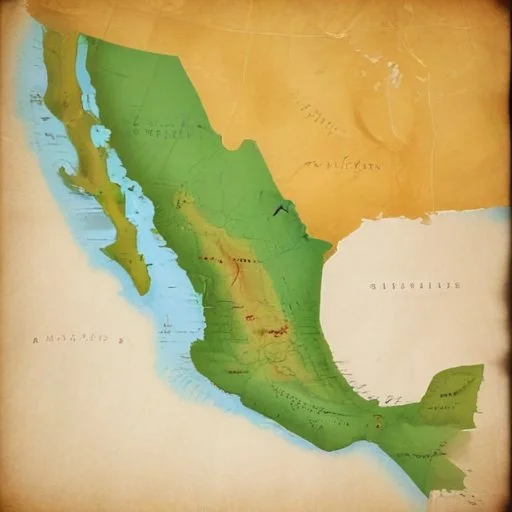
The Treaty of Guadalupe Hidalgo, ratified on May 19, 1848, marked the end of the Mexican-American War and cemented one of the most significant land acquisitions in U.S. history. This historic treaty saw Mexico cede California, Nevada, Utah, and parts of four other modern-day U.S. states to the United States, establishing the Rio Grande as the boundary between the two nations.
Historical Background
The Mexican-American War was sparked by the U.S. annexation of Texas in 1845, which Mexico saw as an affront to its sovereignty. The war raged on for nearly two years, claiming thousands of lives and altering the course of North American history. As the war drew to a close, Mexican officials were faced with the daunting task of negotiating a peace treaty that would stop the bleeding and salvage what was left of their nation.
The Key Players
- Nicholas Trist, the American diplomat who negotiated the treaty, played a crucial role in shaping the agreement.
- Mexican President Antonio López de Santa Anna, who had been ousted from power during the war, was forced to accept the humiliating terms of the treaty.
- U.S. President James K. Polk, a staunch expansionist, had long coveted the Mexican territories and saw the treaty as a means to fulfill his "Manifest Destiny."
A Timeline of Events
- February 2, 1848: Negotiations for the treaty begin at the Villa of Guadalupe Hidalgo, a small town just outside Mexico City.
- February 22, 1848: The treaty is signed, ceding over 529,000 square miles of land to the United States.
- March 10, 1848: The U.S. Senate ratifies the treaty, solidifying the agreement.
- May 19, 1848: Mexico officially ratifies the treaty, bringing an end to the war.
Major Outcomes and Impacts
- The treaty added over 25% to the size of the United States, shaping the country's modern-day borders.
- The U.S. gained control of vital trade routes, including the Mississippi River and the Santa Fe Trail.
- The acquisition of California led to a massive influx of settlers, sparking the California Gold Rush of 1849.
Cultural and Social Influences
The Treaty of Guadalupe Hidalgo had far-reaching cultural and social implications. The influx of American settlers into the newly acquired territories led to the displacement and marginalization of indigenous populations and Mexican citizens. The treaty also solidified the U.S. as a continental power, cementing its position as a global player.
Controversies and Public Perception
The treaty sparked heated debates among Americans, with many opposing the annexation of Mexican territory.
Henry David Thoreau famously penned "Civil Disobedience" in response to the war, arguing that the U.S. had no right to take land by force. Meanwhile, many Mexicans viewed the treaty as a betrayal, lamenting the loss of their national territory.
Quotes and Memorable Sayings
- "We must march from the Rio Grande to the Pacific, and from the Lakes to the Gulf, to preserve our Union, and to secure its permanence."
- - U.S. President James K. Polk, in a speech before the U.S. Senate, 1846
Impact on Future Events
The Treaty of Guadalupe Hidalgo set the stage for the U.S.'s westward expansion, sparking a series of events that would shape the nation's destiny. The California Gold Rush, the construction of the transcontinental railroad, and the Mexican Cession of 1853 all owed their origins to this pivotal treaty.
Trivia and Fun Facts
- The treaty is named after the Villa of Guadalupe Hidalgo, where the negotiations took place.
- The U.S. paid Mexico $15 million for the ceded territories, equivalent to approximately $450 million today.
- The treaty marked the first time the U.S. had acquired territory through a treaty with a foreign nation.
The Treaty of Guadalupe Hidalgo remains a testament to the complex and often tumultuous history of U.S.-Mexico relations. As we reflect on this pivotal moment, we are reminded of the enduring importance of diplomacy, compromise, and the pursuit of peace.
Historiographical Insights
Historical Significance of the Treaty of Guadalupe Hidalgo
The Treaty of Guadalupe Hidalgo marked a significant turning point in the history of the United States, solidifying its position as a continental power. The treaty's implications extended beyond the acquisition of new territories, as it reshaped the country's identity and influenced its future expansionist policies.
Historians have often viewed the treaty as a manifestation of the "Manifest Destiny" ideology, which posited that the United States was destined to expand its territory across North America. The treaty's negotiation and ratification reinforced this notion, paving the way for future territorial acquisitions and shaping the country's westward expansion.
Furthermore, the treaty highlights the complexities of U.S.-Mexico relations, which have been marked by periods of conflict, cooperation, and negotiation. The treaty's legacy continues to influence contemporary issues, such as border security, immigration, and trade, underscoring its enduring relevance in the study of U.S. history and foreign policy.

Character Analysis
Nicholas Trist: The Unlikely Negotiator
Nicholas Trist, the American diplomat who negotiated the Treaty of Guadalupe Hidalgo, was an unlikely figure in the annals of U.S. history. A career diplomat with limited experience in high-stakes negotiations, Trist was tasked with securing a favorable treaty for the United States.
Trist's leadership style was characterized by a unique blend of tact and tenacity. He navigated the complex web of Mexican politics, fostering relationships with key figures and manipulating the negotiation process to his advantage.
Despite his success, Trist's legacy has been overshadowed by more prominent figures of the time. However, his role in shaping the Treaty of Guadalupe Hidalgo cannot be overstated, and his story serves as a testament to the power of diplomacy and negotiation in shaping the course of history.
Cultural Significance Study
The Treaty's Cultural Legacy
The Treaty of Guadalupe Hidalgo had a profound impact on the cultural landscape of the United States and Mexico. The influx of American settlers into the newly acquired territories led to the displacement and marginalization of indigenous populations and Mexican citizens.
The treaty also facilitated the growth of a distinct Californian identity, as American settlers brought with them their own customs, traditions, and values. This cultural exchange had a lasting impact on the region, shaping its art, literature, and music.
Furthermore, the treaty's legacy can be seen in the contemporary cultural landscape of the United States, where the influences of Mexican and indigenous cultures are still felt. The treaty's cultural significance extends beyond its historical context, serving as a reminder of the complex and often fraught nature of cultural exchange.

Economic Consequence Analysis
The Economic Consequences of the Treaty
The Treaty of Guadalupe Hidalgo had a profound impact on the economies of both the United States and Mexico. The acquisition of new territories opened up new markets, resources, and trade opportunities, stimulating economic growth and development.
The treaty also led to a significant increase in U.S. trade with Mexico, with the value of exports and imports skyrocketing in the years following the treaty's ratification. This economic boom had a lasting impact on the U.S. economy, shaping its growth and development in the decades that followed.
In addition, the treaty's legacy can be seen in the contemporary economic landscape of the United States, where trade with Mexico remains a crucial component of the country's economic strategy.
In-Depth Geopolitical Examination
The Geopolitical Context of the Treaty
The Treaty of Guadalupe Hidalgo was concluded against the backdrop of a rapidly changing geopolitical landscape. The war with Mexico was sparked by the U.S. annexation of Texas, which had declared its independence from Mexico in 1836.
The treaty's negotiation and ratification took place amidst a complex web of international rivalries and alliances, with European powers vying for influence in the region. The treaty's terms were shaped by these geopolitical considerations, as the United States sought to solidify its position as a continental power.
The treaty's legacy continues to influence contemporary geopolitics, with the U.S.-Mexico border serving as a flashpoint for debates over immigration, trade, and national security. The treaty's geopolitical significance extends beyond its historical context, serving as a reminder of the enduring importance of diplomacy and statecraft in shaping international relations.


