


The fatal shooting of Michael Brown, an unarmed 18-year-old African American male, by a Ferguson police officer on August 9, 2014, sparked a wave of protests and unrest in Ferguson, Missouri, that would reverberate across the United States.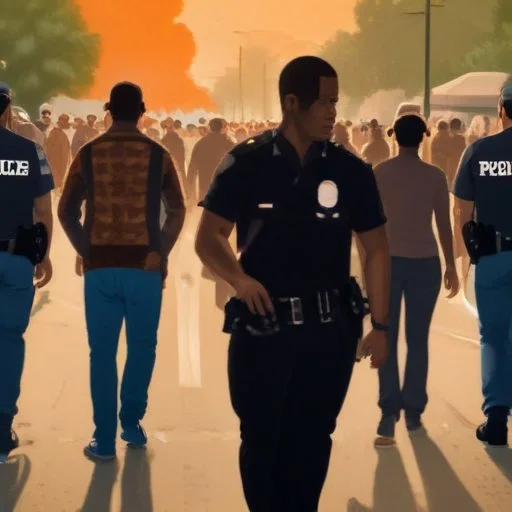
The incident, which occurred in broad daylight on Canfield Drive, sparked outrage and disbelief among the local community, with many witnesses claiming that Brown had his hands up in surrender when he was killed. The police officer, however, alleged that Brown had assaulted him and attempted to steal his weapon, leading to the shooting.
Ferguson, a predominantly African American suburb of St. Louis, had a long history of racial tensions and police brutality. The shooting of Michael Brown was seen as a tipping point, exposing deep-seated issues of systemic racism and racial profiling within the Ferguson Police Department.
The Ferguson unrest led to a national conversation about racial profiling, police brutality, and systemic racism. The incident sparked widespread protests and demonstrations across the United States, with the Black Lives Matter movement gaining momentum.
The Ferguson unrest had a profound impact on popular culture, with many artists, musicians, and athletes speaking out against police brutality and racial injustice.
The shooting of Michael Brown and the subsequent protests and unrest sparked intense debate and controversy, with many criticizing the Ferguson Police Department's handling of the incident and the broader issues of systemic racism.
"We want to make sure that Michael Brown's death is not in vain. We want to make sure that we get justice, not just for Michael Brown, but for all the other African Americans who have been killed by police brutality." - Lesley McSpadden
Many witnesses and protesters shared harrowing accounts of the shooting and its aftermath, including tales of police aggression and brutality.
The Ferguson unrest paved the way for future protests and movements, including the Black Lives Matter movement, which continues to fight against police brutality and racial injustice.
The shooting of Michael Brown and the subsequent Ferguson unrest will be remembered as a pivotal moment in American history, a catalyst for change and a call to action against systemic racism and police brutality.
The Ferguson unrest had a significant impact on popular culture, with many artists using their platforms to speak out against police brutality and racial injustice. The Daily Show with Jon Stewart dedicated several episodes to covering the protests and police response, while musicians like J. Cole and Kendrick Lamar released songs inspired by the events. The unrest also inspired a wave of socially conscious art, with murals and graffiti popping up across Ferguson and beyond.
Additionally, the Ferguson unrest marked a turning point in the way that social justice movements used social media to organize and mobilize. The hashtag #BlackLivesMatter, which was first used during the protests, became a rallying cry for the movement and was used to raise awareness about police brutality and systemic racism.

Lesley McSpadden, Michael Brown's mother, became a vocal advocate for justice and police reform in the aftermath of her son's death. After her son's death, she founded the Michael O.D. Brown We Love Our Sons and Daughters Foundation, which provides support and resources to families who have lost loved ones to police brutality. McSpadden has also been a vocal critic of the Ferguson Police Department, calling for greater accountability and transparency in their handling of cases involving police violence.
McSpadden's advocacy work has taken her from the streets of Ferguson to the halls of Congress, where she has testified before lawmakers about the need for police reform. Her tireless efforts have made her a hero to many in the Black Lives Matter movement, and her story has inspired countless others to take up the fight for justice and equality.
The Ferguson unrest marked a significant shift in the national conversation around policing and race, with many politicians and policymakers forced to confront the issue of systemic racism head-on. President Barack Obama established the Task Force on 21st Century Policing, which aimed to identify best practices for policing in the 21st century and to provide recommendations for how to improve community-police relations.
The unrest also led to calls for greater accountability and transparency in policing, with many advocating for the use of body cameras and greater oversight of police departments. The incident sparked a national debate about the role of police in American society, with many arguing that police were too quick to resort to violence and too slow to engage with the communities they served.

The shooting of Michael Brown was not an isolated incident, but rather part of a long history of racial tensions and police brutality in Ferguson. The city's police department had a reputation for aggressive policing practices, including racial profiling and the use of excessive force. In the years leading up to the shooting, there had been numerous complaints about police misconduct, but little had been done to address these issues.
Indeed, the Ferguson Police Department's own records revealed a pattern of racist behavior, with emails and text messages exchanged between officers containing racist language and jokes. The department's handling of the shooting, including the decision to leave Brown's body in the street for hours, only served to further inflame tensions in the community.
The Ferguson unrest marked a turning point in the Black Lives Matter movement, which had begun to take shape in the years leading up to the shooting. The movement, which was founded by three black women - Alicia Garza, Patrisse Cullors, and Opal Tometi - aimed to highlight the systemic racism and police brutality that black people faced in the United States.
The unrest also sparked a wave of protests and demonstrations across the country, with cities like New York, Los Angeles, and Chicago seeing large-scale protests and marches. The movement's message of resisting systemic racism and police brutality resonated with people of all backgrounds, and it became a rallying cry for social justice activists across the United States.