


On a fateful day in August 1922, Michael Collins, the Commander-in-Chief of the Irish Free State Army, fell victim to a brutal ambush in County Cork, marking a devastating turn in the Irish Civil War. His assassination sent shockwaves across Ireland, plunging the nation into mourning and sparking widespread outrage.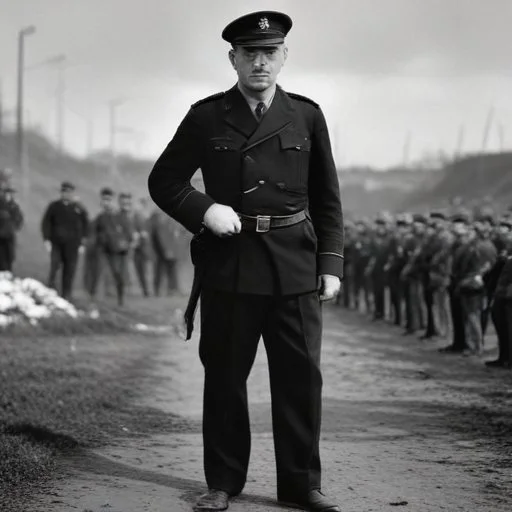
The Irish Civil War, fought between 1922 and 1923, was a conflict that pitted the Provisional Government of Ireland, led by Collins, against the Anti-Treaty Irish Republican Army (IRA). The conflict was sparked by the signing of the Anglo-Irish Treaty in 1921, which granted Ireland independence from Great Britain but fell short of the republicanism sought by many Irish nationalists.
On August 22, 1922, Collins, then 31 years old, set out on a inspection tour of the Free State Army's southern command in County Cork. Traveling in a convoy of two cars, Collins' party was ambushed by a group of Anti-Treaty IRA fighters at Béal na mBláth, a remote crossroads in west Cork. In the ensuing firefight, Collins was struck by a bullet to the head and killed instantly.
Collins' death sent shockwaves across Ireland, with news of his assassination spreading like wildfire. The Provisional Government, already struggling to assert its authority, was plunged into crisis. The Irish people, who had hailed Collins as a hero and a champion of independence, were left reeling in grief and anger.
Michael Collins was born in 1890 in Clonakilty, County Cork. From an early age, he was drawn to the cause of Irish independence, joining the Irish Republican Brotherhood and participating in the Easter Rising of 1916. After his release from prison, Collins became a key figure in the Anglo-Irish War, leading the IRA's guerrilla campaign against the British. In 1921, he played a crucial role in negotiating the Anglo-Irish Treaty, earning him international recognition as a statesman and leader.
Collins' assassination marked a turning point in the Irish Civil War, which would rage on for another year, claiming many more lives. However, his legacy extends far beyond the conflict. Collins is remembered as a champion of Irish independence, a charismatic leader, and a visionary who played a crucial role in shaping Ireland's future. His death sparked a wave of outrage and mourning, but also inspired a new generation of Irish leaders to continue the fight for independence.
"Think, pray, and fight for Ireland." - Michael Collins
Collins' assassination has been immortalized in literature, music, and art, becoming an enduring symbol of Ireland's struggle for independence. His legacy continues to inspire and influence Irish people around the world, with many regarding him as a national hero.
Collins' life and legacy serve as a testament to the power of courage, determination, and vision. His unwavering commitment to the cause of Irish independence continues to inspire generations of Irish people, reminding them of the sacrifices made by those who fought for freedom and self-determination.
The assassination of Michael Collins sent shockwaves through the Irish literary community, inspiring a wave of creative works that would cement his place in Irish literary history.
From Brendan Behan's The Scarperer to Liam O'Flaherty's The Informer, Collins' life and legacy have been immortalized in literature, providing a window into the tumultuous era of the Irish Civil War.
Collins' own writings, including his letters and speeches, have been extensively studied and anthologized, offering a unique glimpse into the mind of a visionary leader.
Michael Collins was born in 1890 in Clonakilty, County Cork, amidst a tumultuous era of Irish-British relations.
As a young boy, Collins was instilled with a strong sense of Irish identity and a desire for independence, influences that would shape his later life and leadership.
His early education at the local national school and later at Clonakilty National School laid the groundwork for his future involvement in the Irish independence movement.
The Anglo-Irish Treaty, negotiated by Michael Collins in 1921, had far-reaching consequences for the geopolitical landscape of Ireland and beyond.
The treaty's provisions, including the partition of Ireland and the establishment of the Irish Free State, created a complex web of relationships between Ireland, Britain, and the emerging international community.
The treaty's impact was felt across the globe, influencing the trajectory of nationalist movements and shaping the course of international relations in the decades that followed.

In the aftermath of Michael Collins' assassination, the Provisional Government faced a crisis of legitimacy, as anti-treaty forces challenged its authority and the very existence of the Irish Free State.
The government's response, including the execution of republican prisoners and the passage of emergency legislation, was marked by a delicate balancing act between maintaining order and respecting the rule of law.
The Provisional Government's struggles to assert its authority would have lasting implications for the development of Irish democracy and the relationship between the state and its citizens.
Michael Collins' life and legacy have been subject to reinterpretation and revisionism by historians, who have sought to nuance our understanding of his role in the Irish independence movement.
From early portrayals of Collins as a romantic hero to more recent critiques of his leadership style and negotiating tactics, historians have grappled with the complexities of his personality and the significance of his actions.
This ongoing historiographical debate reflects the dynamic nature of historical inquiry, as new evidence and perspectives continue to shed light on the life and times of Michael Collins.