


The brutal kidnapping and murder of Miguel Ángel Blanco, a young and charismatic politician from Partido Popular, sent shockwaves throughout Spain in July 1997. This heinous act, perpetrated by the separatist group ETA, sparked massive protests and nationwide outrage, leaving an indelible mark on the country's history.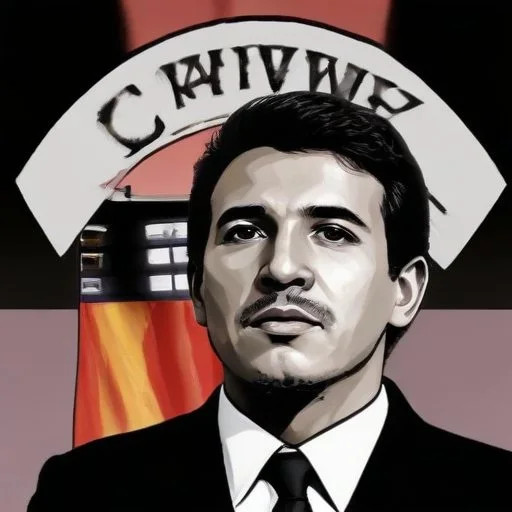
Miguel Ángel Blanco Garrido, born on May 13, 1968, was a rising star in Spanish politics. As a councilor in the Basque city of Ermua, he was dedicated to serving his community and promoting unity in a region torn apart by separatist sentiment. His promising career was tragically cut short when ETA militants kidnapped him on July 10, 1997.
The news of Blanco's kidnapping sent shockwaves throughout Spain. The government, led by Prime Minister José María Aznar, and Blanco's family pleaded for his safe return. The nation held its collective breath as the clock ticked away, but ETA's militants remained resolute in their demands.
Just 48 hours after his kidnapping, the devastating news arrived: Blanco's lifeless body was found in the town of Altzano, near the city of San Sebastián. Spain was plunged into mourning, and the nation's outrage was palpable.
The senseless murder of an innocent life sparked widespread protests across Spain. Millions of Spaniards took to the streets, condemning ETA's brutality and demanding an end to the cycle of violence. The government, opposition parties, and civil society organizations united in their condemnation of the assassination, with many calling for ETA's dismantling.
The assassination of Miguel Ángel Blanco marked a turning point in Spain's struggle against ETA. The incident galvanized public opinion, leading to increased pressure on the government to take decisive action against the separatist group. The event also sparked a renewed commitment to promoting unity and reconciliation in the Basque region.
Today, Blanco's legacy lives on as a symbol of courage and dedication to public service. His tragic assassination serves as a reminder of the devastating consequences of political violence and the importance of promoting peace and understanding in societies torn apart by conflict.
The aftermath of Blanco's assassination saw a surge in artistic and cultural expressions condemning ETA's violence and celebrating Blanco's life. From films and documentaries to music and literature, the event inspired a wave of creative works that continue to resonate with the Spanish public.
In the years that followed, the Basque region witnessed a significant shift in public opinion, with many former ETA supporters distancing themselves from the group's violent ideology. The event also contributed to a growing sense of nationalism in Spain, as citizens rallied around the flag to reject ETA's separatist agenda.
The assassination of Miguel Ángel Blanco was not an isolated incident, but rather the culmination of decades of separatist violence in the Basque region. ETA's roots can be traced back to the 1950s, when a group of Basque nationalists sought independence from Spain. Over the years, the organization's tactics evolved from peaceful protests to armed resistance, with the goal of establishing an independent Basque state.
In the 1980s and 1990s, ETA's violence intensified, with numerous bombings, kidnappings, and assassinations. The Spanish government responded with a mix of political concessions and security crackdowns, but the cycle of violence continued.

Beyond his role as a councilor and politician, Miguel Ángel Blanco was a complex individual with a passion for sports, music, and literature. Born and raised in Ermua, he was deeply rooted in his community and was known for his charisma and dedication to public service.
Blanco's friends and family describe him as a loyal and empathetic person who was deeply committed to his work. His tragic death at the age of 29 left a lasting impact on those who knew him and the community he served.
The assassination of Miguel Ángel Blanco inspired a wave of artistic responses, from films and documentaries to music and literature. Spanish artists, writers, and musicians condemnd ETA's violence and honored Blanco's memory through their work.
The film "Everyone to the Streets" (1999) captured the mood of the nation in the aftermath of Blanco's murder, while singer-songwriter Joan Manuel Serrat dedicated his song "Cantares de la criba" to the young politician. These creative works continue to serve as a testament to the power of art in times of crisis.
The killing of Miguel Ángel Blanco marked a turning point in Spanish politics, with the government and opposition parties uniting in their condemnation of ETA's violence. The event led to increased pressure on Prime Minister José María Aznar to take decisive action against the separatist group.
In the years that followed, the Spanish government introduced a range of measures aimed at dismantling ETA, including the banning of the organization and the arrest of its leaders. The political landscape of Spain was forever changed by Blanco's tragic death.
The Basque region's complex history and cultural identity have long been intertwined with its quest for autonomy and independence from Spain. ETA's violence was, in part, a response to the Spanish state's perceived suppression of Basque culture and self-determination.
The assassination of Miguel Ángel Blanco highlighted the need for a more nuanced understanding of the Basque conflict, one that takes into account the region's unique cultural and historical context. The event sparked a renewed commitment to promoting dialogue and reconciliation in the Basque region.