


Mikhail Gorbachev's election as the first President of the Soviet Union marked a pivotal moment in modern history, signifying a significant shift from the traditional communist hierarchy and granting him executive powers to drive his ambitious agenda of perestroika and glasnost. This groundbreaking move, which took place on March 15, 1990, was a beacon of hope for the ailing Soviet economy and stifled society, which looked towards a brighter future under his leadership.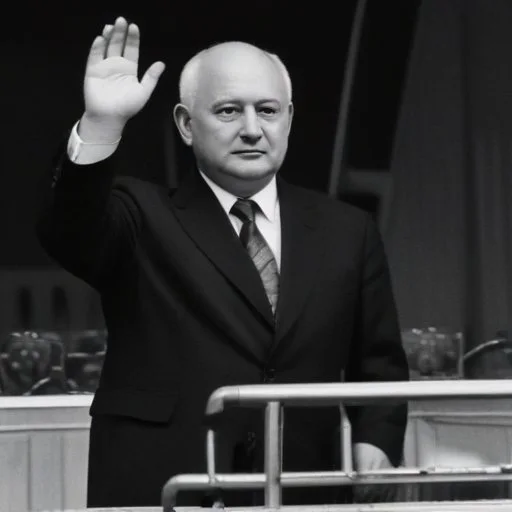
Gorbachev's rise to power was a gradual one, with the Soviet leader having served as the General Secretary of the Communist Party since 1985. However, it was his commitment to reform and openness that set him apart from his predecessors, earning him widespread popularity and support among the Soviet people.
Gorbachev's policies of perestroika (restructuring) and glasnost (openness) aimed to revitalize the stagnant Soviet economy, increase transparency, and promote democratization. These reforms were a far cry from the rigid communist ideology that had governed the Soviet Union for decades, and marked a significant departure from the secrecy and repression that had characterized the regime.
Gorbachev's election as President had far-reaching consequences for the Soviet Union and beyond. His policies of perestroika and glasnost led to:
Mikhail Gorbachev's election as the first President of the Soviet Union was a watershed moment in modern history, marking the beginning of the end of the Cold War and the dawn of a new era of cooperation and reform. His commitment to perestroika and glasnost continues to inspire generations, and his legacy serves as a powerful reminder of the transformative power of leadership and vision.
Gorbachev was born on March 2, 1931, in the village of Privolnoye, Stavropol Krai, Russia. His early life was marked by hardship, with his family struggling to make ends meet during the Great Patriotic War.
Gorbachev's academic pursuits took him to Moscow State University, where he studied law and became involved in the Komsomol, the Soviet youth communist organization. This marked the beginning of his political career, which would eventually lead him to the highest office in the Soviet Union.
Gorbachev's early reforms as regional party leader in Stavropol demonstrated his commitment to improving the lives of ordinary citizens, a theme that would become a hallmark of his presidency.
The late 1980s were marked by a shift in the global political landscape, with the Soviet Union facing increasing economic and political pressure from the West.
The Soviet-Afghan War had drained the Soviet economy, and the country was struggling to maintain its grip on Eastern Europe. Meanwhile, the United States and its allies were pursuing a policy of containment, seeking to undermine Soviet influence and promote democratic values.
The election of Gorbachev as President of the Soviet Union marked a significant turning point in this Cold War era, as the Soviet leader sought to reform and revitalize his country.Gorbachev's economic reforms aimed to decentralize decision-making, increase autonomy for state enterprises, and promote entrepreneurship.
The Law on Cooperatives, introduced in 1988, allowed for the establishment of private cooperatives, marking a significant shift away from state-controlled enterprises.
The resulting growth of small businesses and entrepreneurial activity helped to revitalize the Soviet economy, paving the way for the country's transition to a market-based economy.
Gorbachev's presidency was not without its challenges, as he faced criticism from hardline communists who opposed his reforms.
The Soviet leader also faced difficulties in reconciling the interests of different ethnic groups and republics, many of which were seeking greater autonomy or independence.
Gorbachev's response to these challenges, including the use of military force in the Baltic states, remains a topic of controversy and debate among historians and political analysts.Gorbachev's policies of perestroika and glasnost had a profound impact on Soviet culture, as the country experienced a newfound freedom of expression and creativity.
The relaxation of censorship led to a surge in literary and artistic output, as writers, artists, and filmmakers explored themes that had previously been taboo.
The era of perestroika and glasnost marked a cultural renaissance in the Soviet Union, as the country began to reconnect with its rich literary and artistic heritage.