


In the sweltering heat of 1996, Niger's fledgling democracy was brought to its knees by a cunning and ruthless military officer, Colonel Ibrahim Baré Maïnassara. His brazen coup d'état toppled the country's first democratically elected president, Mahamane Ousmane, and sent shockwaves throughout West Africa.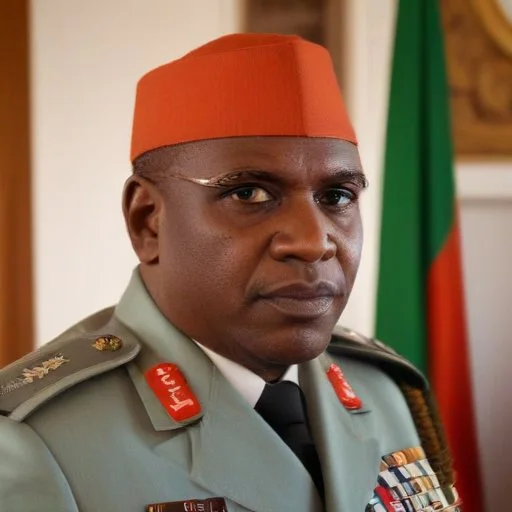
In this article, we'll delve into the tumultuous world of Nigerien politics, exploring the key figures involved, the timeline of events, and the far-reaching consequences of this pivotal moment in the country's history.
As a young military officer, Maïnassara had a reputation for being cunning and calculating. He had risen through the ranks, earning the respect and admiration of his peers, but also gaining a reputation for being fiercely ambitious. With his eyes set on the presidency, Maïnassara began secretly gathering allies and building a network of supporters within the military.
Ousmane, on the other hand, was a figure of hope and change in Niger. Elected in 1993, he had promised to bring democracy and prosperity to the struggling nation. But Maïnassara saw Ousmane's presidency as an obstacle to his own ambitions, and he was determined to bring him down.
In the months leading up to the coup, Maïnassara began to secretly gather support among the military ranks. He exploited the country's economic woes, promising soldiers better pay and improved working conditions if he were to take power. Meanwhile, Ousmane's government was struggling to address the country's deep-seated economic and political problems, creating an atmosphere of uncertainty and discontent.
The final straw came on January 27, 1996, when Maïnassara and his co-conspirators stormed the presidential palace, capturing Ousmane and his top officials. The coup was swift and brutal, with little resistance from the government's forces.
The international community was quick to condemn the coup, with the United States, France, and other Western powers imposing economic sanctions on Niger. But Maïnassara's grip on power was firm, and he would go on to rule the country for the next three years, imposing a regime marked by corruption, human rights abuses, and widespread repression.
Ousmane, meanwhile, was placed under house arrest, eventually fleeing to exile in France. The democratization process in Niger was effectively crushed, and the country would struggle to rebuild its fragile democracy in the years that followed.
The coup of 1996 would have far-reaching consequences for Niger, casting a long shadow over the country's political landscape. Maïnassara's regime would eventually be brought down in 1999, but the damage had already been done. The country would struggle to rebuild its institutions, and the democratic experiment would be put on hold for years to come.
Today, as Niger continues to navigate the complexities of democracy and development, the legacy of Maïnassara's coup serves as a reminder of the dangers of unchecked ambition and the importance of strong institutions. As we look back on this pivotal moment in Nigerien history, we are reminded that the path to democracy is often fraught with danger, but also filled with hope and possibility.
Niger's strategic location in West Africa made it a critical player in regional politics. The country's borders with several nations, including Mali, Burkina Faso, and Libya, created a complex web of alliances and rivalries.
As a result, Maïnassara's coup had far-reaching implications for regional security and stability. The coup sent shockwaves throughout West Africa, prompting concerns about the spread of military rule and the undermining of democratic institutions.
The international community's response to the coup was closely watched by neighboring countries, many of which were also struggling to consolidate their own democracies.

Colonel Ibrahim Baré Maïnassara was born in 1949 in the town of Maradi, Niger. Little is known about his early life, but it is believed that he came from a modest background.
Maïnassara's rise through the military ranks was rapid, and he quickly gained a reputation as a shrewd and cunning officer. He was known for his ability to build relationships and alliances, but also for his ruthlessness and willingness to do whatever it took to achieve his goals.
Despite his brutal regime, Maïnassara was charismatic and had a certain charm that endeared him to some of his supporters.
The economic consequences of Maïnassara's coup were severe. The coup led to a cutoff in international aid and investment, which had been flowing into Niger following Ousmane's election.
The subsequent economic sanctions imposed by the international community further worsened the situation, leading to widespread poverty and economic stagnation.
Maïnassara's regime was marked by corruption and mismanagement, further exacerbating the economic crisis.
Today, Niger continues to struggle with poverty and underdevelopment, and the legacy of Maïnassara's coup remains a major obstacle to economic growth.
Historians have debated the significance of Maïnassara's coup, with some viewing it as a setback for democratization in West Africa.
Others have argued that the coup was a symptom of deeper structural problems in Niger, including poverty, corruption, and ethnic divisions.
The coup has also been seen as part of a broader pattern of military intervention in West African politics, with several other countries in the region experiencing similar coups and regime changes.
Maïnassara's regime was marked by a concentration of power and a suppression of political opposition.
The colonel's leadership style was authoritarian, and he tolerated no dissent or criticism.
Despite his claims to be leading a transition to democracy, Maïnassara's regime was characterized by a lack of transparency, accountability, and respect for human rights.
The legacy of Maïnassara's coup continues to cast a shadow over Niger's political landscape, with many of the country's political institutions still struggling to consolidate their power and authority.