


On a fateful day in May 1919, Mustafa Kemal Atatürk, a charismatic leader with a vision for a modern Turkey, set foot on the sun-kissed shores of Samsun, a coastal town on the Anatolian Black Sea coast. This pivotal moment marked the beginning of the Turkish War of Independence, a four-year struggle against foreign occupation and internal decay that would reshape the country's future.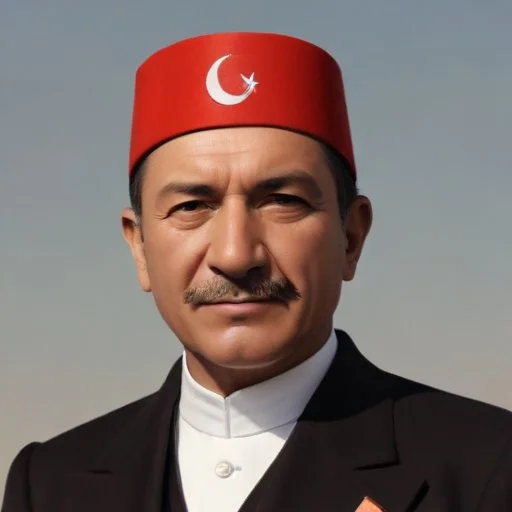
The Ottoman Empire, once a behemoth of power and influence, was crumbling under the weight of external pressures and internal strife. The Great War, as World War I was known, had drained the empire's coffers and led to a devastating defeat. As the Allied powers carved up the empire's territories, Turkish nationalists saw an opportunity to reclaim their homeland and forge a new nation.
Atatürk, a decorated war hero and seasoned politician, was the embodiment of Turkish nationalism. With his piercing gaze and unwavering determination, he rallied the Turkish people, tapping into their desire for independence and self-governance. His leadership would prove instrumental in the war ahead.
On May 19, 1919, Atatürk arrived at Samsun, accompanied by a small group of trusted companions. This seemingly innocuous event would spark a chain reaction of resistance and rebellion across Anatolia. The landing was a deliberate act of defiance, announcing to the world that the Turkish people would no longer submit to foreign domination.
The Turkish War of Independence, sparked by Atatürk's landing at Samsun, would ultimately lead to the founding of the modern Republic of Turkey. This secular, democratic nation would become a beacon of hope in the region, inspired by Atatürk's vision of a modern, progressive society. The legacy of Atatürk's daring move continues to shape Turkish identity and politics to this day.
"Injustice is a hydra-headed monster; though you cut off one head, another appears in its place. The struggle against injustice is unending."
- Mustafa Kemal Atatürk
The Turkish War of Independence and Atatürk's leadership had a profound impact on Turkish culture and society. The country's shift towards modernization and secularism was reflected in the arts, literature, and architecture of the time. The new Turkish Republic would go on to celebrate its rich cultural heritage, while proudly embracing its newfound identity.
Historians have long debated the significance of Atatürk's landing at Samsun, with some arguing it was a calculated move to capitalize on the post-war chaos, while others see it as a bold act of defiance against the Allied powers. Despite these differing interpretations, most agree that Atatürk's leadership during this period was instrumental in shaping the course of Turkish history.
Recent research has shed new light on the role of local resistance groups in the Turkish War of Independence, highlighting the complexity of the nationalist movement and the various factions vying for power. This nuanced understanding of the era has led to a reevaluation of Atatürk's role, revealing a more pragmatic and adaptable leader than previously thought.

The Turkish War of Independence had a profound impact on the country's cultural identity, as Atatürk actively promoted a vision of modernity and secularism. This shift was reflected in the arts, with writers and artists embracing a new sense of national pride and creative freedom.
The period also saw a resurgence of interest in traditional Turkish folk music and dance, as the government actively sought to promote and preserve the country's cultural heritage. This cultural renaissance was a key component of Atatürk's vision for a modern Turkey, one that was deeply rooted in its history and traditions.
The Turkish War of Independence took place against the backdrop of a rapidly changing global landscape, as the old empires of Europe were being dismantled and new nation-states were emerging. The conflict was closely watched by the international community, with many countries seeing it as a test case for the principles of national self-determination.
The war also had significant implications for the region, as the Ottoman Empire's collapse created a power vacuum that would be filled by the rising forces of Arab nationalism and communist ideology. Atatürk's leadership during this period was instrumental in navigating these complex geopolitical currents and securing Turkey's place in the modern world.
Atatürk's decision to land at Samsun was not taken lightly, and he spent several weeks secretly gathering support and resources before making his move. This period of planning and preparation reveals a leader who was willing to take calculated risks, but also cautious and mindful of the potential consequences.
Atatürk's relationship with his closest allies, including Kazım Karabekir and Fevzi Çakmak, was also crucial during this period. These men would go on to play key roles in the Turkish War of Independence, and their loyalty and trust in Atatürk were essential to the success of the nationalist movement.
The Turkish War of Independence had a devastating impact on the country's economy, as trade and commerce were disrupted by the conflict and the Allied occupation. However, Atatürk's government took steps to promote economic development, including the establishment of state-owned enterprises and the encouragement of foreign investment.
The war also led to a significant shift in the country's economic orientation, as Turkey began to look eastward towards the Soviet Union and other emerging markets. This reorientation would have long-term consequences for Turkey's economic development, as the country sought to balance its relationships with Europe and the Middle East.