


In a bold move that would change the course of history, Choudhry Rahmat Ali Khan coined the term Pakistan on January 28, 1933, igniting a sense of unity and purpose among Indian Muslims, who then rallied behind the Pakistan Movement, demanding independence from British rule. This pivotal moment marked the beginning of a long, arduous journey towards self-determination and the eventual creation of Pakistan in 1947.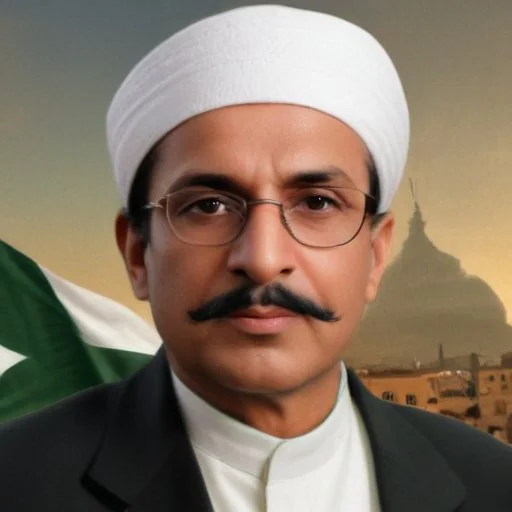
Choudhry Rahmat Ali Khan, a Pakistani nationalist and visionary, was the mastermind behind the concept of a separate homeland for Indian Muslims. Born in 1895 in British India, Ali Khan was a passionate advocate for Muslim rights and self-determination. He believed that a separate nation would provide Indian Muslims with a sense of security, dignity, and freedom from the oppressive British rule.
The term Pakistan is an acronym derived from the regions of Punjab, NorthWest Frontier Province, Kashmir, Sindh, and Baluchistan. Ali Khan's ingenious creation not only captured the essence of the proposed nation but also provided a sense of unity and common identity among Indian Muslims. The name Pakistan symbolized the aspirations of a nation that would be formed by the collective efforts of its people.
The coining of the term Pakistan had far-reaching consequences, shaping the course of Indian and Pakistani history. The movement led to the creation of Pakistan, a sovereign nation that would provide a safe haven for Indian Muslims. The name Pakistan also became a symbol of Muslim identity and unity, transcending regional and linguistic boundaries.
The Pakistan Movement had a profound impact on Indian Muslim culture and society. It awakened a sense of national pride and identity, inspiring a new generation of leaders, writers, and artists. The movement also led to the development of a distinct Pakistani culture, blending Islamic traditions with regional customs and practices.
In his autobiography, Ali Khan recalled the moment when he coined the term Pakistan: "I was possessed by a sudden inspiration, as if some unseen force guided my hand. I wrote the word Pakistan, and as I did, I felt a surge of pride and hope."
Choudhry Rahmat Ali Khan's legacy extends beyond the coining of the term Pakistan. He is revered as a national hero, a symbol of Muslim identity and unity. His vision of a separate homeland for Indian Muslims inspired generations of leaders, activists, and ordinary citizens, shaping the course of Pakistani history.
Ali Khan's story is a testament to the power of vision, courage, and determination. His unwavering commitment to the Pakistan Movement inspired countless Indians Muslims to fight for their rights and self-determination. Today, his legacy continues to inspire Pakistanis and Muslims around the world, reminding them of the importance of unity, identity, and freedom.
The Pakistan Movement had a profound impact on Indian Muslim culture and society, leading to the development of a distinct Pakistani identity. The coining of the term Pakistan sparked a sense of national pride and unity, inspiring a new generation of writers, artists, and musicians. The movement also led to the creation of a unique Pakistani cuisine, blending traditional Mughal and Persian flavors with regional ingredients.
Urdu, once a minority language, became the national language of Pakistan, symbolizing the country's identity and unity. The language played a crucial role in shaping Pakistani culture, with poets and writers like Allama Iqbal and Faiz Ahmad Faiz contributing to the country's rich literary heritage.

Choudhry Rahmat Ali Khan's early life was marked by poverty and hardship, but he was driven by a fierce determination to uplift the Indian Muslim community. Born in 1895 in British India, Ali Khan was deeply influenced by the Khilafat Movement, which aimed to restore the Ottoman Caliphate and promote Muslim unity.
Ali Khan's vision for a separate homeland for Indian Muslims was shaped by his experiences as a student at the University of Cambridge, where he was exposed to European nationalist ideologies. He was particularly drawn to the ideas of Mustafa Kemal Atatürk, who had successfully secularized Turkey and established it as a modern nation-state.
The coining of the term Pakistan took place against the backdrop of rising nationalist sentiment in British India. The Indian National Congress, led by Mahatma Gandhi, was demanding greater autonomy from British rule, while the Muslim League, led by Muhammad Ali Jinnah, was advocating for a separate homeland for Indian Muslims.
The geo-political context of the time was marked by the rise of fascist and nationalist ideologies in Europe, which influenced Indian Muslim intellectuals like Choudhry Rahmat Ali Khan. The collapse of the Ottoman Empire and the rise of modern nation-states in the Middle East also shaped the political landscape of British India.
Historians have long debated the significance of Choudhry Rahmat Ali Khan's role in the Pakistan Movement. Some have argued that he was a visionary who single-handedly changed the course of Indian Muslim history, while others have seen him as a symbol of Muslim nationalism and identity.
Recent studies have re-evaluated Ali Khan's legacy, highlighting his contributions to the development of Pakistani nationalism and identity. Scholars have also explored the ways in which Ali Khan's vision for a separate homeland was shaped by his experiences as a student in Europe and his engagement with European nationalist ideologies.
The coining of the term Pakistan marked a significant turning point in the Pakistan Movement, as it provided a clear and tangible goal for Indian Muslims to rally behind. The term captured the imagination of Muslims across British India, who saw it as a symbol of unity and self-determination.
The Pakistan Movement was characterized by a complex web of political alliances and rivalries, with the Muslim League, the Indian National Congress, and the British colonial authorities vying for power and influence. The coining of the term Pakistan added a new dimension to these political dynamics, as Indian Muslims began to assert their demand for a separate homeland.