


Napoleon Bonaparte, the master strategist behind France's military conquests, reached the pinnacle of power when the French Senate proclaimed him Emperor of the French on May 18, 1804. This monumental event marked a significant turning point in European history, as the revolutionary ideals of liberty, equality, and fraternity gave way to imperial ambitions.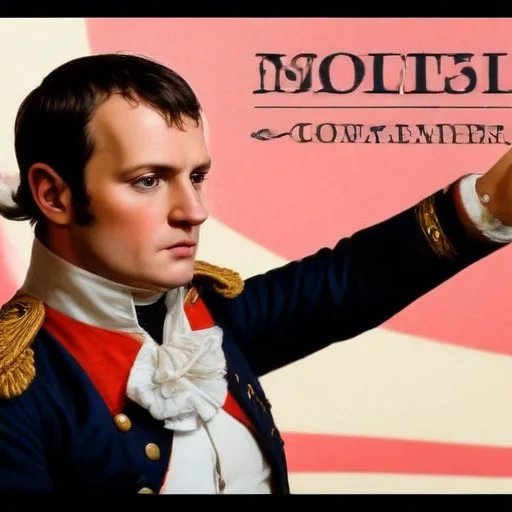
In the late 18th century, France was in turmoil, reeling from the aftermath of the French Revolution. Amidst the chaos, a young and ambitious Napoleon Bonaparte emerged, determined to restore order and stability to the nation. With his exceptional military prowess and strategic thinking, Napoleon rapidly rose through the ranks, winning victories in Italy and Egypt, and eventually seizing control of the French government in the coup d'état of 18 Brumaire (November 9, 1799).
As Napoleon's power grew, so did his ambition. He set his sights on solidifying his grip on France, and the French Senate, swayed by his charisma and military successes, was more than willing to oblige. On May 18, 1804, the Senate gathered in solemn ceremony, and with a unanimous vote, proclaimed Napoleon Emperor of the French. This momentous decision marked the beginning of the Napoleonic Empire, and Napoleon's coronation ceremony would soon follow on December 2, 1804.
Napoleon's imperial coronation had far-reaching consequences, both within France and across Europe. The Napoleonic Empire would go on to shape modern European history, leaving a lasting legacy in the realms of politics, law, and culture. Napoleon's civil code, the Code Napoleon, remains a cornerstone of European law, while his military conquests redrew the map of Europe, paving the way for the rise of modern nation-states.
The Napoleonic Empire was not only a political entity but also a cultural and artistic force. Napoleon's love of classical antiquity inspired a new era of artistic expression, from the grandiose architecture of the Arc de Triomphe to the resplendent furnishings of the Palace of Fontainebleau. The Napoleonic style, characterized by grandeur, elegance, and a sense of imperial grandiosity, would influence European art and culture for generations to come.
"An empire founded by war must maintain itself by war."
-- Napoleon Bonaparte
Napoleon's rise to imperial power finds parallels in the histories of ancient Rome, where Julius Caesar's own imperial ambitions were similarly marked by military conquest and strategic brilliance. Like Caesar, Napoleon's imperial legacy would shape the course of European history, leaving an indelible mark on the trajectory of modern civilization.
Napoleon's coronation ceremony, held on December 2, 1804, was a sumptuous affair, with all the trappings of imperial grandeur. According to accounts, Napoleon, resplendent in his imperial regalia, took the throne, his piercing gaze surveying the assembled guests as he declared, "Je suis l'empereur!" ("I am the emperor!"). It was a moment of unbridled triumph, marking the apotheosis of Napoleon's imperial ambition.
The Napoleonic Empire's impact on European history would be felt for generations to come, shaping the course of modern politics, culture, and society. Napoleon's imperial legacy would influence the rise of future empires, from the British Empire to the German Empire, and beyond.
Napoleon's proclamation as Emperor of the French marked a watershed moment in European history, as the ideals of liberty, equality, and fraternity gave way to imperial ambition. Today, Napoleon's imperial legacy continues to shape modern Europe, from the grandeur of his architectural achievements to the enduring influence of his legal and cultural reforms. As we reflect on this pivotal moment in history, we are reminded of the enduring power of human ambition and the indelible mark it leaves on the course of human progress.
Before his ascension to imperial power, Napoleon Bonaparte was born on August 15, 1769, in Ajaccio, Corsica. His family, of minor Corsican nobility, moved to France when Napoleon was nine years old. He excelled at the École Militaire in Paris, graduating in 1785 as a second lieutenant in the French army.
Napoleon's early military career saw him serve in the Reign of Terror, where he became known for his tactical genius and bravery. He rose through the ranks, becoming a brigadier general in 1794 and eventually seizing control of the French government in the coup d'état of 18 Brumaire.
In the years leading up to his proclamation as Emperor, Napoleon solidified his grip on power, centralizing authority and reforming the French government. His military conquests expanded French territory, and his charismatic leadership won him widespread popular support.

Joséphine de Beauharnais, Napoleon's wife and Empress of the French, played a crucial role in shaping his imperial ambitions. Born on June 23, 1763, Joséphine was a member of the French aristocracy and a widow with two children when Napoleon met her in 1795.
Joséphine's influence on Napoleon was significant, and she became his closest advisor and confidante. Her graciousness, elegance, and social skills helped to soften Napoleon's rougher edges, making him more appealing to the French nobility and European monarchies.
Despite Napoleon's later marriage to Marie-Louise of Austria, Joséphine remained a beloved figure in his life, and her death in 1814 devastated him.
The Napoleonic Empire's cultural impact extended far beyond France, influencing art, architecture, literature, and music across Europe. Napoleon's love of classical antiquity inspired a renewed interest in ancient Greek and Roman culture, leading to the development of neoclassicism in art and architecture.
The Empire's cultural achievements include the establishment of the Louvre Museum, which Napoleon founded in 1803. The Louvre became a repository for Europe's artistic treasures, showcasing masterpieces from across the continent.
Napoleon's patronage of the arts also led to the creation of iconic landmarks like the Arc de Triomphe and the Palace of Fontainebleau, which remain symbols of French cultural heritage.

Napoleon's coronation ceremony on December 2, 1804, was a lavish affair, with all the trappings of imperial grandeur. The ceremony took place at Notre-Dame Cathedral in Paris, with Pope Pius VII in attendance.
The imperial regalia worn by Napoleon, including the crown, scepter, and orb, were designed to evoke the majesty of ancient Roman emperors. The regalia, now housed at the Louvre Museum, remain an important artifact of the Napoleonic Empire.
The coronation ceremony was meticulously planned, with every detail intended to convey the power and legitimacy of Napoleon's imperial authority.
Napoleon's rise to imperial power was underpinned by a complex philosophical framework, drawing on Enlightenment thinkers like Rousseau and Montesquieu. He was deeply influenced by the ideals of the French Revolution, particularly the concepts of liberty, equality, and fraternity.
However, Napoleon's pragmatic approach to power soon led him to reconcile these ideals with the pragmatic necessities of statecraft and military conquest. He saw himself as a visionary leader, tasked with bringing order and stability to a chaotic Europe.
Napoleon's imperial ambition was fueled by a strong sense of patriotism and a desire to restore French greatness, but it also reflects a deeper philosophical tension between individual liberty and the demands of state power.