


On a fateful day in 2004, the Mars Rover Spirit, a pioneering robotic explorer, suddenly fell silent, ceasing all communication with mission control. This eerie silence was a result of a malfunction in the rover's flash memory, leaving the team at NASA scrambling to diagnose and rectify the issue.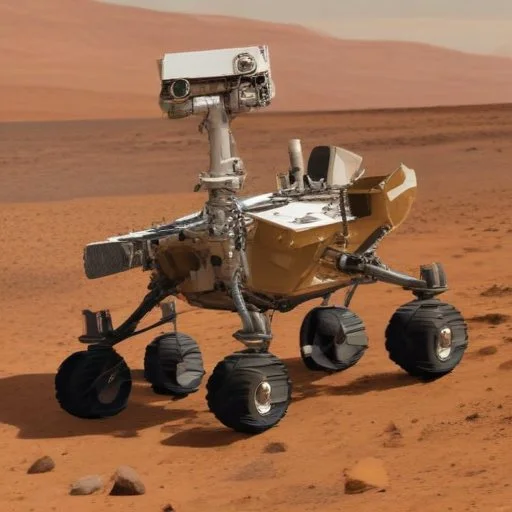
The Mars Rover Spirit, launched in June 2003, was designed to explore the Martian terrain for a minimum of 90 days. However, as the rover ventured deeper into the Martian landscape, its flash memory, responsible for storing critical data, began to malfunction. This critical failure resulted in the loss of communication with the rover, leaving mission control in the dark.
The team at NASA, led bySpirit's project manager, Dr. Steven Squyres, embarked on a challenging remote rescue mission. Through a series of intricate commands, the team successfully diagnosed the problem and implemented a fix, restoring communication with the rover on February 6, 2004.
This remarkable feat showcased the ingenuity and expertise of NASA's engineers, who, from thousands of miles away, managed to revive the Spirit rover. This triumph marked a significant milestone in the history of robotic space exploration, underscoring the importance of effective communication and problem-solving in the face of unforeseen challenges.
--Dr. Steven Squyres, Spirit Project Manager
The successful recovery of the Spirit rover paved the way for future robotic exploration missions, emphasizing the critical role of efficient communication and problem-solving in space travel. The rover continued to explore the Martian terrain for an impressive six years, providing invaluable insights into the planet's geology and environment.
The Spirit rover's remarkable journey has inspired future generations of engineers, scientists, and explorers, pushing the boundaries of what is possible in space travel. As we continue to venture into the unknown, the lessons learned from Spirit's journey will remain an integral part of our quest for discovery and understanding.
By embracing the challenges and setbacks that come with space exploration, we can continue to push the frontiers of human knowledge, driven by the unwavering spirit of discovery and innovation.
As the project manager of the Mars Rover Spirit, Dr. Steven Squyres played a pivotal role in the rover's recovery. With a Ph.D. in astronomy from Cornell University, Squyres brought a wealth of experience in planetary science and space exploration to the mission.
Squyres' leadership and expertise were instrumental in diagnosing the problem and implementing the fix that revived the Spirit rover. His ability to think on his feet and make critical decisions under pressure earned him recognition as one of the most successful project managers in NASA's history.

The successful recovery of the Mars Rover Spirit had significant economic implications for NASA and the space industry as a whole. By salvaging the $400 million mission, NASA avoided a substantial financial loss and demonstrated its capabilities in robotic space exploration.
The extended lifespan of the Spirit rover also generated additional revenue through international collaborations and data sharing agreements. Furthermore, the mission's success paved the way for future Mars exploration projects, attracting new investments and partnerships in the space industry.
The Mars Rover Spirit's remarkable recovery showcased the power of advanced technologies in space exploration. The rover's onboard systems, such as its flash memory and communication equipment, were pushed to their limits during the recovery process.
The experience gained from Spirit's recovery has had a lasting impact on the development of subsequent Mars rovers, including the design of more robust and fault-tolerant systems. The technological innovations and lessons learned from Spirit have also influenced the development of other robotic space exploration missions.

The Mars Rover Spirit's recovery and extended mission had a profound impact on the general public's perception of space exploration. The rover's " Phoenix-like" revival sparked widespread interest and excitement, inspiring a new generation of scientists, engineers, and explorers.
The mission's success also helped to promote STEM education and awareness, encouraging young people to pursue careers in science, technology, engineering, and mathematics. The Spirit rover's story has become an iconic example of human ingenuity and perseverance, inspiring countless individuals around the world.
In the context of space exploration history, the Mars Rover Spirit's recovery represents a crucial milestone in the development of robotic space exploration. The mission's success demonstrated the feasibility of long-duration spaceflight and the importance of adaptability and resilience in the face of unforeseen challenges.
The Spirit rover's legacy continues to influence our understanding of Mars and the possibilities of life beyond Earth. As a historical event, the recovery of Spirit serves as a powerful reminder of human curiosity and the enduring quest for knowledge and discovery.