


On July 4, 1997, NASA's Mars Pathfinder space probe etched its name in the annals of interplanetary exploration history, becoming the first spacecraft to successfully land on the Martian surface. This groundbreaking feat marked a major milestone in our quest to unravel the mysteries of the Red Planet, sending back unprecedented images and data that redefined our understanding of Mars.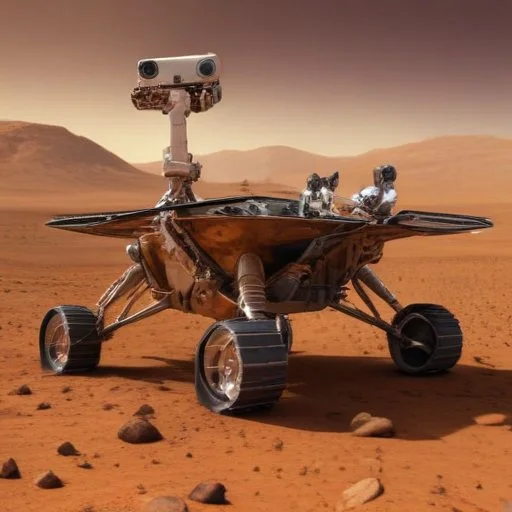
The Mars Pathfinder mission was designed to test new technologies and strategies for landing on Mars, paving the way for future robotic missions. Launched on December 4, 1996, the spacecraft embarked on a 6.5-month journey, braving the harsh conditions of space. The probe's innovative airbag landing system, which allowed it to bounce onto the Martian surface, proved to be a game-changer in planetary exploration.
The Mars Pathfinder was equipped with a suite of scientific instruments, including cameras, spectrometers, and meteorological sensors. The probe transmitted a wealth of data back to Earth, providing scientists with invaluable insights into Martian geology, atmosphere, and climate. The mission's findings significantly expanded our knowledge of the Red Planet, revealing a world of breathtaking diversity and complexity.
A team of dedicated scientists and engineers worked tirelessly to bring the Mars Pathfinder mission to life. Dr. Matthew Golombek, the mission's project scientist, played a crucial role in shaping the project's scientific objectives and strategy. Alongside Dr. Daniel Goldin, NASA's Administrator at the time, the team pushed the boundaries of what was thought possible in space exploration.
The Mars Pathfinder mission has had a profound impact on the field of planetary exploration. Its pioneering achievements have inspired a new generation of space scientists and engineers, paving the way for subsequent Mars missions like the Spirit and Opportunity rovers, Curiosity, and Perseverance. As we continue to explore the vast expanse of our solar system, the Mars Pathfinder's legacy serves as a beacon of innovation and discovery.
"The Mars Pathfinder is a testament to American ingenuity and the boundless potential of the human spirit." - Dr. Daniel Goldin, NASA Administrator
The Mars Pathfinder's historic landing on Mars marks a triumphant chapter in the annals of space exploration, inspiring future generations to reach for the stars. As we continue to venture into the unknown, the Pathfinder's legacy serves as a beacon of hope, illuminating the path to new discoveries and breakthroughs.
The Mars Pathfinder mission was not an isolated effort, but rather a culmination of decades of Mars exploration. From the early flybys of Mariner 4 in 1964 to the Viking landers of the 1970s, each mission built upon the discoveries of its predecessors. The Pathfinder's success was a testament to the incremental progress made in understanding the Martian environment and developing the necessary technologies to explore it.
The mission's innovative airbag landing system, for instance, was a direct result of the failures of previous landers, such as the Soviet Union's Phobos 1 and 2 missions. By learning from these failures, NASA engineers were able to design a more reliable and effective landing system.
The Pathfinder's achievement was not a singular event, but rather a milestone in a long and ongoing journey of Mars exploration.
As the Mars Pathfinder project scientist, Dr. Matthew Golombek played a crucial role in shaping the mission's scientific objectives and strategy. With a background in geology and planetary science, Golombek brought a wealth of knowledge and expertise to the project.
His work on the Viking missions in the 1970s laid the foundation for the Pathfinder's geological surveys.Golombek's dedication to the mission was instrumental in ensuring its success, and his contributions to the field of planetary science continue to inspire new generations of scientists and engineers.
The Mars Pathfinder mission was a testament to the power of innovation and technological advancement. The probe's airbag landing system, Alpha Particle X-Ray Spectrometer (APXS), and Imager for Mars Pathfinder (IMP) camera were just a few examples of the cutting-edge technologies developed for the mission.
These technological breakthroughs have had a lasting impact on the field of space exploration, paving the way for future robotic missions like the Spirit and Opportunity rovers, Curiosity, and Perseverance.
The Pathfinder's legacy continues to inspire new technological innovations, driving humanity's pursuit of the unknown.
The Mars Pathfinder mission provided unprecedented insights into the Martian environment, revealing a world of breathtaking diversity and complexity. The probe's data on the planet's geology, atmosphere, and climate have greatly expanded our understanding of Mars' environmental dynamics.
The mission's findings have significant implications for understanding the potential for life on Mars, both past and present. By studying the planet's climate and geology, scientists can better comprehend the conditions necessary for life to thrive.
The Pathfinder's environmental insights have far-reaching implications for the search for life beyond Earth.
The Mars Pathfinder mission captured the imagination of people around the world, inspiring a new generation of scientists, engineers, and explorers. The mission's success was a testament to human ingenuity and the boundless potential of the human spirit.
The Pathfinder's cultural impact extends beyond the scientific community, influencing popular culture and inspiring artistic works, such as films, literature, and art.
The mission's achievement has become an integral part of our collective cultural heritage, symbolizing humanity's innate curiosity and drive to explore.